






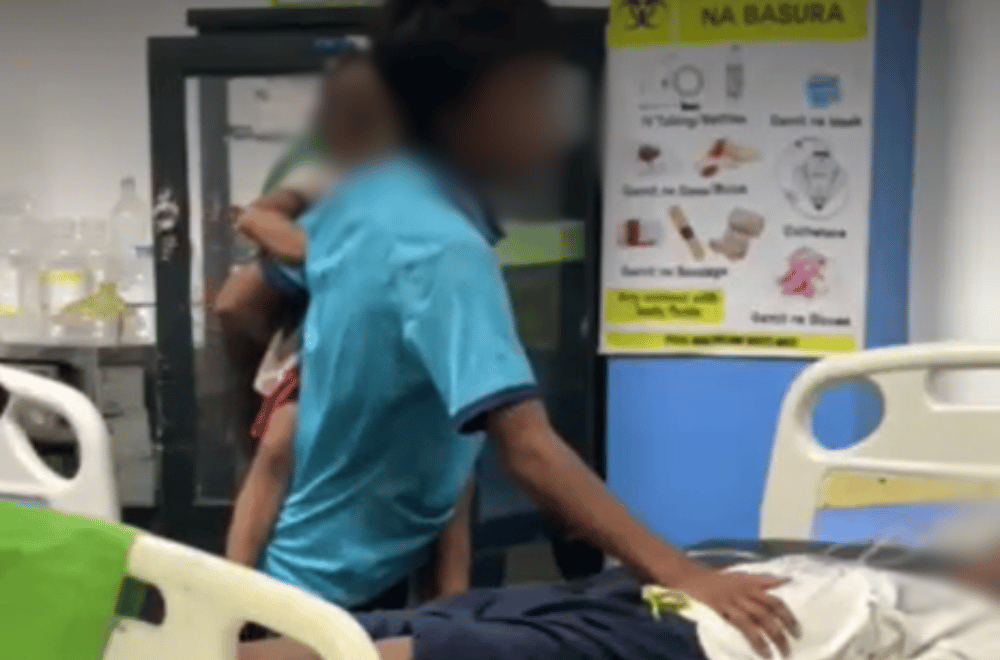
Three members of a family in Libon, Albay died while five others, including a two-year-old child, landed in the hospital after eating puffer fish or ‘butete.’
According to the Rural Health Unit in Libon, one of the victims died shortly after eating the dish, which was prepared for a family meal.
According to the Rural Health Unit (RHU) in Libon, one of those who died found the puffer fish at the shore and cooked it later for the whole family. It was not the first time the family ate puffer fish.
“Yun po ang ginawa nilang ulam sa tanghalian around 11 a.m., kinain daw po nila yun sa lutong ginataan; kasi dati na daw po yun silang kumakain talaga nung puffer fish,” John Carlo Vasquez, a nurse from RHU Libon, said.
Just minutes after eating the dish, three of them got weak, experienced stomach ache, and vomited. At around 2 p.m., they were brought to the Pantao District Hospital but they did not make it there alive.
“Bago sila po nagpadala [sa hospital], naramdaman po kasi daw nila yung parang nanghihina na daw — lalo yung mag-asawa kasi yun po yung unang kumain nung butete. Nanghihina tapos nasakit na po yung tiyan, tapos nagsusuka nung ‘di po matigil — ng around 2 p.m. nagpadala na po sila sa Pantao District Hospital,” Vasquez said.
According to the Bureau of Fisheries and Aquatic Resources (BFAR) in Bicol, there is a permanent ban on the purchase, distribution, and consumption of any kind of puffer fish, whether raw or processed, as stated in Fisheries Administrative Order 249.
The effects of consuming poisoned puffer fish can be experienced within minutes and can include numbness, paralysis, difficulty breathing, decreased blood pressure, and ultimately, death.
“Ang puffer fish, igwa siyang talagang lethal [na] poison, madalian po — kapag ang tao naka-ingest o nakakakan ning poison na ini — madalion po ang effect. So ang apod kaitong lason na igwa ang puffer fish, iyo ang inaapod na tetrodotoxin,” Wheng Bricia-Briones, BFAR Bicol spokesperson, said.