






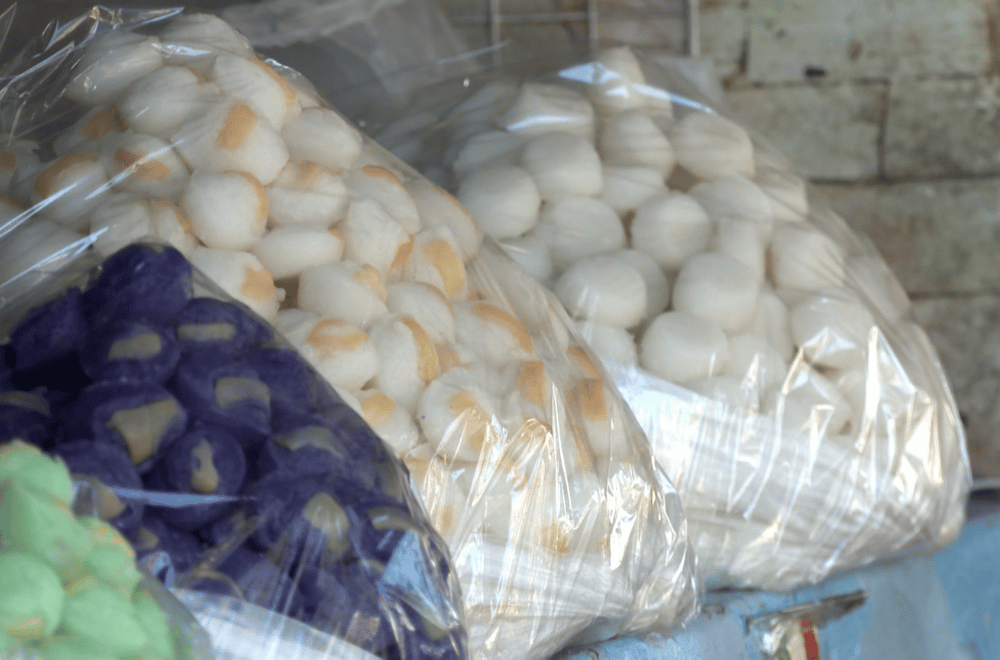
The intense heat has affected the sale of puto, a well-loved rice cake in Calasiao, as customers avoid going out and vendors struggle with spoilage.
Dina Victorio, a vendor who used to sell 50 kilos of puto daily, has now reduced her supply to 25 kilos to prevent losses.
“[Limited] po ‘yung pinapagawa namin kasi sa sobrang init para hindi kami masiraan po,” she said.
Despite the lower demand, the price of puto with cheese remains at P130 per kilo, while plain puto and kutsinta cost P110 per kilo.
Meanwhile, Raquel de Vera-Romero, a food stall owner, ensures her cooked meals stay fresh despite the heat by maintaining cleanliness and using fresh ingredients.
“’Yung linis talaga. ‘Yung malinis ‘yung karne mo. Kasi dun nakukuha ‘yung madaling mapanis, ‘yung isang beses lang huhugasan ‘yung karne. Kami sinasala pa eh,” she said.
According to health officials, food spoils faster in extreme heat, increasing the risk of foodborne illnesses.
“Napakadelikado po nito ‘pag ito ay nakain o na-ingest ng isang tao kasi maaari po siyang magkaroon ng foodborne illness tulad ng diarrhea at iba pang intestinal diseases,” Dr. Rheuel Bobis, spokesperson of CHD-1, said.
Authorities advise the public to inspect food before eating, especially if it smells or tastes unusual.
“Kapag ang isang pagkain ay nag-iba na ang amoy o may kakaiba ng lasa, itsura doon sa orihinal na pagkakaluto, huwag nang kainin,” Dr. Bobis warned.