





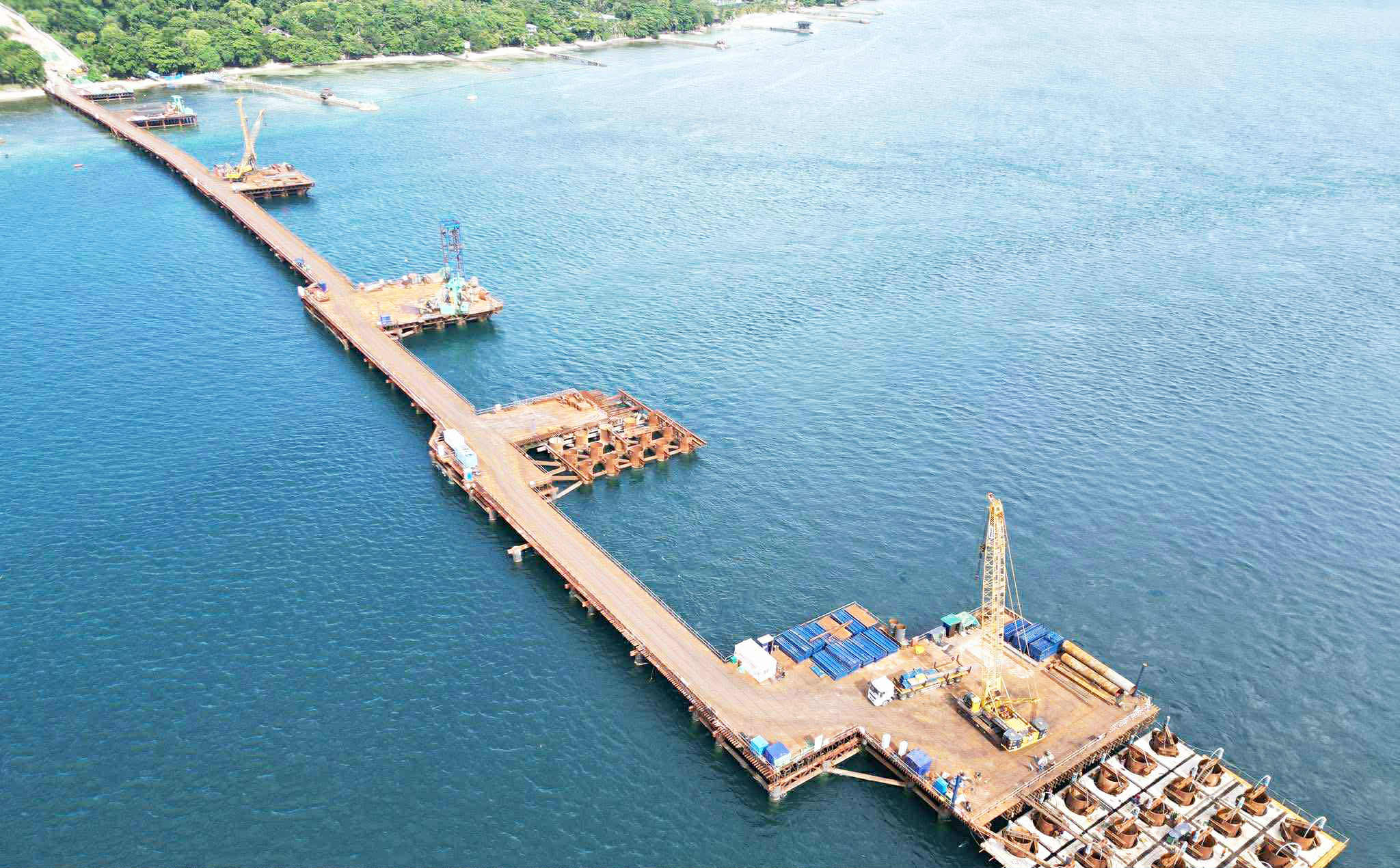
The mayors of Samal Island and Davao City are hopeful that construction of the Samal Island-Davao City Connector Bridge will continue amid the issuance of a writ of kalikasan by the Supreme Court (SC).
Davao City Acting Mayor Sebastian Duterte said he respects the SC’s decision, emphasizing that the rule of law must prevail and the legal process must be followed.
He also acknowledged the right of every Filipino to a balanced and healthy ecology.
However, Duterte explained that the bridge was designed to serve the Davaoeños and Samaleños by offering a safer, faster, and more affordable mode of transportation between the two cities.
Duterte urged petitioners to reflect on whether their opposition truly prioritizes environmental protection or merely serves to protect private commercial interests.
He also expressed optimism that the project will meet all the necessary requirements to move forward.
Meanwhile, Samal Island Mayor Lemuel Reyes echoed strong support for the project, saying that the people of Samal have long desired development and better connectivity between Samal and mainland Davao.
He emphasized the bridge’s potential benefits such as easier transportation, faster medical service, tourism growth, business opportunities, and livelihood opportunities.
Reyes raised concerns that those who filed the petition are not from Samal and allegedly failed to consult the community.
He called on all agencies and sectors to listen to the voices of the people affected directly by the project, especially Samaleños.
SC issued a writ of kalikasan directing the respondents, including several government agencies and the Chinese contractor, to submit a verified return on the petition within a non-extendible period of 10 days after service of the writ.
A writ of kalikasan is a legal remedy under Philippine jurisprudence that protects a person's constitutional right to a balanced and healthy ecology.
The Department of Public Works and Highways (DPWH), one of the respondents in the petition, said its legal team is reviewing the writ and will file a response within 10 days.
DPWH maintained that unless the court issues a temporary restraining order (TRO) or Temporary Environmental Protection Order (TEPO), the construction of the bridge will continue as scheduled.