






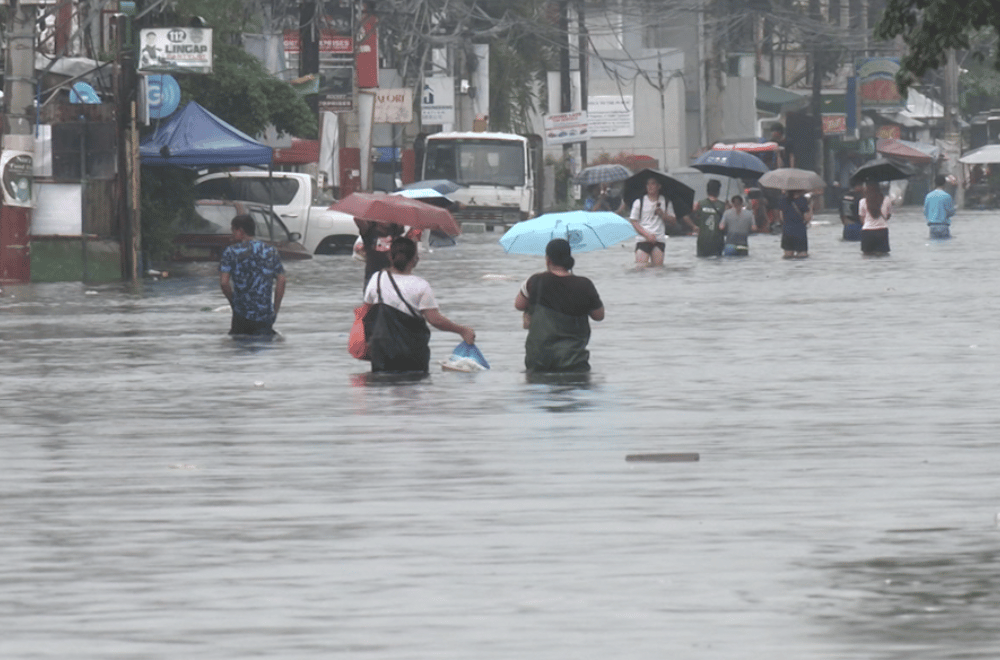
Despite waist-deep floods, several residents in Dagupan City have chosen to wade through dirty waters just to get to work.
One of them is Richard Bautista whose office is also submerged in floodwaters.
“Nakakatakot din talaga ang leptospirosis kaya ang ginawa ko, uminom na lang ako ng gamot,” he said.
John Ramos from Barangay Mayombo faces the same risk. He has to go out to buy basic necessities.
“Nakakatakot lalo na sa mga sugat sa paa,” Ramos said.
Flooding has worsened on Caranglaan-Mayombo Road, making it impassable for vehicles. Residents are left with no choice but to walk through the murky water.
The Department of Health - Center for Health Development (CHD) in Region 1 is already expecting a rise in leptospirosis cases.
From January 1 to July 5 this year, the region has recorded 84 confirmed cases, more than double the 33 cases reported during the same period in 2024.
So far, 13 people have died from the disease.
“Malaki ang posibilidad [ng pagtaas ng leptospirosis case] lalong-lalo na ‘yung exposure ng ating mga kababayan sa baha ay tumaas din dahil sa mga bagyong dumaan dito sa Region,” CHD Region 1 spokesperson Dr. Rheuel Bobis, said.
While prophylaxis medicines are available, health officials warn against self-medicating. They urge residents to consult health centers before taking any medication.
Common symptoms of leptospirosis include sudden fever with chills, severe muscle pain (especially in the legs), headaches, red eyes, liver pain, skin blisters, stiff neck, and difficulty urinating.
To prevent infection, the public is advised not to walk or swim in dirty floodwaters. If unavoidable, they must wear protective gear like boots and gloves, and wash immediately after exposure.