






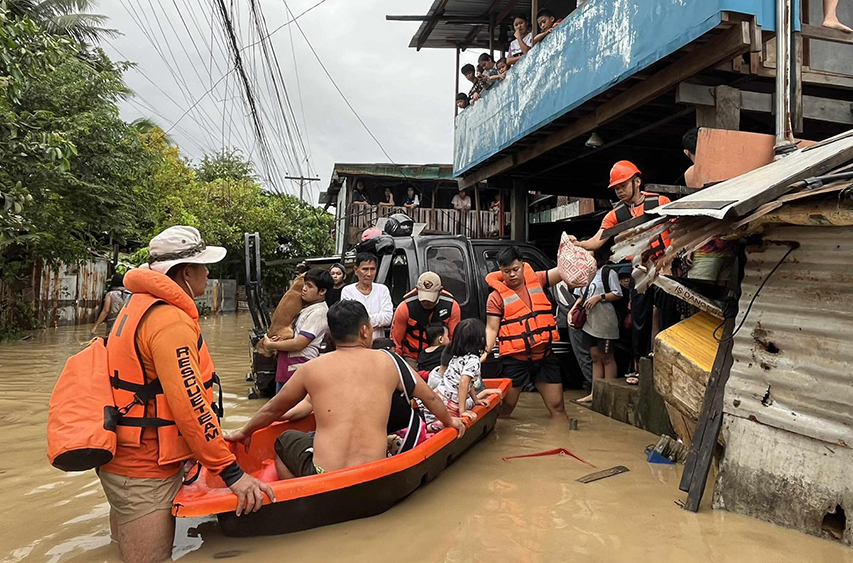
Cebu Governor Pamela Baricuatro has signed an executive order placing the province under a state of calamity due to the devastation caused by Typhoon Tino.
Tino made landfall in the northern town of Borbon at 5:10 a.m. on Tuesday, November 4, 2025, and brought with it heavy rains and dangerous winds.
It first made landfall Silago, Leyte at midnight before it made landfall in Cebu and eventually in Sagay City in Negros Occidental, in San Lorenzo in Guimaras, and in Iloilo City.
The torrential rains Tino dumped on Cebu caused massive flooding in many parts of the province, including in the cities of Mandaue and Talisay.
"The Provincial Disaster Risk Reduction and Management Office, in coordination with the Municipal/City Risk Reduction and Management Councils, after assessment confirmed the widespread damage, loss of lives, continuous imminent threats to life and safety, disruption of essential services, and urgent need of emergency response, and has recommended the declaration of the State of Calamity in the Province of Cebu thru its Memorandum 03-2025 dated 4 November, 2025," reads Executive Order No. 68 released evening on November 4.
Based on data (updated) as of November 6, at least 101 people from the province died from the typhoon:
- Liloan - 35
- Compostela - 25
- Mandaue City - 12
- Danao - 8
- Balamban - 8
- Talisay City - 7
- Asturias - 2
- Consolacion - 1
- Bantayan - 1
- Tabogon - 1
At least 30 others died in Cebu City.
At least 33,661 families (105,588 individuals) were evacuated in the province, the Capitol said on November 4.
In Talisay City, hundreds of houses along the Mananga River were either damaged or destroyed when the river overflowed. At least 1,088 individuals from 262 households have taken shelter at the Talisay Sports Academy, the Capitol said in a Facebook post, quoting the chief of the city's Emergency Operations Center.
Baricuatro said a declaration of state of calamity is necessary to enable the province to access calamity funds quickly, control prices of goods, and expedite relief and rehabilitation efforts, pursuant to the Philippine Disaster Risk Reduction and Management Act of 2010.
In the same EO, Baricuatro authorized all provincial government offices, component cities, and municipalities “to utilize their respective Quick Response Funds and other appropriate funds for rescue, relief, recovery, and rehabilitation, subject to existing auditing and accounting rules and regulations.”
“The Cebu PDRRMO, and in coordination with concerned local DRRM offices, is directed to lead and coordinate rescue, relief, medical, and rehabilitation efforts, and to mobilize necessary resources and manpower for immediate disaster response,” the EO reads.
The governor also directed the Local Price Coordination Council, in coordination with the Department of Trade and Industry, to implement a price freeze and monitor the prices of basic necessities and prime commodities “to protect consumers and ensure access to basic goods and commodities during the emergency period.”