






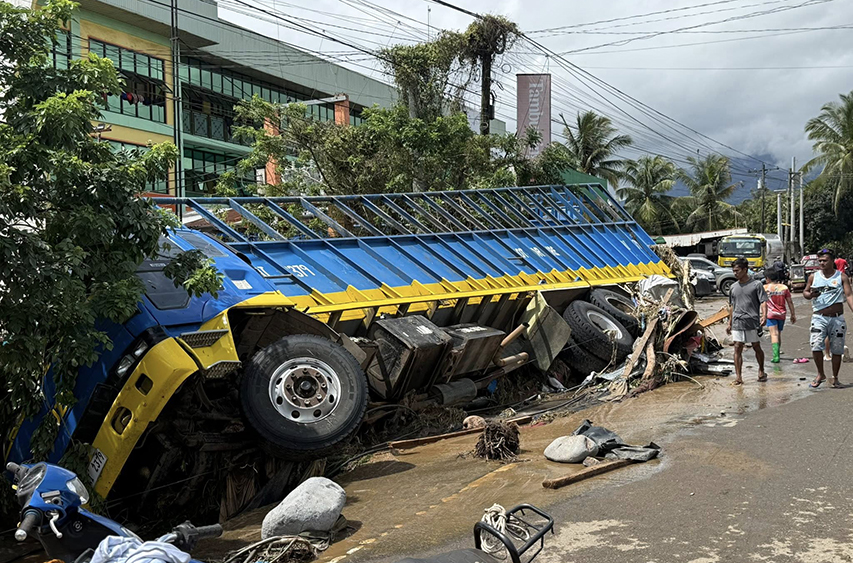
At least six people died in Canlaon City, one of the areas in Negros Oriental that experienced the wrath of Typhoon Tino.
Mayor Jose Chubasco Cardenas said in a Facebook post on November 4, 2025 that at least six have perished in the disaster and the city continues to search for others reported missing.
At least 291 families have sought refuge in evacuation centers following the disaster.
As of November 4, the following bridges have not been passable:
- Highway Binalbagan Bridge
- Highway Inyawan Bridge
- Near Mt. Citi Bridge
- Sitio Alibababy Bridge (Detour area)
- Barangay Malaiba Bridge
- Barangay Bayog Bridge (Near Montemayor Residence)
Cardenas said the city’s immediate needs include water, electricity, restoration of communication lines, and food. The Canlaon Pensionne House (Canlaon City Pension House) serves as drop-off point for donations, according to the provincial government.
The mayor said the city government continues to collect the latest information so that residents will be updated.
“Kabalo kami ug unsa ka importante ang paghatag ka ninyo ug kanunayng update sa kahimtang sa Canlaon apan ang inyong mga opisyales mismo apektado sab sa maong panghitabo…. Kami nagapaningkamot nga mohatag ka ninyo ug kompletong detalye ug sitwasyon sa matag barangay nga ginsakopan sa Canlaon apan hangtod karon kami ga coordinate sa matag barangay opisyales para maka kuha ug insaktong impormasyon ug datos,” his Facebook post reads.
Like in other areas devastated by Typhoon Tino, including parts of Eastern Visayas, Cebu, and Palawan, residents of Canlaon was caught by surprise by the amount of rainfall the typhoon brought, which triggered extreme flooding.
Negros Oriental Governor Chaco Sagarbarria checked on the situation in the city personally on November 5 and assured assistance, including food packs and essential supplies to families that have been displaced.
“Governor Chaco reaffirmed his unwavering commitment to support Canlaon City and other affected areas, highlighting the importance of unity and collaboration among local and national agencies in addressing the impacts of natural disasters. He also expressed gratitude to all sectors extending their help and solidarity to the people of Canlaon,” reads a post on the Facebook page of the provincial government.
Tino first made landfall Silago, Leyte before it made landfall in Cebu and eventually in Sagay City in Negros Occidental, in San Lorenzo in Guimaras, and in Iloilo City, bringing with it heavy rains and dangerous winds.
PAGASA DATA
Data released by PAGASA on November 5 showed that Tino produced a significant amount of rainfall in the Visayas region.
“The rainfall amount exceeded 20-year return period in many areas of the Visayas,” PAGASA said, adding, that widespread flooding was imminent in low-lying areas in Central Visayas on November 4.
“A 20-year return period means that in any given year, there is a 5% (or 1/20) chance this extreme rainfall event (or worse) could occur,” PAGASA said.
In Cebu island, for one, the areas with recorded water level exceeding critical level based on PAGASA’s automatic rain gauge (ARG) include Bagakay, Toledo with 428 mm; Ilihan, Toledo with 300mm; Danao City with 183 mm; and the Mactan Synoptic Station in Mactan Island with 183 mm.
The significant flooding triggered by extreme rain, PAGASA said, resulted in loss and damage to property and livestock, and even loss of lives.