






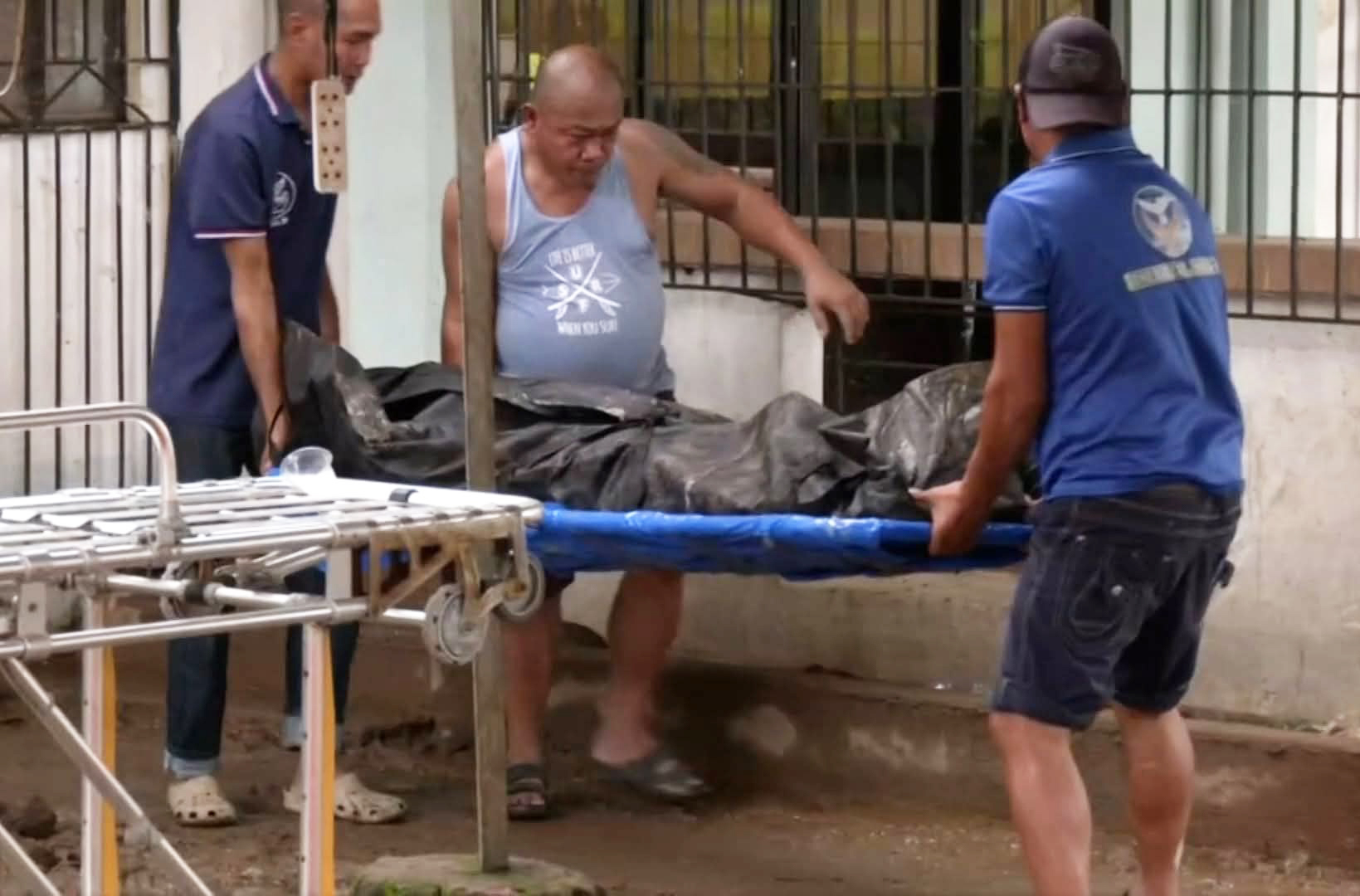
At least 20 people have died in Negros Occidental when Typhoon Tino made landfall in the Province. Authorities continue to search for at least 33 others who have gone missing, as of this writing.
Tino made landfall in the northern city of Sagay in Negros Occidental after it made landfall in Silago, Leyte and in Borbon, Cebu. From Negros Occidental, it made its way to San Lorenzo in Guimaras and Iloilo City, bringing with it heavy rains and dangerous winds.
Based on data from the Negros Occidental Provincial Disaster Risk Reduction and Management Office (PDRRMO), nine of those who died were from the town of La Castellana. Twenty have gone missing in the town.
A resident, Vicente de Guirra, could not accept the unfortunate fate that fell upon his family. His wife died while their three children, including a nine-month-old baby, have gone missing.
“Nasabit ako sa kahoy. Pumunta sa aking manugang kasi mataas ang kanilang bahay. Tapos, doon kami…” he shared in between tears.
The four-year-old child of another resident, Aguinaldo Villar, was rescued but his other relatives are among those who have gone missing.
Bryll Larry Sañor, spokesperson of the Negros Occidental PDRRMO, said those who died perished in the floods.
“Meron sa kanila na inanod, naanod lahat ito. Yan na mostly ang reason talaga. Found dead bodies. Nag-deploy na at tumulong na tayo saoperation ng search, rescue and retrieval,”
Like residents in other areas devastated by Typhoon Tino, residents of Negros Occidental was caught by surprise by the amount of rainfall the typhoon brought that triggered extreme flooding.
- La Castellana – 9
- Bago City – 3
- San Carlos City – 3
- Ilog – 2
- Murcia – 2
- La Carlota City – 1
PANAY AREAS
In the Province of Capiz in neighboring Panay Island, widespread flooding displaced up to 175,000 individuals with 148,000 of them seeking refuge at evacuation centers.
In the town of Sigma in Capiz, 17 of 60 barangays were flooded. Flooding also occurred in Barangay Poblacion Sur in the town of Ivisan.
“Unti-unting bumaba ang baha from the 2nd district to the 1st district. Ang hindi usual na binabaha, binabaha na ngayon. Siguro silted na talaga ang ating rivers,” Atty. Sheila Artillero, head of PDRRMO-Capiz told GMA Regional TV News One Western Visayas earlier.
The strong winds Tino brought also downed trees .
In the Province of Antique, up to 41,000 families were displaced by the typhoon. One died from drowning.
PAGASA DATA
Data released by PAGASA on November 5 showed that Tino produced a significant amount of rainfall in the Visayas region.
“The rainfall amount exceeded 20-year return period in many areas of the Visayas,” PAGASA said, adding, that widespread flooding was imminent in low-lying areas in Central Visayas on November 4.
“A 20-year return period means that in any given year, there is a 5% (or 1/20) chance this extreme rainfall event (or worse) could occur,” PAGASA said.
The significant flooding triggered by extreme rain, PAGASA said, resulted in loss and damage to property and livestock, and even loss of lives.