






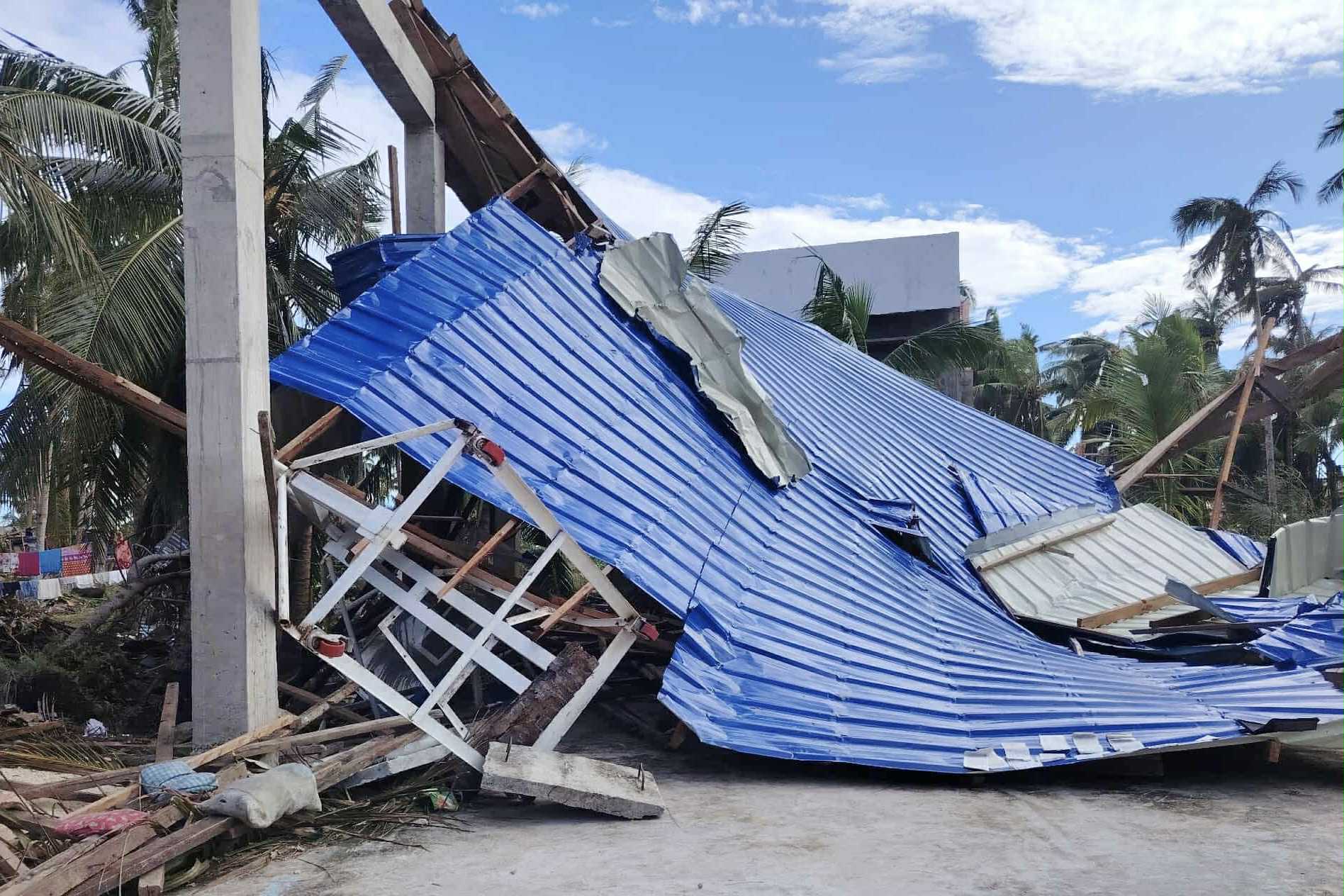
The Province of Dinagat Islands has been placed under a state of calamity due to the severe impact of Typhoon #TinoPH.
In a special session on Wednesday, November 5, 2025, the Provincial Board approved a resolution declaring the entire province under a state of calamity after thousands of residents were affected and numerous roads, houses, and facilities were damaged.
Data from the Provincial Disaster Risk Reduction and Management Office (PDRRMO) showed that the typhoon affected nearly 50 percent of the province’s population, equivalent to around 50,000 to 60,000 individuals.
Initial results of the Rapid Damage Assessment and Needs Analysis (RDANA) following the onslaught of Typhoon Tino also showed that several sectors were affected, including the social sector, lifeline and critical facilities, the productive sector, and governance.
Data showed that around 680 houses were destroyed or damaged in several barangays in the town of Tubajon, where 864 food packs and 54 half-sacks of rice have been distributed.
In Libjo, around eight percent of houses sustained damage, and relief distribution is also ongoing.
The town of Basilisa also reported that around 25 percent of houses were damaged, with 757 food packs distributed.
In San Jose, around eight percent of houses were damaged while minor damages to homes were recorded in the towns of Dinagat and Cagdianao, where relief operations also continue.
For infrastructure, the towns of Loreto and Tubajon were identified as the most heavily affected.
In Loreto, the Cambinliw Bridge was destroyed and rendered impassable, as of this writing. Power outages also persist, with the Loreto District Hospital relying on generators.
The Gibusong Islands also suffer from total power and communication loss due to the reported 40 percent damage to the NAPOCOR power plant and downed electrical posts. Water supply has also been disrupted in the Poblacion area.
In Tubajon, road clearing operations are ongoing, with 31 partially damaged infrastructures, including schools, amounting to an estimated P3.2 million in damage. A birthing facility was also destroyed. Power supply remains down with limited generator use, communications are non-functional, and only four out of nine barangays are connected to the local water district.
The provincial government also reported that 75 percent of barangays in the province have already been re-energized while 25 percent remain under restoration, based on the power situation advisory issued by the Dinagat Islands Electric Cooperative (DIELCO).
In the agriculture sector, 90 percent of banana plantations, five to 10 percent of coconut trees, and two hectares of cassava were damaged in Loreto. In Tubajon, 0.08 hectares of hybrid corn and one hectare of cassava were affected while 70 percent of crops, livestock, and vegetables in Basilisa and nearby towns also suffered significant damage.
At present, clearing operations and distribution of relief goods are ongoing across the affected areas in the province.
The declaration of a state of calamity will allow the immediate release of calamity funds and resources to expedite relief and recovery operations.