






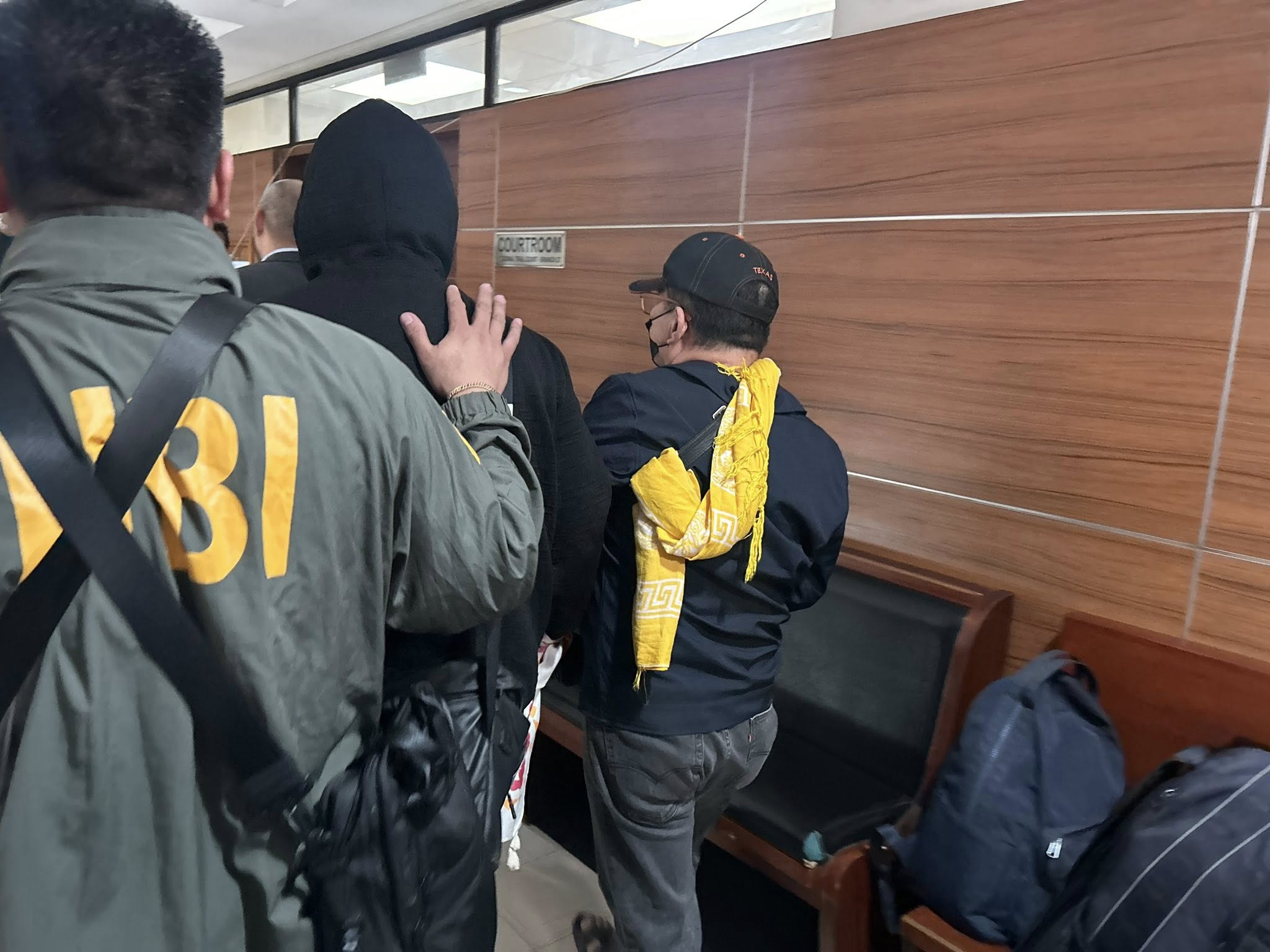
Two of eight engineers of the Department of Public Works and Highways (DPWH) linked to the P96.5-million anomalous flood control project in Davao Occidental arrived in Cebu from Davao afternoon on Friday, December 19, 2025.
District Engineer Rodrigo Larete and Czar Ryan Ubungen, chief of the Finance Section of DPWH Region 11 arrived at 3 p.m. at the Mactan Cebu International Airport (MCIA).
The two were escorted by officials and personnel of the National Bureau of Investigation (NBI) Davao and met by officials and personnel of NBI Central Visayas Regional Office.
The accused were ushered into the Regional Trial Court (RTC) Branch 27 in Lapu-Lapu City shortly after they arrived.
RTC Branch 27 issued warrants of arrest to controversial contractor Cezarah Rowena (Sarah) Discaya and eight DPWH Davao Occidental engineers for malversation of public funds or property in relation to the ghost flood control project.
The case is non-bailable.
Sarah Discaya is also expected to arrive in Cebu on December 19.
She was placed under arrest evening on December 18.
Discaya arrived at the Ninoy Aquino International Airport (NAIA) Terminal 2 at 1:40 p.m. on December 19. She was with at least seven NBI agents.
Discaya was taken temporarily to the Philippine National Police (PNP) Aviation Office at NAIA 2 departure lobby.
NBI Acting Director Lito Magno arrived ahead of Discaya at the airport for a domestic personal flight to the Province of Cagayan.
According to Magno, cases involving Discaya and nine others were raffled off to a Cebu court.
On December 17, two cases filed against Discaya and DPWH-Davao Occidental engineers were transferred to the Lapu-Lapu City Regional Trial Court.
Based on a GMA News Online report, Supreme Court (SC) spokesperson Atty. Camille Ting said this is in accordance with guidelines that corruption-related cases from infrastructure projects must be forwarded to the nearest designated anti-graft court of the nearest judicial region.
“The determination of the nearest judicial region shall be made by the presiding or executive judge concerned,” Ting told reporters.
To recall, the SC previously designated several regional trial courts to handle anti-graft cases.
(with reports from Nikko Sereno/GMA Regional TV Balitang Bisdak)