






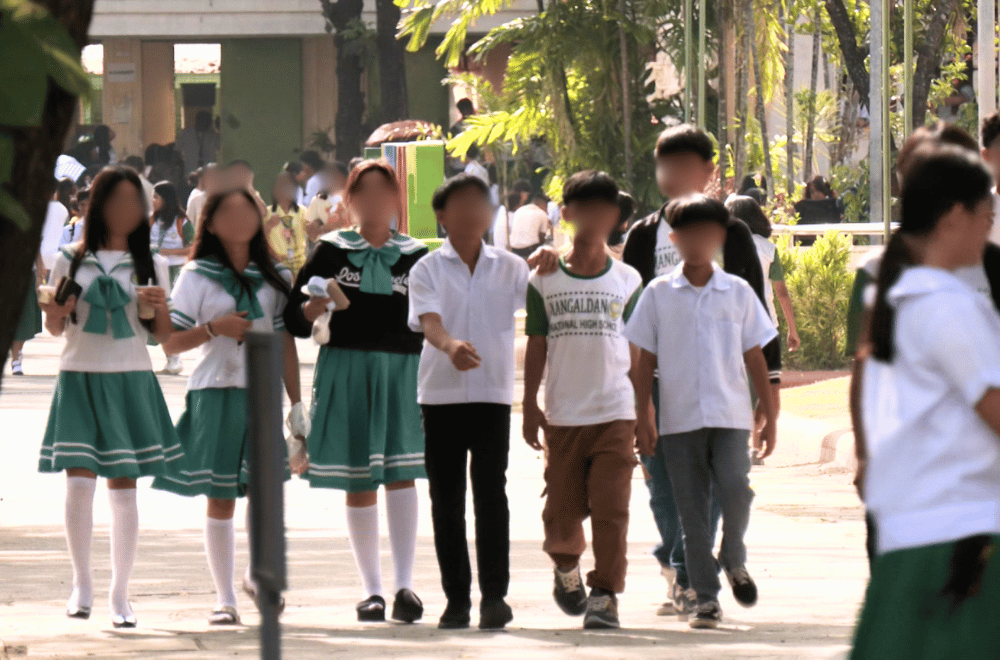
As the 1986 EDSA People Power Revolution turned 40 on Wednesday, February 25, 2026, teachers in Pangasinan called on the youth to learn its lessons and value democracy.
The peaceful uprising, held from February 22 to 25, 1986 along Epifanio de los Santos Avenue, led to the ouster of former President Ferdinand Marcos Sr. and the installation of Corazon Aquino.
Levy Cerezo, a historian, said the movement began gaining momentum after the assassination of opposition leader Benigno Ninoy Aquino, Jr. in 1983.
“Nagsimula, actually, ito noong pagkamatay ni Benigno Ninoy Aquino, Jr. Noong mga panahon na ‘yun, si Marcos, ‘yung nakaupo. Ngayon dahil gusto nila na si Corazon Aquino ang maupo, nagkaroon ng EDSA People Power,” Cerezo said.
Residents like Alberto Ricardo in Mangaldan said the anniversary remains a reminder of unity.
“Ito ‘yung panahon na nagkaisa ang mga Pilipino upang patalsikin ang diktatorya noong 80s,” he said.
Teachers and civic groups, however, expressed concern that younger generations in the province are becoming less familiar with the historical events.
“Ito ‘yung nais nating iparating sa tao, lalong-lalo na sa ating henerasyon, ang kahalagahan ng demokrasya. Pinapakita din nito na binibigyan natin ng halaga at inspirasyon ang mga kabataan na huwag mawawalan ng boses,” Cerezo said.
After 1986, Congress was restored, the 1987 Constitution was ratified, and democratic institutions such as the free press and independent judiciary were strengthened.
Educators in Pangasinan have called for stronger history education in schools to ensure that the spirit of People Power remains relevant to the next generation.
PEOPLE POWER KICKOFF CONCERT
In a special report by Mav Gonzales on 24 Oras, during a free concert at Quezon City Memorial Circle days before the Edsa People Power Revolution Anniversary, a significant number of Gen Z and Gen Alpha attendees said they did not know the purpose of the concert.
However, others from the same generations also participated with an understanding of its message, the 1986 call against corruption amid the recent flood control issues.
In a report on GMA News Online, Ogie Alcasid, who performed on the concert, beamed with hope seeing an audience made up of mostly young people singing with him during rehearsals.
“I’m happy that they are interested. When I rehearsed ‘Handog ng Pilipino’, they knew it. They give importance to this day regardless of what they believe or who their future president will be," he said.
"If that is the attitude of the youth, then the Philippines has hope,” Alcasid added.
Kiko Aquino Dee, a scion of the Aquino family and convenor of the anti-corruption movement Trillion Peso March, said corrupt practices and human rights abuses fought during the Marcos dictatorship are resurfacing.
“Many of the demons fought and driven away during the Marcos dictatorship — corruption, human rights violations — are returning today. There is a new urgency to remember and renew our fight against corruption,” Dee said.
Shannen Liz Carreon, a political sociologist, said many Filipinos remain highly susceptible to fake news. Unlike in 1986, today’s youth must contend with the pervasive spread of misinformation on social media.
“We studied TikTok, YouTube, and Facebook for months. It’s harder because even Gen Z can be easily misled by videos… Filipinos, I’m sorry to say, can be easily manipulated by news—misinformation and disinformation,” she said.