





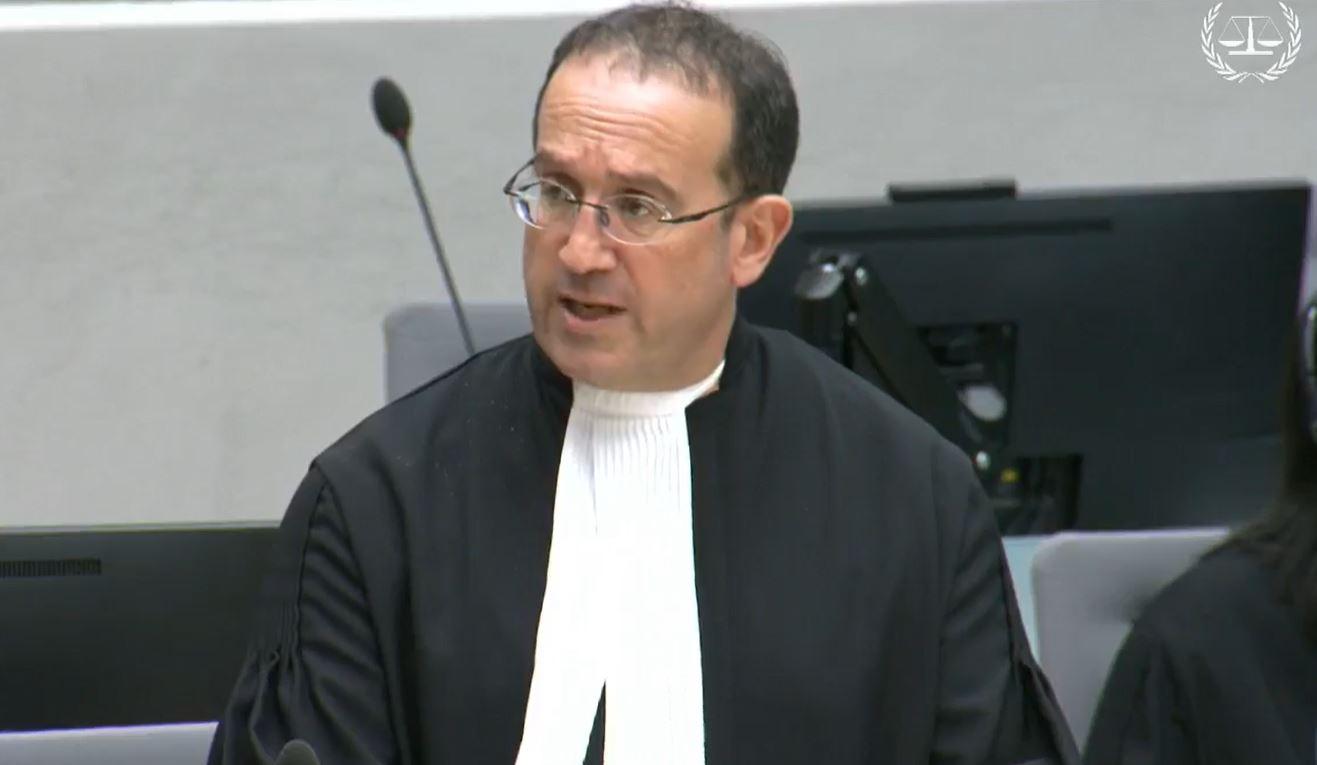
There is no evidence linking former President Rodrigo Duterte to the killings of Leyte Mayor Rolando Espinosa, Ozamiz Mayor Reynaldo Parojinog, his defense lawyer on his International Criminal Court (ICC) case said Friday.
As lawyer Nicholas Kaufman continued to present the defense’s submissions on the merits, he said that Duterte’s involvement in Espinosa’s case ended when the latter surrendered.
In August 2016, Kaufman said Duterte gave Espinosa a 24-hour ultimatum to surrender and commended the late mayor when he did.
“So if we look at it from the point of view of Rodrigo Duterte, that is where the incident ended, despite Mr. Jeremy exhorting us to believe otherwise,” he said during the last day of the confirmation of charges hearings.
“What happened thereafter, as awful as it may be, had nothing to do with our client. And not one witness can say that,” he added.
To recall, following his surrender, Espinosa and drug suspect Raul Yap were killed in an alleged shootout inside the Baybay City Provincial Jail.
Meanwhile, Kaufman said that the prosecution’s case on the death of Parajinog rested exclusively on a witness who was “unable to provide complete or reliable testimony.”
On July 30, 2017, Parojinog and several others were killed in a predawn drug raid at the Parojinog family compound.
“Contemporaneous police reports reflect that these police operations proceeded pursuant to six judicial search warrants, something hardly consistent with a premeditated murder scheme,” he said.
“After all, if the intention was cold-blooded murder, why go to the bother of involving a judge?” he added.
Kaufman said that official investigative materials indicate that cops were met with gunfire when they attempted to serve the warrant, prompting a return of fire.
He said that four individuals were also arrested.
“That fact alone is not consistent with the theory of indiscriminate execution but is rather consistent instead with arrest and prosecution within the boundaries of the law and not indiscriminate use of force,” he said.
The ICC Prosecution previously cited the killings of Espinosa, and Parajinog.
“To summarize, across incidents 10 to 14, Count 2, we see absolutely no evidence of any attribution to Mr. Duterte on a granular level nor do see any evidence of a mutually agreed cause of conduct on the upper hierarchical level of government, involving Mr. Duterte,” he said.
'NOT A WITCH HUNT'
Kaufman argued that the term “high-value target” was an operational classification used by law enforcement.
“HVT is not a code for an instruction to kill or a witch hunt. It as a prioritization tool within anti-drug operations applied across regions and units on the basis of intelligence assessments, alleged position within the drug networks, or inclusion on watchlists,” Kaufman said.
“Classification does not imply selection for murder, any more than it is proof of unlawful intent,” he added.
The ICC Prosecutor has charged Duterte with 3 counts of crimes against humanity (murder and attempted murder) during his term as mayor and president.
Under count 2, killings were allegedly perpetrated by members of the “National Network” across the Philippines during his presidency between 2016 and 2017. This covers 14 victims labelled as “high-value targets.”
Kaufman said that when incidents falling under count 2 are examined individually, the pattern is similar.
“Namely, heavy reliance on insider testimony, wishful and selective reading of police reports, and dubious and tenous linkage to Rodrigo Duterte,” he said.
(With reports from Joahna Lei Casilao, GMA Integrated News)