






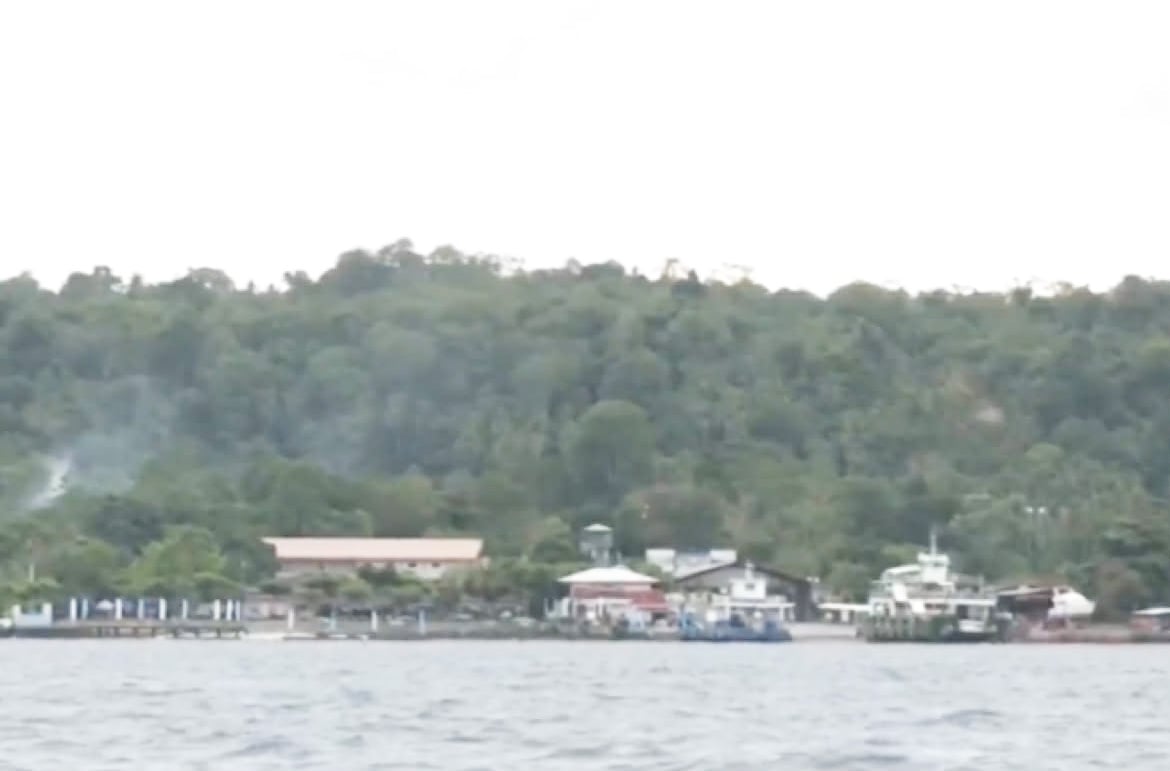
Tourism in the Davao Region is feeling the impact of the fuel crisis caused by the tension in the Middle East as tourist arrivals dropped in March 2026 compared to the same period in 2025.
During the dry season, tourists flock to beach destinations like Samal Island in Davao del Norte, which is known for its scenic coastlines.
However, due to high fuel prices, transportation fees have increased, particularly ferry and barge fares used to reach the island.
According to the City Investment and Tourism Office, tourist arrivals in Samal Island declined in March 2026.
The Department of Tourism-Davao (DOT-11) acknowledged that the sector is affected, although the situation remains manageable.
“May mga cancellation of pre-booked for example in hotels may cancellation of group bookings ang na-notice natin for example Holy Week yan talaga ang we see na high ang volume but not as high as before but meron pa namang movement while manageable we are still affected,” DOT-11 Director, Tanya Rabat-Tan, said.
Despite this, major events and conventions scheduled in the region for April 2026 are pushing through, although some have reported a slight decrease in the number of attendees.
“For this month of April we coordinated with our big venues so far no cancellations sa pre-book conventions may konti sa numbers of attendees but tuloy ang convention and conferences this month of April,” Rabat-Tan added.
DOT-11 expressed concern over the possible impact on tourism workers and local livelihoods since it remains uncertain when the conflict in the Middle East will end.
“Ang worry is mag lay-off na tayo ng tourism workers, ma affect ang livelihood sa communities yon yung worries. Honestly we take it a quarter at a time even our decision-making the rollout of our activities,” Rabat-Tan said.
RENEWABLE ENERGY
Meanwhile, the Mindanao Development Authority (MinDA) has intensified its efforts to invest in renewable energy to reduce dependence on imported fossil fuels such as coal, which are also affected by global conflicts.
MinDA aims to achieve a 50-50 energy mix in Mindanao – half renewable and half non-renewable – by 2030.
“If we achieve greater amount of renewable energy powering our electricity on a daily basis then we become resilient to the impacts of external shock kahit pa sumipa ng sangkatutak na taas ang presyo ng coal at diesel but we rely on our, solar, hydro, biomass that is locally sourced then we continue to enjoy at a better advantage economically and environmentally,” MinDA Assistant Secretary Romeo Montenegro, said.
However, one of the challenges in reaching this target is the continued expansion of coal capacity by some power companies.
“Pag nag-expand sila syempre law of mathematics pag-tumaas ang fossil mas tataas ang hahabulin natin na 50 na target for Mindanao. The better scenario is, to encourage them to build more renewable energy instead of expanding on coal,” Montenegro added.