






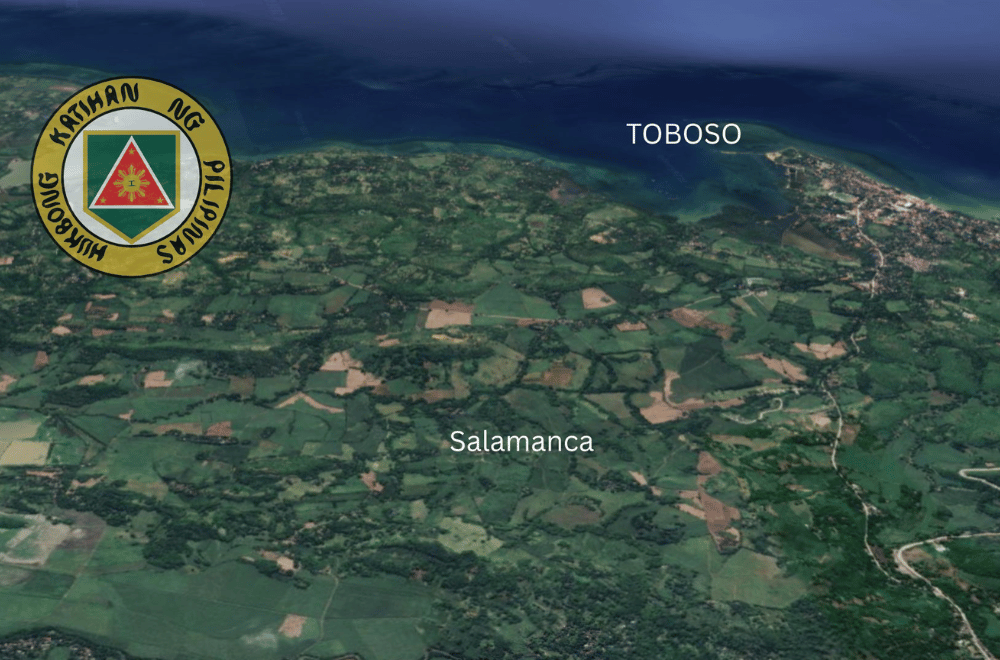
A University of the Philippines (UP) student leader and an alternative media journalist were among 19 people killed in what the military described as an encounter with New People’s Army (NPA) rebels in Toboso, Negros Occidental, as competing accounts emerged over whether civilians were among the dead.
The UP Diliman University Student Council (USC) said its Education and Research councilor Alyssa Alano was among those killed during the April 19 incident in Barangay Salamanca.
“Noong Abril 19, walang habas na pinaulanan ng bala ng 79th Infantry Batallion ng Armed Forces of the Philippines (AFP) ang Barangay Salamanca, Toboso, Negros Occidental kung saan halos 168 na pamilya at 653 na indibidwal ang napilitang magbakwit sa kanilang mga tahanan,” the statement read.
“Kaugnay nito, ibinabalita ng UP Diliman University Student Council na isa sa mga nasawi ang ating kapwa Iskolar ng Bayan na si USC Councilor Alyssa Alano dahil sa pasistant atake at panunupil ng militar sa Negros,” it added.
The USC condemned the killing of Alano, calling her an “innocent civilian.”
“Nakipamuhay at nakipag-aralan si Alyssa sa hanay ng mga kapatid nating magsasaka mula sa Negros upang alamin ang kanilang tunay na kalagayan sa harap ng pangangamkam ng lupa, pagsasamantala, at militarisasyon,” it read.
The UP Office of the Student Regent also expressed sympathy.
“Ipinapahayag ng UP Office of the Student Regent ang matinding dalamhati at pag-alaala sa balita ng pagpaslang ng pasistang militar kay Alyssa Alano, mag-aaral ng UP Diliman at konsehal ng UP Diliman University Student Council,” it said.
JOURNALIST AMONG DEAD
Meanwhile, the People's Alternative Media Network (AlterMidya) said one of those killed was RJ Nichole Ledesma, a writer and editor of Paghimutad-Negros and its regional coordinator for Negros Island.
“RJ was a community journalist, editor, and poet. He served as editor-in-chief of Spectrum, the student publication of the University of St. La Salle–Bacolod, where he took a degree in Psychology,” Altermidya said.
“Since 2020, he led Paghimutad Negros, an alternative media outfit focused on human rights reporting and grassroots storytelling. He later joined Altermidya as regional coordinator for Negros Island,” it added.
The group said Ledesma was conducting community work and immersion reporting in the area at the time, including on the effects of renewable energy projects on farmer communities.
Citing Human Rights Advocates Negros (HRAN), Altermidya said Ledesma “was not in the initial clash site in Sitio Sinugmawan” and was instead attacked in a separate community in Sitio Plariding during a military pursuit operation.
MILITARY ACCOUNT
The Philippine Army earlier said 19 alleged NPA members were killed in a series of encounters with troops from the 79th Infantry Battalion in Barangay Salamanca.
“Nineteen NPAs were killed, dismantling the Northern Negros Front, and one of our troops was wounded with a minor injury and is now in stable condition,” Army spokesperson Colonel Louie Dema-ala said.
The military has rejected claims that civilians were among those killed.
“Ano ang ginagawa ng mga sinasabi nilang journalist, social workers, faculty members, spokesperson ng mga progresibong grupo sa loob ng encounter site na may mga bitbit na baril at nakikipagbarilan sa ating mga sundalo?” Dema-ala said in a message to GMA News Online.
“Yan ang tanong ko sa kanila,” he added.
Dema-ala said troops acted professionally and followed International Humanitarian Law.
“Troops of the 79IB showed steadfast commitment to their mission and dedication to duty. Their adherence to International Humanitarian Law and utmost respect for human rights stand as a testament to the professionalism and honor that define the Philippine Army soldier,” he said.
“The [Armed Forces of the Philippines] did not hunt people — it responded to the community's own call for protection,” he added.
OPPOSING ACCOUNTS
However, the NPA’s Apolinario Gatmaitan Command disputed the military’s account, saying only a few of those killed were armed fighters.
“The rest were civilians documenting a peasant activity, standing alongside farmers who are consistently pushed to the margins by land-grabbing and systemic neglect,” it said.
“Among the casualties were local and foreign journalists and human rights advocates who only carried notebooks, cameras, and the grievances of the poor — tools far more threatening to the status quo than any rifle,” it added.