






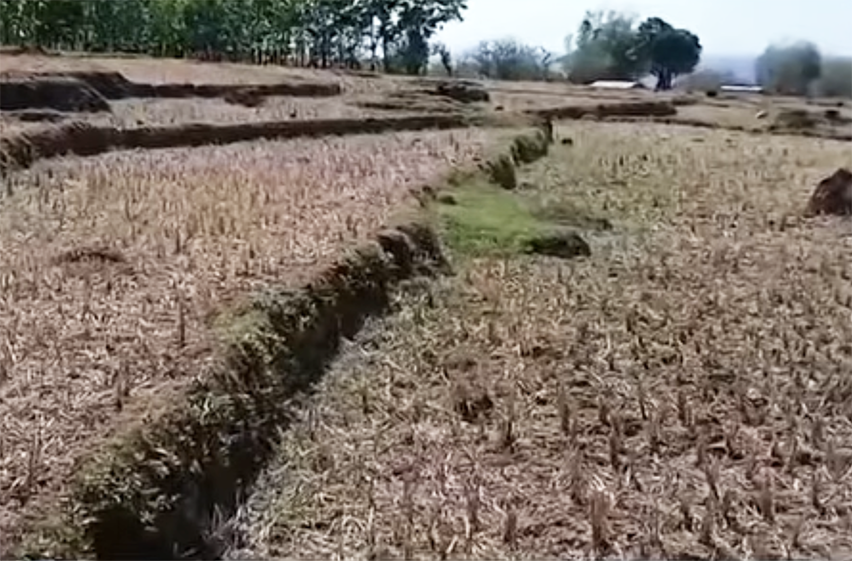
Leo Lozano is one of the residents of Zamboanguita town in Negros Oriental who relies on farming as a source of income.
But with the extreme heat damaging his crops and drying up his fields, he is not sure how he can provide for his family in the coming months.
At his farm in Barangay Nasig-id, Lozano is lucky to save even a hectare of the rice he had planted. He needed to have the rice harvested fast before they, too, would wilt and go to waste.
Other farmers are not as fortunate.
And it’s not just his farm that is feeling the brunt of the extreme weather. Thousands of hectares of rice fields in their area have dried up and grounds have cracked.
The river that supplies water to the Sanig-ig dam has also dried up, which has affected the irrigation canal at the rice fields.
The gate valve of the dam getting damaged is not helping, either.
Aside from water for their crops, farmers also worry where to get water for their animals.
Lozano said losses due to the heat are piling up. He is yet to recover what he has spent for fertilizer, seeds, and pesticides.
State weather bureau PAGASA has said the El Niño may begin in June and may last until the end of 2026.
Farmers like Lozano are worried even more with the so-called Super El Niño or Strong El Niño that is expected to bring even more heat.
They hope the government can give them help.