






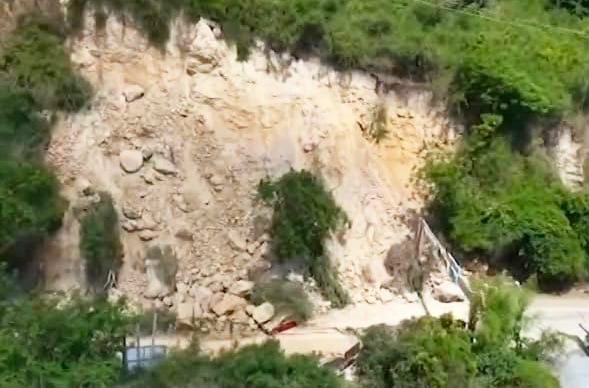
The Mines and Geosciences Bureau-Davao (MGB-11) has reminded the public to watch for warning signs of possible landslides to help prevent accidents and ensure safety.
MGB-11 said there are “early warning signs” indicating that the ground is already moving, which the public should recognize to help prevent loss of lives.
The public is urged to stay alert and be prepared for these signs.
The first warning sign to watch out for are cracks or fissures on the ground, roads, or even on the concrete floors and foundations of houses.
If these cracks continue to widen or deepen, it could indicate that the ground is gradually sinking or shifting.
Second, check the surroundings. Leaning or tilted trees, electric posts, or fences may also be signs that the ground is already moving.
Step-like formations observed on slopes may also indicate ground movement.
“Kung makakita mo og hagdan hagdan naa nay possible slumping,” MGB-11 Director, Beverly Berbante, said.
In terms of water-related signs, the public is advised to be cautious if new springs suddenly appear or if the ground becomes unexpectedly wet or muddy, especially in areas where this has not happened before.
If these warning signs are noticed, the public is urged to inform the barangay officials or the Local Disaster Risk Reduction and Management Office (LDRRMO) and evacuate to a safer location.
Meanwhile, the Office of Civil Defense-Davao (OCD-11) said local government units need to develop a 30-year disaster resilience master plan starting at the barangay level to ensure better preparedness and reduce the risk of deaths and injuries.
However, funding remains a challenge for many local government units.
“Ayaw namo og huna-huna sa kwarta ang importante you have the plan identified nimo ang solution ibutang nimo na sa 30years nga period usa nimo iimplement, all hazards bisan wala pamo nabahaan nakabutang didto nga highly susceptible sa baha kana nga purok kinahanglan naa nay plano tanan purok sainyong barangay should be covered with that plan it has to be institutionalized through an ordinance,” OCD-11 Director, Ednar Dayanghirang, said.