






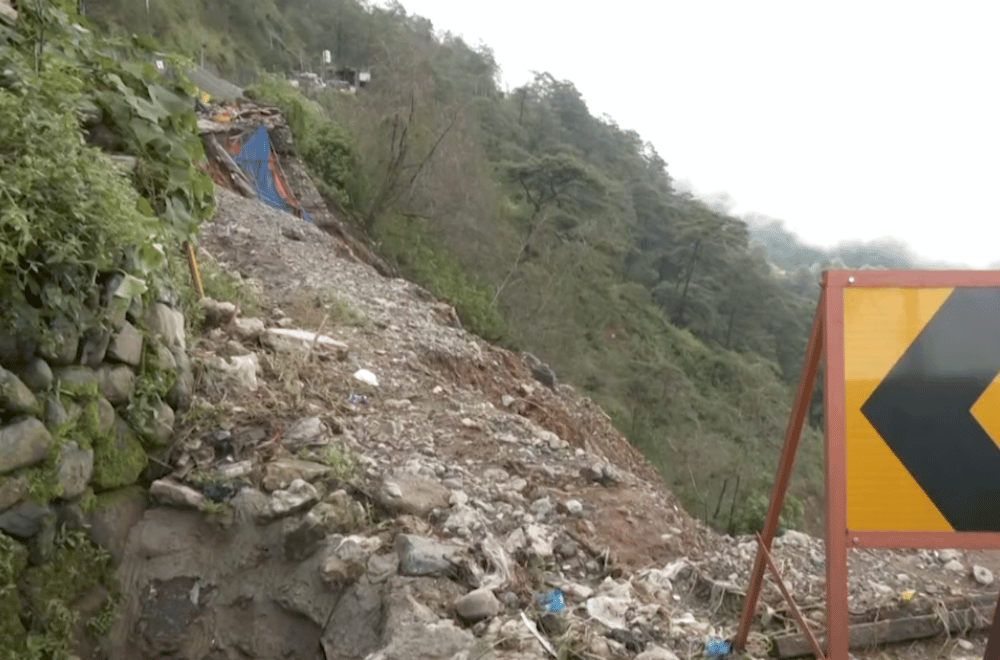
Rain may have eased across the Cordillera this week but the risk of landslides remains high as saturated soil continues to threaten communities in mountainous areas.
The Philippine Atmospheric, Geophysical and Astronomical Services Administration (PAGASA) said rains in the region would be weaker than those recorded in recent weeks but could continue until the weekend due to the southwest monsoon or habagat.
Larry Esperanza, chief meteorologist of PAGASA-Baguio, said Tropical Depression #NenengPH is too far to strengthen the monsoon significantly.
“Itong linggong ito, medyo mahina dahil tropical depression ni Neneng at medyo malayo. Ibig sabihin, hindi niya masyadong napapalakas itong southwest monsoon natin,” Esperanza said.
Despite weaker rains, authorities remain concerned about landslides because much of the soil in the region is already saturated.
The Mines and Geosciences Bureau (MGB) said about 90 percent of the Cordillera's land area has a potential risk of landslides.
A total of 633 barangays in the region are listed as flood- and landslide-prone areas, the MGB said.
Since Tropical Cyclone Maymay hit the region, authorities have recorded 54 landslides, most of them in Benguet.
“Dito yung pinakamaraming naitalang landslide since tayo yung pinakatinamaan ng pinakamaraming accumulated na rainfall,” Raymanne Mabazza, supervising geologist of MGB-CAR, said.
The MGB is also monitoring secondary hazards, including landslides that could block rivers and create temporary dams.
“Magkakaroon tayo ng temporary damming at kung na-breach yung dam, pwedeng magkaroon ng flash flood sa low-lying,” Mabazza said.
The La Trinidad Municipal Disaster Risk Reduction and Management Office is also preparing for the possible effects of Neneng.
Yoshio Labi, La Trinidad's DRRM officer, said teams would revisit landslide-prone areas to warn residents.
“‘Yung mga landslide-prone area, bibisitahin po ulit namin para ma-warningan ‘yung mga tao. Naka-alerto pa rin emergency operations center namin,” Labi said.