






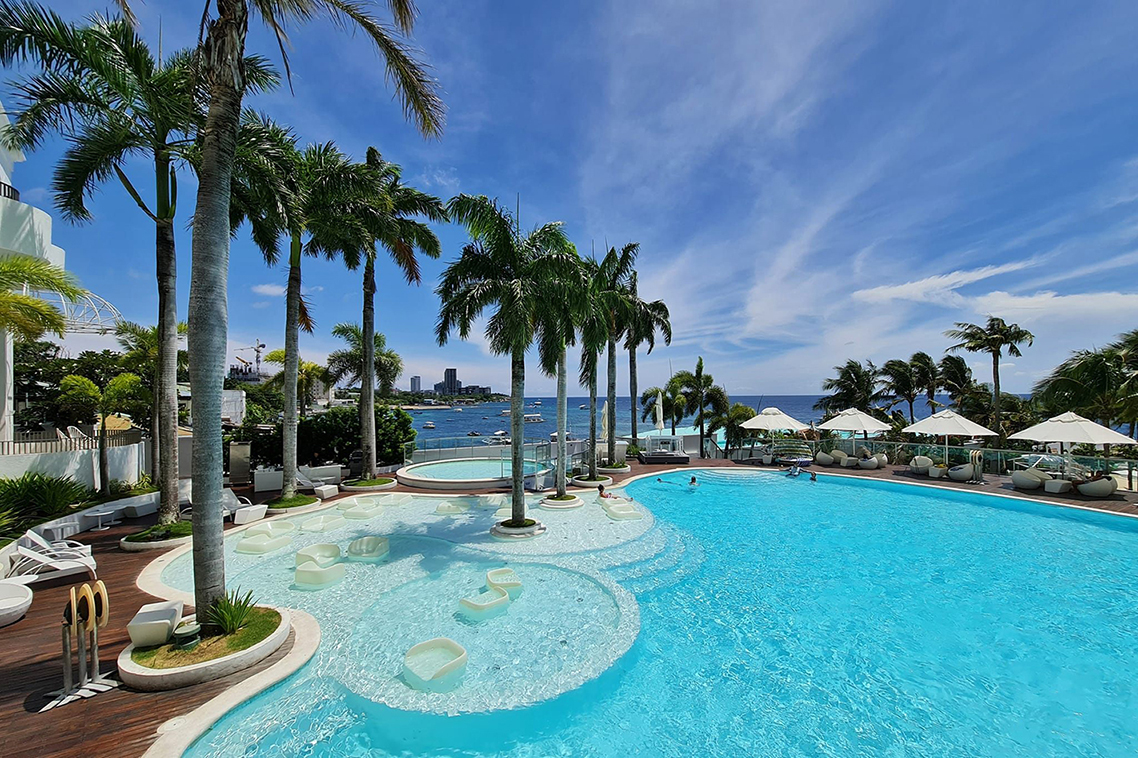
“Mactan is 100-percent ready for tourists in 2024,” Hotel Resort and Restaurant Association of Cebu, Inc. (HRRAC) assured in an official statement sent to GMA Regional TV News.
HRRAC said that Mactan hotels and resorts are now at 90-percent completion in their recovery phase from the devastation left behind by Super Typhoon Odette (international name: Rai) in December 2021.
”We’re ready to compete and be seen as a separate alternative island destination in 2024,” Bryan Connelly, general manager of JPark Island Resort, who also sits as HRRAC’s Member of the Board, said.
To recall, the Department of Tourism 7 reported in January 2022 of damages to tourism properties and establishments placed at P2.5 billion in Lapu-Lapu City alone caused by ST Odette.
With the typhoon wreaking havoc at the height of the COVID-19 pandemic, what used to be 1.8 million travelers to Lapu-Lapu, that contributed to over half of Cebu Province’s 3.3 million guests in 2019, were reduced to a total of 313,408 guests in Lapu-Lapu City, and 541,376 visitors to the province by the end of 2022, this according to the Lapu-Lapu Tourism Office.
Two years later, the island of Mactan is back on its feet.
Connelly shared that other than frequent individual travelers who enjoy leisure trips, resorts are also cultivating the meetings, incentives, conventions, conferences, exhibits, and events market segment.
Other than the winter-flyer market, they would make sure business continues as they “dedicate the island’s growing inventory for corporate functions, and brand activations.”
As for Simon Chew, general manager of Movenpick Mactan, he said that they have already started developing a stream of guest coming from Malaysia, Singapore, and neighboring countries as these are the travelers who do not only come to Mactan for leisure but also for retreats and other related trainings.
Maribago Blue Waters, for its part, will unveil 65 rooms with new restaurants and facilities that cater to the expected return of tourists and events, said Domiku Ugarte, its general manager. Ugarte said the property also aims to continue growing the Korean market and the other Southeast Asian countries.
Currently, Mactan thrives with 60 percent of guests coming from local destinations or nearby cities in the Philippines, HRACC underscored.
According to Brian Noel of Plantation Bay, “crucial to our growth in 2024 will be the introduction of more flights especially from new destinations like India.
“Easing of travel restrictions such as visa approvals from Japan and China will help encourage foreign nationals to include Cebu, Philippines in their travel plans for the coming year,” Noel added.
LESSONS
Foresight, resilience, and sustainability encapsulate the lessons industry leaders learned from the Odette experience.
John Kristoff Rafols of the Lapu-Lapu Tourism Office underscored “Anticipation. Prevention. Response.”
“Much of the effort transpires during the preparation stages the moment weather forecasts are announced. Response from the community is vital and collaboration between sectors will always be key,” he said.
For HRRAC Vice President for Resorts Josef Chiongbian, the general manager of Savoy Hotel Mactan, the organization can help facilitate centralized community relief efforts to manage resources better “as we aim to help spread out to a wider network of people in need.”
He envisions “extending specialized resources provided by specific industry partners to avoid duplication of same efforts in order to maximize value and coverage”.
Eya Shrimski, the general manager of Tambuli, pointed out the importance of having typhoon resilient communication systems, something that Shangri-La Mactan general manager Dave Junker agreed with.
Shrimski recalled how difficult it was to coordinate instructions when the typhoon downed communication and internet lines. What helped them was their satellite two-way radios.
Junker believes Mactan can benefit from underground power lines and communication distribution systems.
“With the lines going down, it would be a beneficial investment to consider construction of underground power lines and communication distribution systems moving forward,” he said.
Meanwhile, Didier Belmonte of Crimson said “Green Sustainable Architectural Designs, when done right, proves to last longer.”
“We’ve rebuilt our facilities differently by paying attention to the natural occurrence of the elements making it stronger and resilient to harsher conditions,” he said.