






Mataasnakahoy, a charming and vibrant municipality in Batangas, kicked off 2026 simultaneous to the observance of its 94th founding anniversary from January 1 to 3 – a festivity that celebrated its rich history, community pride, and simple but lively tradition.
The municipality, occupying 19.66 square kilometers or 2,409.59 hectares of land from end to end, observed not only another year of togetherness for its residents across 16 barangays, but also a significant milestone in local governance and comprehensive rise.
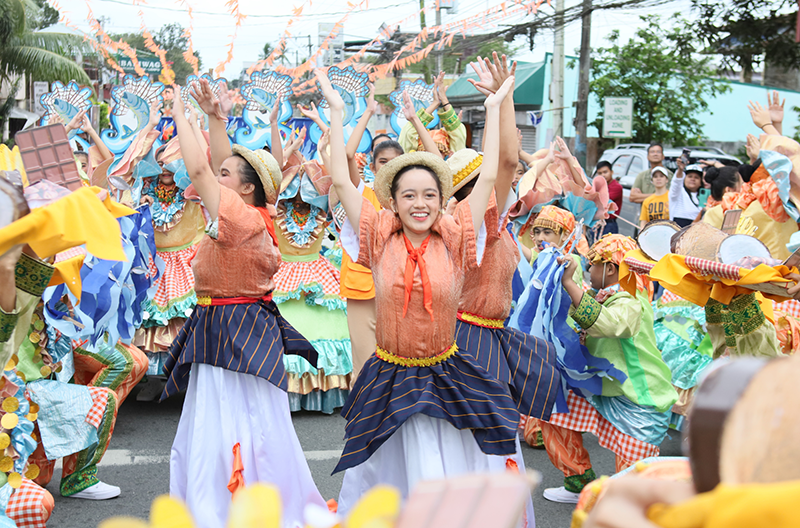
Mataasnakahoy’s charter anniversary was highlighted by the coronation of the Ginoo at Binibining Mataasnakahoy Turismo 2026 on the first day, the Street Dance Competition on the second, and the grand parade of colorful floats on the last day.
The three-day bonanza carried a distinctly Mataasnakahoy spirit and culminated with a star-studded Kapuso Fiesta with performances from Kapuso artists Jennifer Maravilla, Lee Victor, Bryce Eusebio, Prince Carlos, Hannah Precillas, Arra San Agustin, and EA Guzman.
Mataasnakahoy is bordered by the 100th Training Wing of Fernando Air Base in Lipa City on the southeast and Barangay Banay-banay and Bagong Pook on the southwest. The Taal Lake sits on its northwestern region, while the municipality of Balete, Batangas covers the northeast.
It is composed of five urban and 11 rural barangays, each composed of puroks and, in some areas, sitios. Sitting at an elevation of 379 meters, the municipality is known for its cool climate, a defining feature that continues to draw visitors and shape daily life.
LEGEND OF HEALING
The municipality’s local folk tale narrates how Mataasnakahoy emerged from being the breeding spot where a miraculous fruit tree that produces a radiant fruit with an equally powerful healing power was found.
According to the legendary story, two brothers embarked on a journey to find a wondrous fruit for their severely ill mother who one night dreamt of the super fruit.
The tree was astoundingly towering, but no fear nor height could prevent the brothers from reaching for the fruit no matter the risk. Their valor and persistence paid dividends as their mother’s strength returned upon taking the magical food, prompting other villagers and nearby communities to acknowledge the tall tree’s sprouting place as the “Mataasnakahoy.”
HISTORY
Mataasnakahoy’s process of becoming a municipality began in 1862 when Lipa’s then-Municipal Captain decided to name it after a 100 meter-high tree that fell during a typhoon, in accordance to a municipality-wide ruling that elevated populous villages into barrios.
It was in March of 1931, however, when Mataasnakahoy alongside another barrio pursued independence and separation from Lipa, forming an independent municipality.
Everything was formalized in January 1932, as Mataasnakahoy officially attained its independent municipality status on the very first day of that new year, with Antonio M. Mandigma being declared the first Presidente Municipal.
Since this momentous period of municipal separation, Mataasnakahoy went through the ebbs and flows of the changing periods during a rather tumultuous period in Philippine history, marked by rampant deaths and widespread starvation during the American occupation, and chaos, and desolation during the Japanese period.
Over time, the Batangueños’ communal action and their shared vision for a more vibrant and effervescent Mataasnakahoy slowly but surely erected the highly touted community that it is now – streets busier, residents livelier, and a collective future apparently brighter.
As Mataasnakahoy looks beyond this year’s anniversary, the January 3 celebration stood as a reminder of the town’s shared identity that is grounded in its geography, strengthened by its barangays, and sustained by a community that continues to celebrate progress together.