
GUIDE: What to do after testing positive for COVID-19
Around GMA
Around GMA
Marcos delivers aid to Davao provinces a day after SONA 2026 #SONA2026 Marcos says Davao City ‘Love Buses’ going electric Discounted fares on LRT-2, MRT-3 remain in effect amid Middle East crisisArticle Inside Page
Showbiz News
Take a look at the guidelines developed by the University of the Philippines College of Medicine Class '91.
It's been more than a year since the COVID-19 pandemic began but the battle against the dreaded disease is far from over. Despite the hope that the COVID-19 vaccines offer, we still find ourselves worrying as new and active cases hit record-breaking numbers recently.
It seems like every day COVID-19 gets closer and closer to home and nowadays we're saying “Get well soon” and “Condolences” more than “Happy Birthday” and “Congratulations.”
Moreover, as a result of the growing numbers in new and active cases, most of the hospitals have already reached their full capacity. We've heard of stories lately about people going to ten hospitals or more and failing to find one that can accommodate them or having to wait in line for hours or days to get admitted.
This is why several local government units and private companies have taken the initiative to establish more quarantine facilities for those with mild symptoms, so that hospitals will have room to treat the severe cases.
Also, those who are asymptomatic or showing no symptoms of COVID-19 and those with mild symptoms are now advised to undergo home care during their recovery.
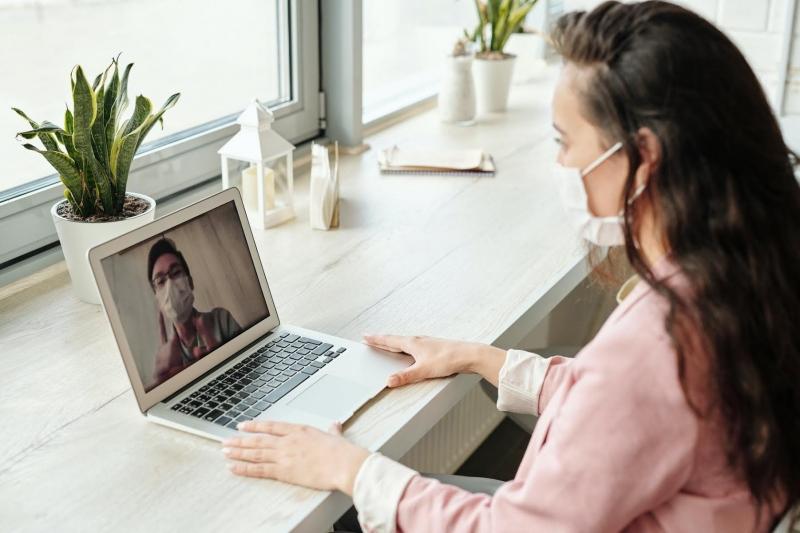
What should you do after testing positive for COVID-19? / Source: Pexels
In line with this, the University of the Philippines (UP) College of Medicine Class 1991 developed a COVID-19 home care algorithm to serve as a step-by-step guide for individuals who tested positive for COVID-19 or have high risk exposure.
So, if you just tested positive for COVID-19 or were exposed to someone who has COVID-19 and are not sure what you should do, here are helpful guidelines for you.
Asymptomatic and/or exposed to COVID-positive person
If you are currently not experiencing any symptoms but was exposed to a COVID-19 positive person, all you need to do is to quarantine for 14 days and monitor yourself for symptoms. The same thing should be done even if you tested negative in the COVID-19 RT-PCR test on day five to seven.
Make sure to undergo single room confinement, use a separate toilet and bath from the rest of your family or housemates, have no contact with others, and don't share utensils.
COVID-19-positive and/or with symptoms
If you are experiencing symptoms such as fever, chills, difficulty breathing, myalgia, malaise, cough, sore throat, headache, nasal congestion, loss of smell, loss of taste, diarrhea, nausea or vomiting, you should undergo a RT-PCR test immediately to know your status.
If your test comes back as positive, the first thing you should do is to isolate. Plus, perform contact tracing and let people you've been in contact with know of your status so they can also have themselves tested.
While undergoing home care, you should do teleconsultation and continue to monitor your symptoms and vital signs, including SpO2 four times a day.
If you have fever and body aches, take paracetamol. Plus, you should continue taking maintenance medicines for your pre-existing disease, if any.
If your symptoms don't progress or become worse, complete at least 10 days of isolation from the onset of symptoms.
If you begin to experience severe dyspnea or shortness of breath, altered mentation (confusion, lethargy, behavioral changes), increasing weakness, chest pain and unstable vital signs, then that's the time you should go to an emergency room.
Negative test result
Even if you tested negative for COVID-19, you should undergo quarantine if you are experiencing symptoms and/or was exposed to someone who tested positive. Remember that there are those who will test negative during the first few days of exposure.
Monitor your symptoms and should they progress, have yourself tested again, just to be sure. If it still comes back negative, do teleconsultation to work-up for other diseases.
If you need a visual guide on what to do, see the COVID-19 home care algorithm created by UP College of Medicine Class '91 below, as shared by the Philippine General Hospital or UP-PGH.
For more lifestyle content, head out to GMA's Lifestyle page.
Check out the gallery below of Filipino celebrities who are COVID-19 survivors.
