

 GMA Brandtalk
 Tracking
 Archives

EXPLAINER: What are grave threats under Philippine laws?
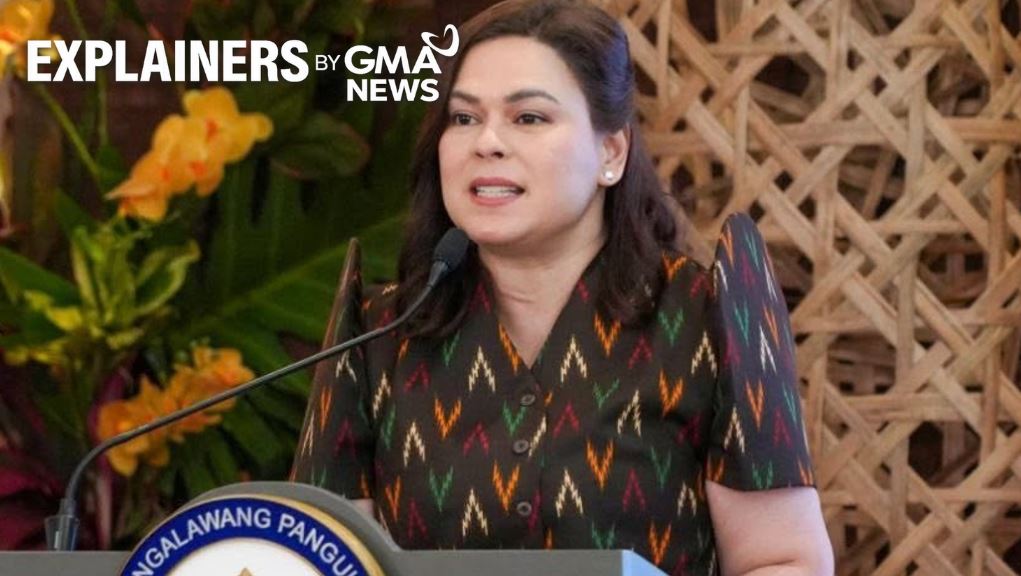
A Quezon City court has issued an arrest warrant against Vice President Sara Duterte in relation to the public threats she made against President Ferdinand Marcos Jr., First Lady Liza Araneta-Marcos, and former House Speaker Martin Romualdez — but what exactly are the charges lodged against her?
In the arrest warrant issued against Duterte, she is charged with three counts of “Grave Threats in Relation to Section 6 of Republic Act No. 10175”.
Under the law, someone who has committed grave threats is defined in Article 282 of the Revised Penal Code as “any person who shall threaten another with the infliction upon the person, honor or property of the latter or of his family of any wrong amounting to a crime.”
Simply put, telling another person that you plan to commit a crime against them can also be a crime.
In 2024, Duterte publicly said that she has already hired a hitman to kill Marcos, Araneta-Marcos and Romualdez in case she is killed. The same public threats are also the subject of one of the articles of impeachment lodged against her.
In the Revised Penal Code, the penalty for the act is the next degree lower than the crime the perpetrator threatened to commit.
But Duterte is not being charged for simply violating the Revised Penal Code. The arrest warrant specifically cited the alleged violation of RA 10175: the Cybercrime Prevention Act of 2012.
Section 6 of the Cybercrime Prevention Act states that: “All crimes defined and penalized by the Revised Penal Code, as amended, and special laws, if committed by, through and with the use of information and communications technologies shall be covered by the relevant provisions of this Act.”
“Provided, That the penalty to be imposed shall be one degree higher than that provided for by the Revised Penal Code, as amended, and special laws, as the case may be,” the law added
This means that if a crime prescribed in the Revised Penal Code is committed through the internet or the computer, it is still covered by the Cybercrime Prevention Act. More than this, it means the penalty the suspect faces is higher than that provided in the Revised Penal Code.
Duterte made the threats during an online media briefing, placing them under the umbrella of the Cybercrime Prevention Act. This also increased the degree of the act.
The Vice President’s bail is P120,000 for each of the three counts of grave threats in relation to the Cybercrime Prevention Act. —LDF, GMA News

