

 GMA Brandtalk
 Tracking
 Archives

Marcos: ASEAN leaders call for immediate peace in Middle East
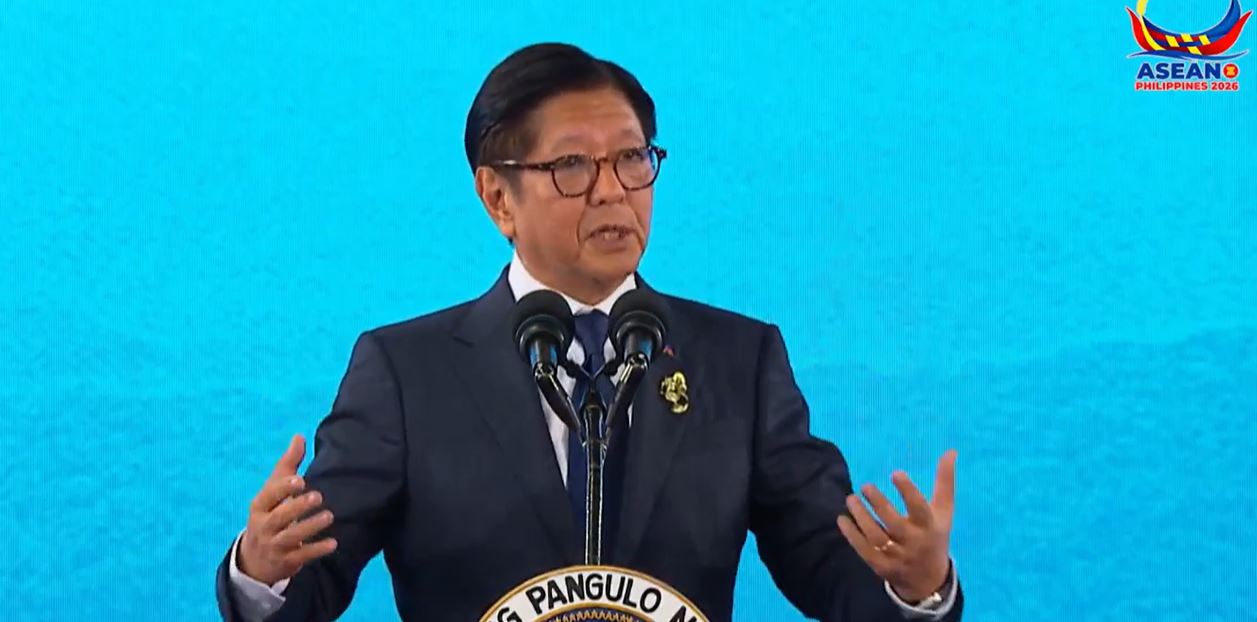
LAPU-LAPU CITY — Leaders of member nations of the Association of Southeast Asian Nations are calling for peace in the Middle East, President Ferdinand “Bongbong” Marcos Jr. said on Friday.
Marcos said this in a press conference following the 48th ASEAN Summit and Related Meetings.
“Again, until the fighting ends, until the bombings end, it is very difficult to put together any kind of solution—if you want to call it that. That is why the call essentially is peace now,” Marcos said.
Marcos said the ASEAN foreign ministers have already put out that document, "calling all parties to cease hostilities, and to take a step back, open the Strait of Hormuz, and find a way for a lasting peace. This is between the US, Israel, and Iran."
Marcos said that the current situation is very difficult and nothing will be achieved until there is peace.“We’re now in this limbo situation where we don’t know how long it’s going to last, we don’t know when the next encounter is going to be. Is the ceasefire on? Is it not on? Is Israel included? Is Hezbollah included? It’s a very difficult situation,” Marcos said.
In a joint statement issued Friday night, ASEAN leaders expressed deep concern over the situation in the Middle East, which “poses a grave threat to the lives and safety of civilians, as well as to regional and global peace and stability.”
They also urged all parties involved to maintain conducive conditions for the full and effective implementation of the ceasefire, by exercising utmost restraint, ceasing all hostilities, and avoiding any acts that may aggravate the situation.
“We underscored the importance of maintaining regional peace, stability and prosperity, upholding international law, and promoting genuine dialogue and diplomacy in addressing conflicts and tensions, including the need for a complete and immediate cessation of hostilities across all fronts in the Middle East,” the ASEAN leaders said.
Likewise, the leaders stressed the importance of maintaining maritime safety and security and upholding freedom of navigation.
“We expressed deep concern over any discriminatory or unilateral measures, that may impede or obstruct vessels passing through the Strait of Hormuz, or any straits used for international navigation, which are inconsistent with international law, as reflected in the 1982 UNCLOS,” they added.
Marcos earlier called on fellow heads of state of ASEAN to find the best course of action for the region amid the ongoing conflict in the Middle East.
He said that the conflict has disrupted maritime and air transport routes, heightened risks to merchant and noncombatant vessels and aircraft, and affected the flow of energy and essential goods. –NB/VBL, GMA News
