

 GMA Brandtalk
 Tracking
 Archives

Marcos to ASEAN leaders: Study adjustments, best approaches amid Middle East conflict
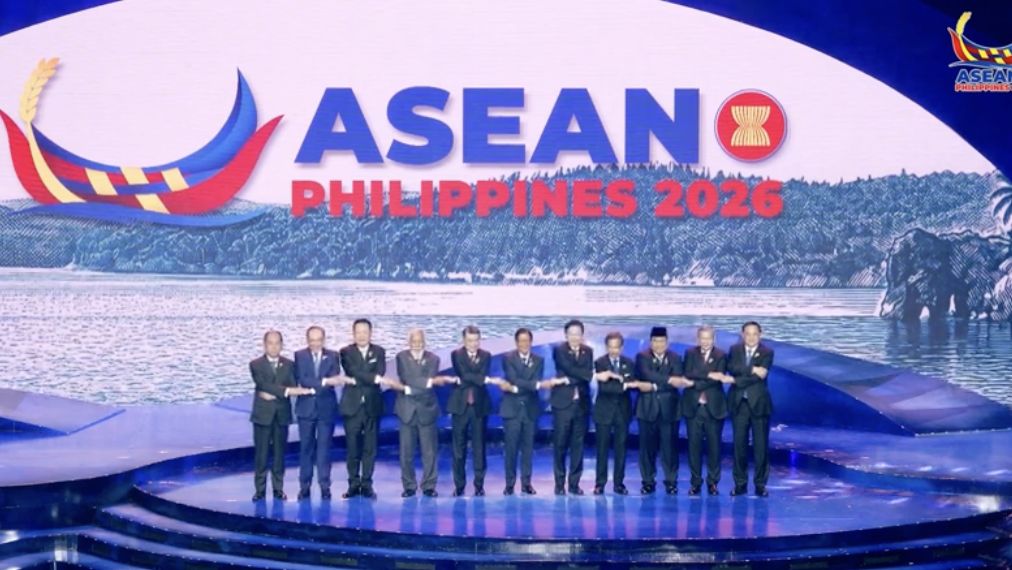
LAPU-LAPU CITY, Cebu — Philippine President Ferdinand “Bongbong” Marcos Jr. on Friday called on fellow heads of states of the Association of Southeast Asian Nations (ASEAN) to find the best course of action for the region amid the ongoing conflict in the Middle East.
During the opening ceremony of the 48th ASEAN Summit and Related Meetings, Marcos emphasized that the leaders meet at a time of “considerable challenge” due to the impacts of the tensions in the Middle East on the people.
“The increasingly volatile situation in the Middle East has impacted our region, challenging us to remain agile in the face of uncertainties which threaten lifestyles, livelihoods, and lives,” he said.
“Over the past months, each of our countries has had to make adjustments to modify our approaches. So we come together now to study those adjustments, to find the best approaches, to face the future, together,” he added.
Marcos said that many people in ASEAN look up to their leaders not only for stability but also for reassurance and hope amid these trying times.
“The work of ASEAN must continue, not despite the challenges, but because the times demand our answers to those challenges for our peoples, for our countries, for ASEAN,” he said.
Stop the fighting
During the 48th ASEAN Summit Plenary, Marcos also pointed out that the Middle East conflict has disrupted maritime and air transport routes, heightened risks to merchant and noncombatant vessels and aircraft, and affected the flow of energy and essential goods.
With ASEAN’s longstanding commitment to peace, the Philippine President said that member-states push for the “immediate cessation of hostilities, the peaceful settlement of disputes, the protection of civilians and civilian infrastructure, and the restoration of safe, unimpeded and continuous transit passage in the Strait of Hormuz.”
Amid the challenges, Marcos said that ASEAN leaders should work together to ensure regional energy security and resilience, stabilize food security, and uphold the safety of ASEAN nationals.
“Today, we gather to confront with unity and resolve the repercussions of the situation in the Middle East and seek to advance our common commitment to peace, stability, and prosperity while ensuring that the benefits of our cooperation are felt by all our peoples,” he continued.
All heads of state of the ASEAN member-countries are present in the summit, except for Myanmar who is represented by its Permanent Secretary of the Ministry of Foreign Affairs.
Aside from the Marcos, others present are
- His Majesty Sultan Haji Hassanal Bolkiah Mu’izzaddin Waddaulah of Brunei Darussalam
- Cambodia Prime Minister Samdech Moha Borvor Thipadei Hun Manet
- Indonesia President Prabowo Subianto
- Lao PDR Prime Minister Sonexay Siphandone
- Malaysia Prime Minister Dato’ Seri Anwar bin Ibrahim
- Myanmar Permanent Secretary of the Ministry of Foreign Affairs U Hau Khan Sum
- Singapore Prime Minister Lawrence Wong
- Thailand Prime Minister H.E. Anutin Charnvirakul
- Timor-Leste Prime Minister Kay Rala Xanana Gusmao
- Vietnam Prime Minister H.E. Lê Minh Hưng
Coordination challenge
ASEAN economic ministers met in Cebu on Thursday and "identified practical, concrete response measures" to ensure energy and food security, according to a chair statement, but the proposals lacked specific details.
They included diversifying suppliers and routes and developing a crisis communication protocol, but it was unclear what, if any, action might be taken.
The region, with a population of nearly 700 million people and economies worth a combined $3.8 trillion, faces significant risks from the fallout of the Iran war, and the Philippines—among the first countries in the world to declare an energy emergency—has pushed for approval of a voluntary, commercial-based ASEAN oil-sharing framework agreement.
But coordination remains a big challenge for ASEAN. Despite rapid growth of its individual economies, integration has been slow, with vast differences between its 11 members and no central authority to ensure compliance with ASEAN agreements and initiatives.
The ASEAN leaders will hold a retreat on Friday and are expected to call for a negotiated settlement between the United States and Iran as well as a reopening of the Strait of Hormuz, a conduit for about 130 vessels a day and a fifth of the world's oil and gas supplies prior to the conflict.
Leaders will urge ASEAN members to complete the domestic processes required to approve a fuel-sharing pact, ensuring its "earliest possible entry into force", according to a working draft of a statement seen by Reuters on Thursday. —with reports from Reuters/AOL, GMA News

