






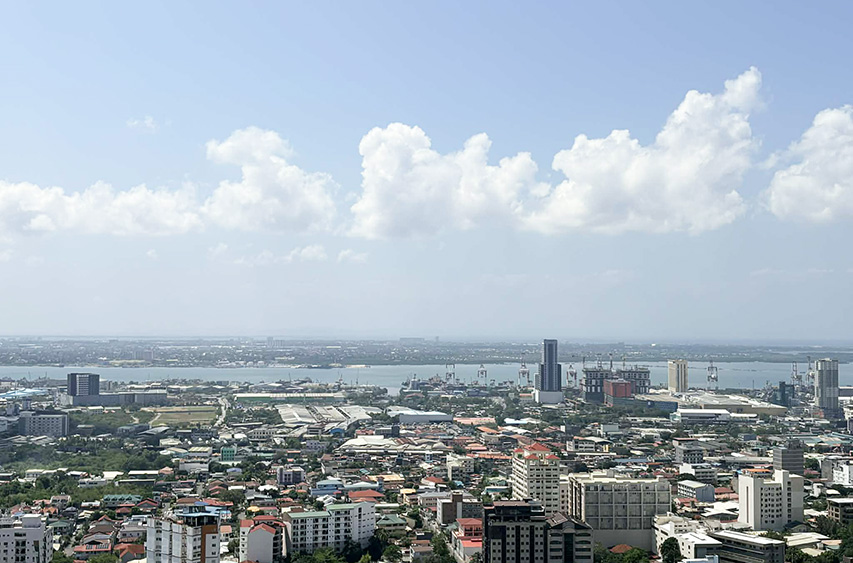
The air quality in Metro Cebu has improved to "fair" on April 22, 2026 from "very unhealthy" the past days, according to the Environmental Management Bureau (EMB) of the Department of Enrivonment and Natural Resources (DENR).
"We are pleased to report a significant and continued improvement in air quality across Metro Cebu. As of today, the persistent haze that affected the region over the past week has largely dissipated," EMB said in a Facebook post on April 22.
The bureau said "the improvement is driven by sustained local wind speeds and natural ventilation, which have effectively dispersed the trapped PM2.5 (fine particulate matter) that had reached critical levels on April 19."
Because of this, EMB's Talisay City Station, which recorded the air quality at peak levels of 199 (Very Unhealthy) has dropped the AQI level to 98, thus, the air quality classification is now under a "fair" or moderate category.
But EMB said that while the air is much clearer, an AQI of 98 remains at the upper end of the "Fair" range. It has advised the following:
- SENSITIVE GROUPS: Children, the elderly, and individuals with asthma or cardiovascular conditions may still experience slight discomfort. It is recommended to reduce heavy or prolonged outdoor exertion until levels drop further into the "Good" range.
- GENERAL PUBLIC: Most people can resume normal outdoor activities. However, please remain mindful of any unusual coughing or throat irritation.
- PROTECTION: The strict recommendation for N95/KN95 masks is now lifted for the general public, though sensitive individuals should keep them on hand if planning to be near high-traffic areas.
The public, EMB said, can help maintain air quality and can help prevent a localized "re-build" of pollutants through the following:
- Avoid Open Burning: Refrain from burning garbage, leaves, or agricultural waste (pagsunog), as this releases high concentrations of PM2.5 directly into the breathing zone.
- Vehicle Maintenance: Ensure that vehicles are well-maintained to reduce excessive smoke emissions.
- Reduce Idle Time: Turn off engines when vehicle is parked or while waiting for extended periods to lower roadside emissions.
- Report Fires: Report localized grass fires or illegal burning immediately to the local Bureau of Fire Protection (BFP) or city environment office.
The haze that settled over Metro Cebu since April 17, 2026, EMB has said, may have been caused by the following factors:
- In very hot weather, high-pressure systems often lead to stagnant air. Without strong winds or rain to "wash" the atmosphere, pollutants from vehicles and industry don't disperse and hover over the city, creating the hazy conditions obseved in Talisay City and Cebu City.
- Zero Dispersion: A total lack of wind means that smoke, vehicle emissions, and dust are not being blown away; instead, they are accumulating directly in the air people breathe.
- Localized Emissions from vehicles and road dust
- Other area sources, such as grass fires (SRP Area) and residential/commercial fires (Pahina Central)