






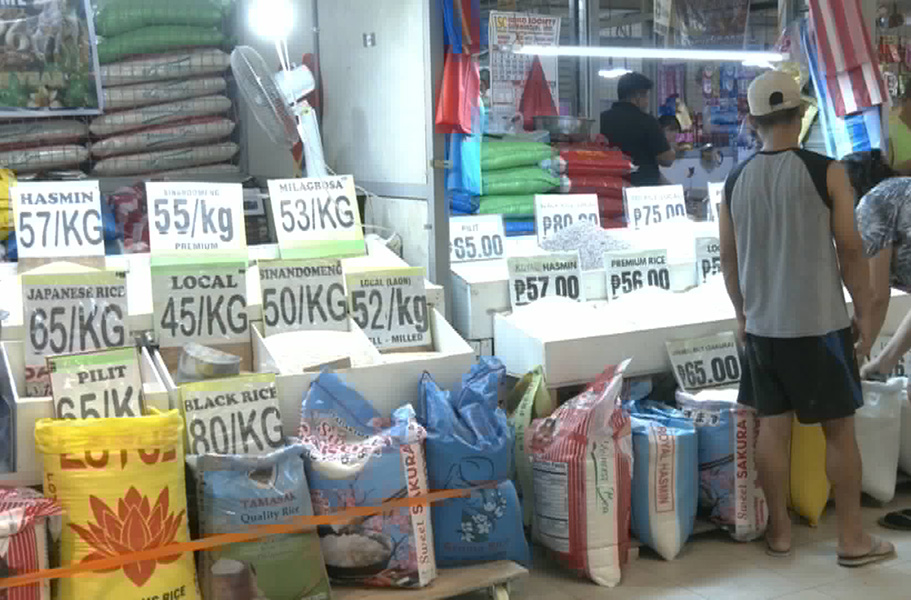
Consumers may have to bear the added burden of paying for higher price of rice for the next four months.
The Department of Agriculture in Region 6 said it expects prices to go down by August when a fresh harvest of rice, those that will be planted in May 2026, becomes available.
“Nagsa-start na sa land preparation ang ating farmers. So ini-expect natin na tataas talaga ang presyo. Hanggang August pa ‘yan kasi August pa ang start ng harvest kung matatanim sa May. Diyan natin ini-expect na bababa ang presyo," said Maria Teresa Solis, Regional Technical Director of Operations Management of DA-6.
But the challenge does not end there. Because the prices of fuel, particularly diesel, have gone up, transport cost from farm to the milling facility has also gone up.
“Ang ating problema ngayon, tumaas ang (presyo) diesel so mataas ang transport cost from the farm to rice mill to market,” Solis said.
Based on monitoring by DA-6, the price of regular milled local rice has gone up to P54 per kilo from P50 per kilo.
Well milled rice is at P56 per kilo.
The price of premium local rice remains stable.
Meanwhile, the price of imported Japanese rice has gone up by P13. From P55 per kilo on March 31, 2026 the price has gone up to P64.
But DA-6 assured imported rice does not go straight to Region 6 and will not compete with rice produced locally.
“Hindi ‘yan direct na in-import dito sa Region 6, kungdi dumaan sila sa other ports outside Region 6,” Solis said.
For Ma. Nora Lingho, a consumer, the best thing to do is to make sure the rice her family buys does not go to waste.
“Tipid-tipid lang muna. Ini-estimate muna sa pamilya. Bibili pa rin talaga kasi wala tayong kakanin kung hindi tayo bibili,” she said.