






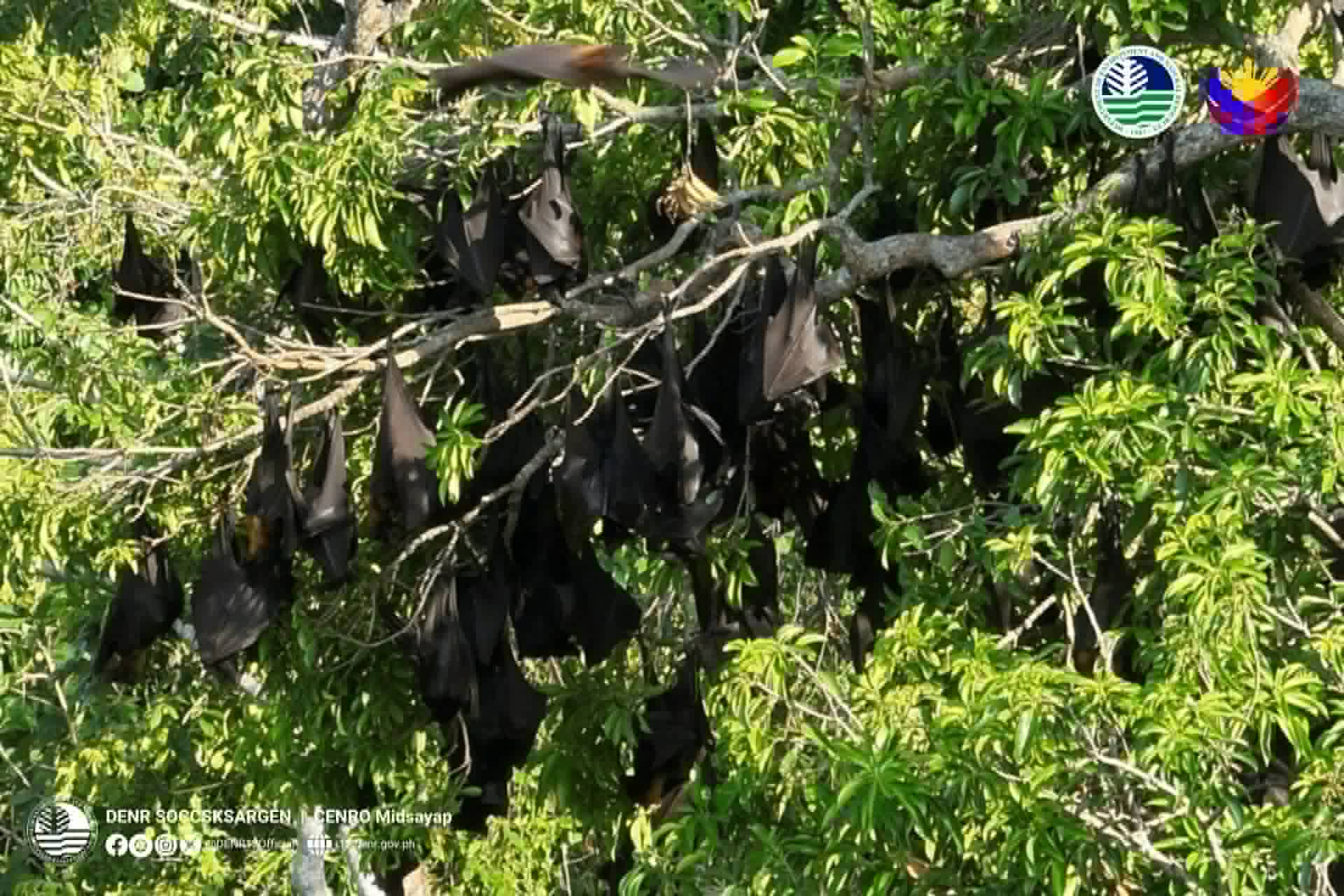
Around 160,000 flying foxes were recorded in a forest area in Banisilan, Cotabato following a two-day population count and roost site assessment.
The Department of Environment and Natural Resources-SOCCSKSARGEN (DENR-12) Community Environment and Natural Resources Office (CENRO) Midsayap, in coordination with the Municipal Environment and Natural Resources Office (MENRO), barangay officials, and on-the-job trainees from a school, led the monitoring, which included fly-out counts and evening dispersals.
DENR-12 said the discovery represents one of the largest recorded concentrations of fruit bats in the region, highlighting the ecological importance of the area.
During the activity, at least three species were identified in the site: the critically endangered golden-crowned flying fox, the endangered large flying fox, and the island flying fox.
A significant number of young bats were also observed, indicating that the forest serves as an important breeding and nursery habitat.
The team documented a “rush hour” dispersal pattern beginning at around 5:30 p.m. and peaking at around 5:50 p.m. when large numbers of bats filled the sky until nightfall.
“Researchers also observed a notable behavioral shift, with bats flying higher above the forest canopy compared to previous low-level navigation. Environmental officials describe these animals as ‘silent reforesters’ due to their critical role in seed dispersal and forest regeneration,” DENR-12 said.
“With the colony not only stable but actively growing, authorities stress the urgent need to protect Sitio Kalantay’s habitat to ensure the continued survival of these species and the ecological balance they support,” DENR-12 added.