





Killings linked to the war against illegal drugs, online harassment and red-tagging of human rights defenders, killings of journalists, and delays in the recognition of ancestral domain for indigenous peoples (IPs) are among the continuing human rights concerns in the Philippines.
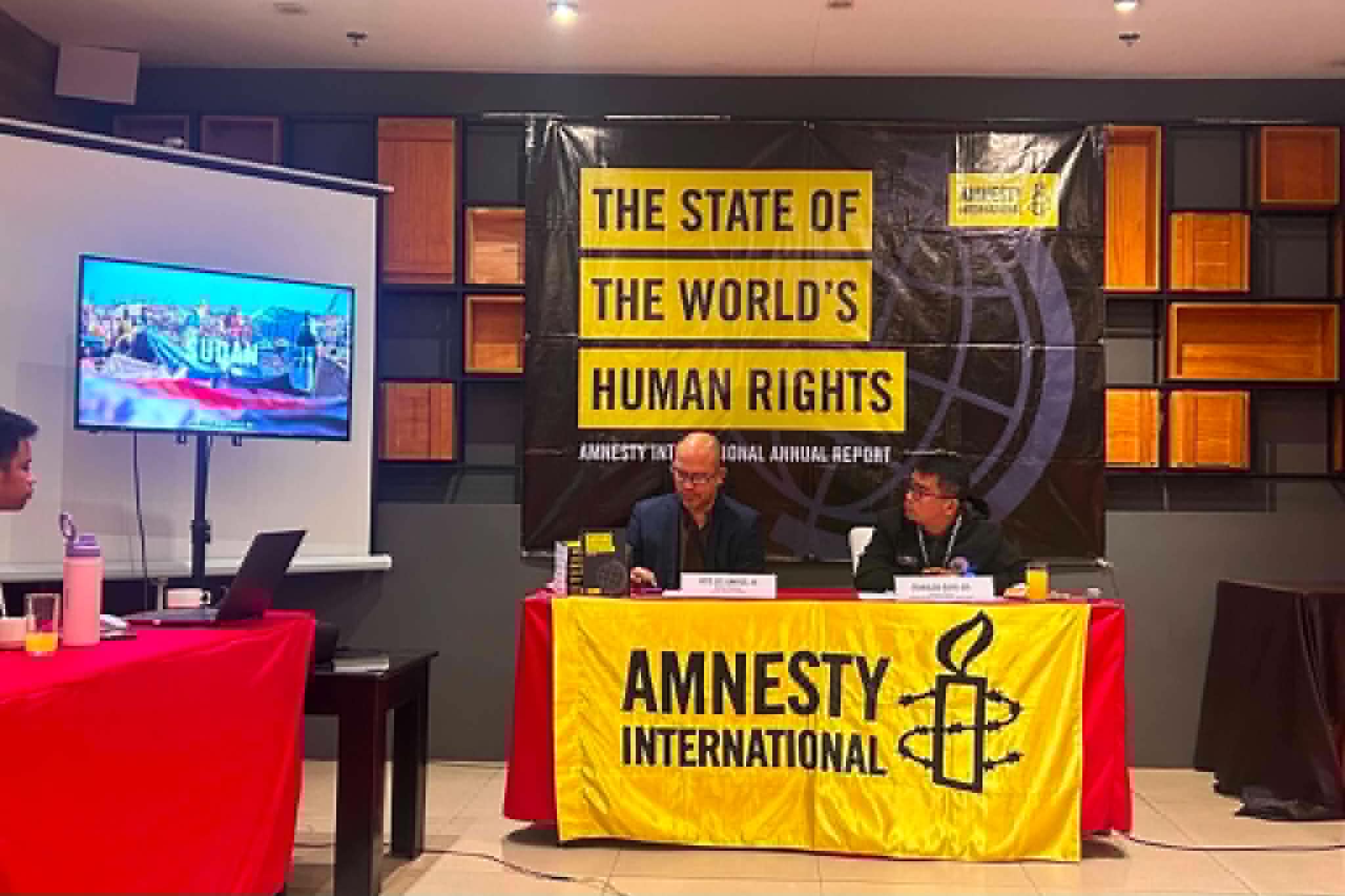
According to Amnesty International during its visit in Cagayan de Oro City, these are only a few of the human rights violations experienced in the country from 2025 to 2026.
The group visited the city to present the results of its studies, including the initiatives and actions it has undertaken.
According to Amnesty International, one of the most common issues faced by human rights defenders in the country is persistent harassment due to their advocacy for the protection of individual rights.
“Nakalagay nga sa ating Constitution na obligasyon ng ating estado through our government o pamahalaan na irespeto, protektahan at i-fulfill ang karapatan ng bawat Pilipino, bawat tao na andito sa Pilipinas. We can only do so much, admittedly, but we will not stop issuing public statements, we will not stop asking audiences before relevant government agencies,” Amnesty International PH Section Director, Ritz Lee Santos III, said.
Another concern identified by the group is the continuing harassment and red-tagging of human rights defenders, whether online or in person, with some cases reportedly resulting in deaths.
“Ang nakakalungkot ay maraming sitwasyon na parang weaponizing the law against activists and journalists at parang without necessarily having a goal na ma-convict,” Santos added.
GMA Regional TV One Mindanao is reaching out to authorities for a statement, as of this writing.
Police said earlier that in all its operations against illegal drugs, its personnel observe and uphold human rights, provided that officers are not placed in danger.
The Department of National Defense (DND) under which the Armed Forces of the Philippines (AFP) operates, has also said that it adheres consistently to human rights standards while carrying out its mandate of protecting the country against terrorism.
Meanwhile, the National Commission on Indigenous Peoples (NCIP) in Bukidnon continue to call on the government to address their long-standing concerns and challenges that have remained unresolved for years.
“I would like to ask also especially our government that they can have more funds on the titling of ancestral domains because that is one of the reasons (of the difficulty of) the titling of the certificate of ancestral domain title because there is no such fund for the processing of the ancestral domain,” NCIP Bukidnon Provincial Officer, Ronaldo Baya-on, said.
The groups have urged the House of Representatives and the Senate to pass the Human Rights Defenders Protection Act, which seeks to provide protection for activists, environmental defenders, journalists, and government critics.