

 GMA Brandtalk
 Tracking
 Archives

Kwentong Kapuso: The food cravings I carry with me
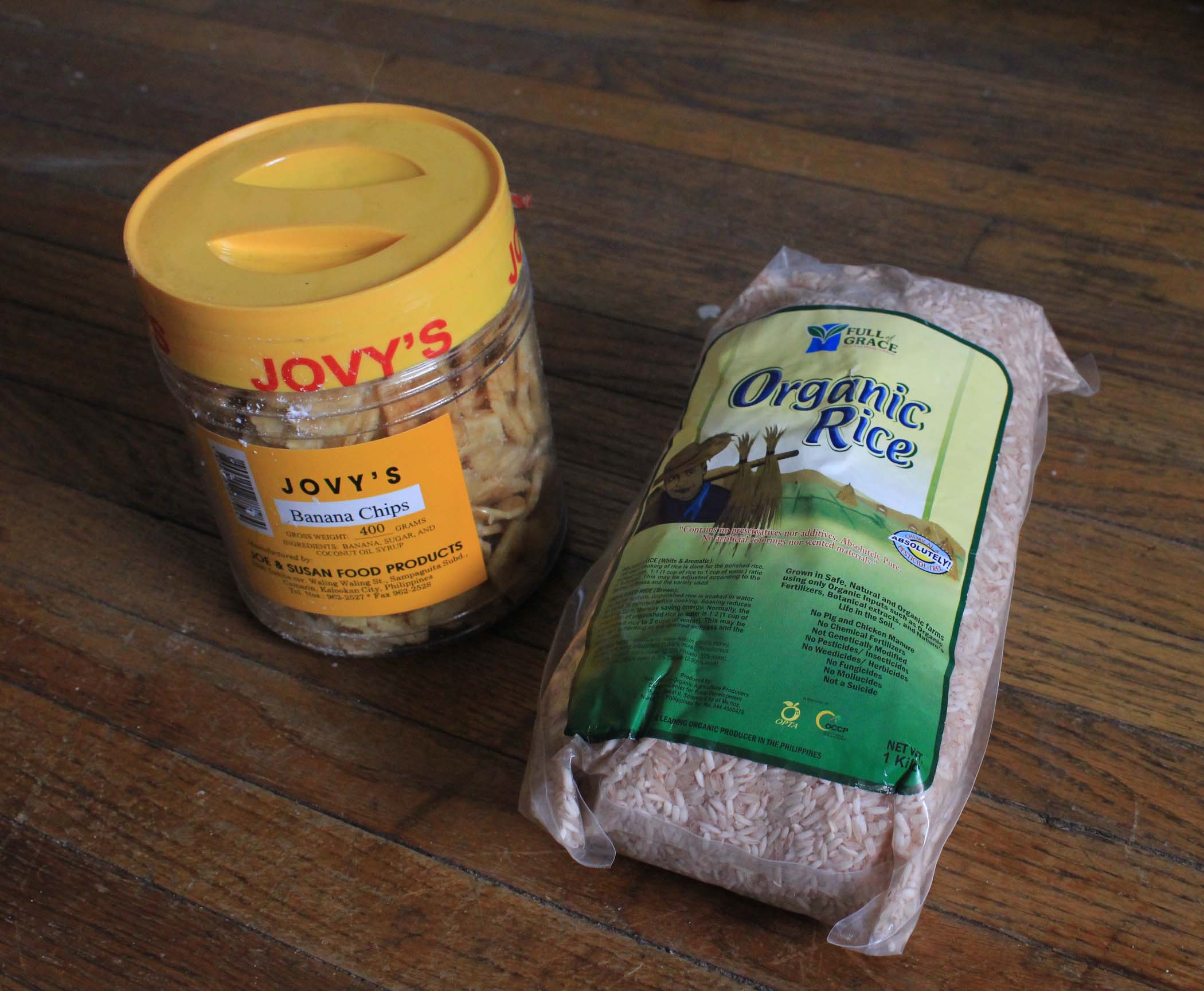
The malunggay pesto survived in my baggage. So did the coco jam, and the kilo of organic rice from the Salcedo Market. And the five rolls of tablea tsokolate. On my flight from Ninoy Aquino Airport to Narita, I didn’t think it was enough. I asked the Pinay flight attendant if she had any extra packets of the Cebu dried mangoes served with the in-flight meal. I don’t know if she noticed my stricken face, or if she’s used to passengers’ stricken faces upon their leaving Manila, but she brought me six packets of mangoes, piling them onto my tray table with a small smile. I tucked them away into every empty pocket I had left, my carry-ons already at capacity with books and snacks—everything from my literal motherland I could possibly carry with me. 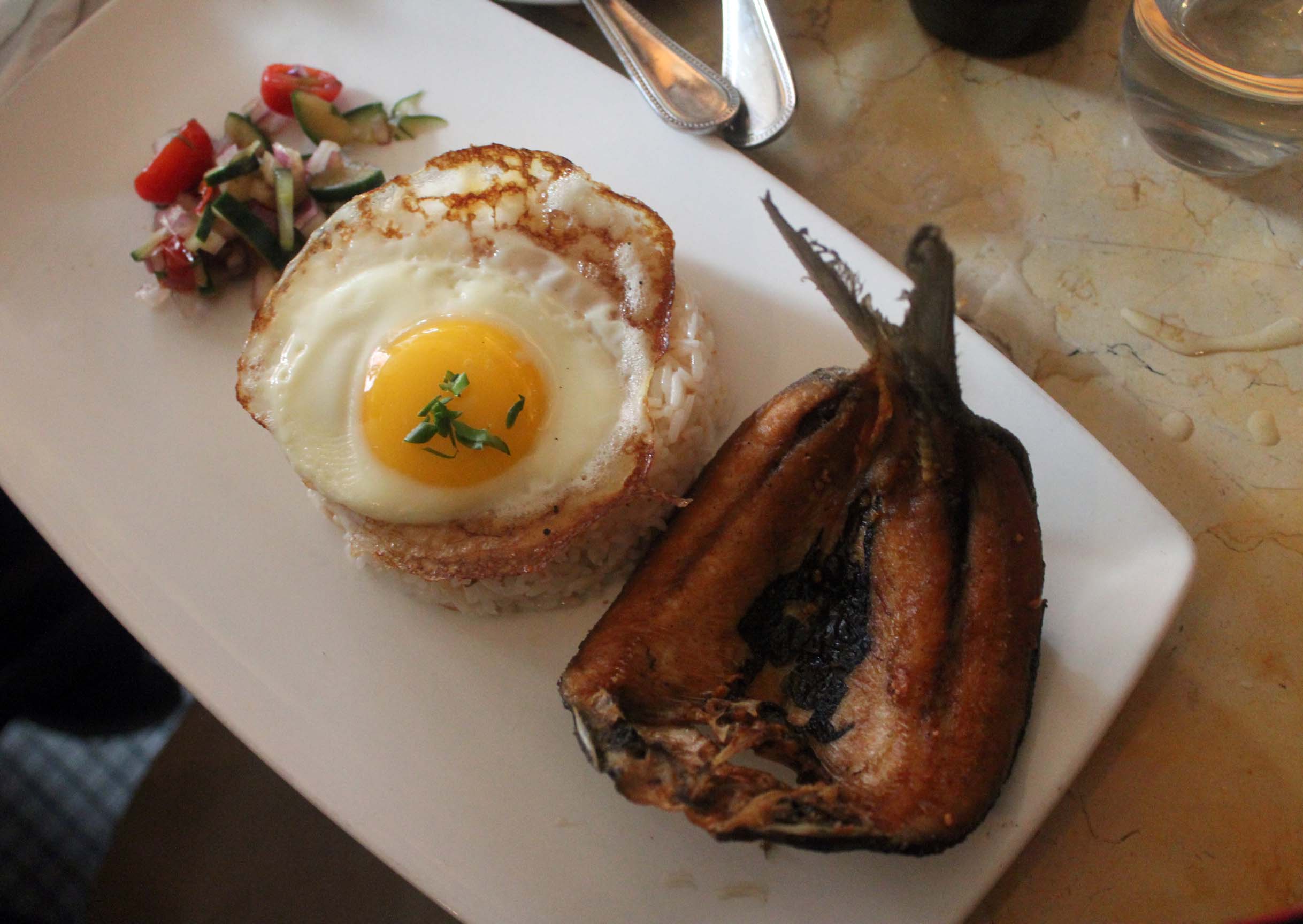 After seven months in the Philippines on a Fulbright grant, returning to graduate school at the University of Iowa is my obligation and my privilege. But the cravings that strike me now are the most visceral manifestations of homesickness I've ever known. When I think of breakfast, I want only silog, or pan de sal, or taho. When I think of condiments, I want only vinegar or calamansi or banana ketchup. I wake up craving every variation of pork that Filipinos do so deftly and heart-stoppingly: bagnet from Malate. Sisig from Trellis. Lechón from anywhere. I’ll never claim that my transition from the Philippines ever approaches the intensity of separation that my mother and her siblings endured, when they moved to California in the 1970s, never to live in Taguig again. I'll never claim to know the pangs of OFWs, stationed abroad for decades on end, often alone, in the service of their families. But my experience of leaving the Philippines after calling it my home for seven months—my mini-migration, if you will—has taught me that one sorrow of binationalism is not only leaving a world behind you. It’s the burden of carrying an entire world inside of you, with no immediate way to put it down, or return. Food becomes the closest way of accessing this world—a physical transporting that doesn’t involve a plane. It’s not an experience easily translatable to someone whose feet, and tongue, are firmly planted in only one culture. But I understand more deeply, now, why some pot of adobo was always on the stove when I visited my aunts and uncle; why my mother always left rice in the rice cooker at room temperature, why trips to the Filipino market an hour away in Northridge immediately put my mother in a better mood, had the feeling of a celebration. I have my own menu of foods I miss now, that I must attempt to recreate in order to manage my homesickness. I can’t go for the fatty, melt-in-your-mouth pork adobo at Adarna, or order the hissing, perfectly textured sisig at Trellis. I can’t walk ten feet to my corner carinderia for a thirty-peso plate of adobo. Or stop at a buko vendor for fresh cracked coconut juice. I can’t press my fingers around a small green calamansi, or wait grinningly for a plate of coconut crabs at the Cubao Dampa.
  But in New York City, where I spend a week before flying back to the University of Iowa, I can visit Maharlika in the East Village with four other Fil-Ams. In Maharlika, the face of a jeepney adorns one wall, a game of sungka rests on one shelf, and a framed scene of The Last Supper hangs near the entrance. Bottles of vinegar are seemingly everywhere. Every accent in the restaurant is self-consciously Filipino, with classic style, not irony, and the food follows this sentiment. Dishes of puffed, warm pan de sal. A perfectly fried mackerel curled next to a pile of egg-topped garlic rice. The five small saucers of vinegar and Maggi Savor with Calamansi Liquid Seasoning that crowd our table. The arroz caldo, that most soothing of Filipino breakfast foods, dotted with fried garlic and dressed with shots of patis. The tattooed Fil-Am server frowns at us in mock, winking disapproval when we ask for knives to eat our deeply purple ube waffle; "You don't use a knife!" he jokes, and we grin and hold up our forks and spoons to reassure him that’s how we're eating most of our meal. I eat in concentrated silence, finishing my saucer of vinegar for my tapsilog, then I start in on my tablemates’ vinegar—they seem to understand, and let me. And in Brooklyn, on my last night in New York, I visit Umi Nom with two other Fil-Am friends, where I hopefully order the buko juice. It’s both sweeter and more metallic, somehow, than the 15-peso baggies of buko juice I bought from the vendors on Anonas Extension, but it strikes some deep satisfaction in me anyway, and I finish it. Umi Nom’s pork adobo is steeped in coconut milk and vinegar. It approaches, and nearly surpasses, the same melting richness of what I had at Adarna in Quezon City. Umi Nom’s sisig is served in tacos, like at Pino in Teachers’ Village, a five-minute walk from my former home there. We are the only customers at Umi Nom at 9pm that Tuesday night, and we tip the lone server well. It’s harder for me in Iowa City, where the nearest turo-turo style restaurant is a forty-five minute drive away, and I have only a bicycle in the snow. But when a non-Filipino mentions to me, on my fourth day back, that Philippine food was “weird” on first try, I put on earmuffs and bike with no small amount of heartbreak and frustration, the next day, to the nearest tiny Asian grocery store. I buy pechay and vinegar and soy sauce and garlic and peppercorn and bay leaves and pork belly. I set my rice cooker to work on the organic red bigas from Salcedo Market. I open my copy of Kulinarya and obey the adobo recipe there, and then I eat adobo for three meals straight. For days afterwards my living room smells like vinegar and soy sauce, but I refuse to open a window. Recently, an article in "The Huffington Post" named Filipino food one of the Top 10 New Foods of 2011. I expect that more non-Filipinos in America will experience it, each a new culinary Columbus, discovering what we’ve known all along, and learn to cook and crave it too. This is only good. For me, though—and I suspect for more than one Fil-Am—this cuisine is the most immediate way to access a home that has become as equal in origin and necessity to me as the States. So, until I return to Manila, I’ll ration my mangoes and my rice. I’ll obey the instructions in Kulinarya. Hoping, in snowy Iowa City, that the motherland’s recipes compose a kind of map that guides me back again. — HS/TJD, GMA News

