

 GMA Brandtalk
 Tracking
 Archives

ADVERTISEMENT
Filtered By: Money
Money
Standard & Poor's pushing for passage of sin tax, fiscal incentives reform, says BIR chief
+
Make this your preferred source to get more updates from this publisher on Google.
Bureau of Internal Revenue (BIR) Commissioner Kim Henares revealed Thursday that the visiting review team of international credit rating agency Standard & Poor’s said passage of the bills on sin tax reform and fiscal incentives rationalization by next June will improve prospects for a credit rating upgrade. Results of the S&P review may be known by May, when Congress resumes session. The legislature adjourned for its summer break Thursday. In the eyes of S&P, the Philippines is a “BB” sovereign. Investment grade is two more steps up at “BBB-“ on its 12-rung ratings ladder. S&P gave the country the “BB” grade in November 2010 for long term foreign currency denominated debt and the “B” grade for short term foreign currency credit.
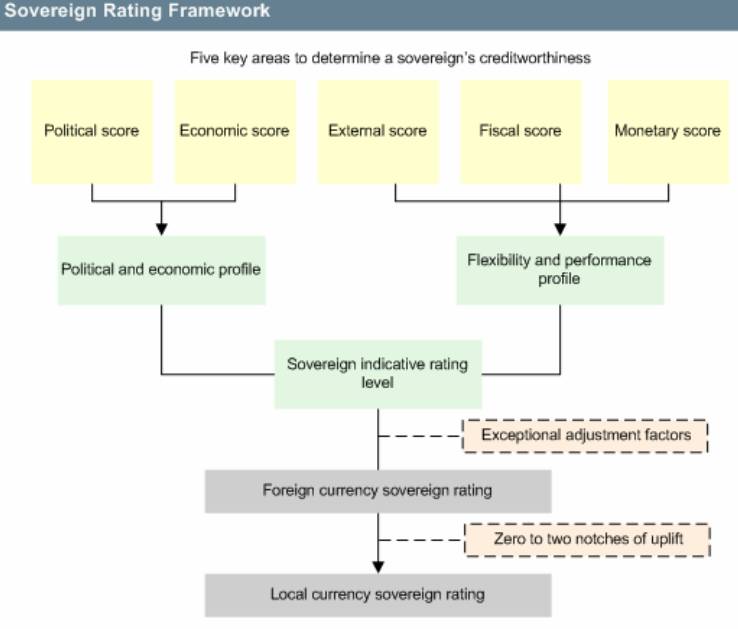
Standard & Poor's sovereign or country credit analysis has five key sets of factors: Institutional effectiveness and political risks; Economic structure and growth prospects; External liquidity and international investment position; Fiscal performance and flexibility, as well as debt burden; and Monetary flexibility.
"The five key factors that form the foundation of our sovereign credit analysis are:
• Institutional effectiveness and political risks, reflected in the political score.
• Economic structure and growth prospects, reflected in the economic score.
• External liquidity and international investment position, reflected in the external score.
• Fiscal performance and flexibility, as well as debt burden, reflected in the fiscal score.
• Monetary flexibility, reflected in the monetary score."
The global debt watcher is not the only international entity pushing for economic reforms. The World Bank also did in its latest Philippines Quarterly Update (PQU) released Monday, March 19. The PQU urged "more focus on several key reform areas such as strengthening public financial management, increasing tax revenues, and enhancing competitiveness through stronger regulatory capacity, enhancing competition including reducing the cost of doing business, addressing infrastructure and service delivery bottlenecks, and improving workers’ skills, thus making them more employable." "A huge window of opportunity currently exists for speeding up critical reforms,” World Bank Country Director Motoo Konishi said. “Besides having strong macroeconomic fundamentals, the country is benefitting from political stability and a popular government that is seen by many as strongly committed to improving governance and reducing poverty," he added. 'Stable' outlook S&P affirmed the “BB” grade last December 16 and that came with an “outlook” rating of “stable” from the previous “positive” mark. "We base our view on the current external liquidity and net debt indicators against the Philippines' relatively high public external debt, about 48% of which is on commercial terms. We expect further rating improvements to be most likely driven by improvements in fiscal and debt credit metrics," S&P credit analyst Agost Benard said three months ago. According to officials of the Bangko Sentral ng Pilipinas, the Philippines is "underrated" by about two to three notches by the international credit rating agencies. Pending bills Budget Secretary Florencio Abad has said that June 2012 is the Aquino administration’s target for enacting into law the bills on “sin” tax reform and fiscal incentives rationalization. Under the 1987 Constitution, all tax laws of the country must first come from the House of Representatives. The fiscal incentives measure is several steps ahead of the sin tax bill, which is still bogged down in the House ways and means committee, The fiscal incentives bill (HB 4935) is also known as “The Investments and Incentives Code” when the House approved it on third reading and transmitted it to the Senate middle of last year. The Senate received HB 4935 on August 8. There are three counterpart Senate Bills: SB 2142 by Senator Ralph Recto; SB 2379 by Senator Manuel Villar; and SB 2755 by Senator Edgardo Angara. Recto is chairman of the Senate committee on ways and means. Villar heads the economic affairs and trade and commerce committees. Angara leads the committees on education and science. The Aquino administration-backed version of the sin tax reform bill is HB 5727 authored by Cavite Rep. Joseph Emilio Abaya. However, before Abaya’s bill came along, the committee had worked on other sin tax bills and issued a subcommittee report. Cagayan de Oro Rep. Rufus Rodriguez pointed out that Subcommittee Report 6 is a product of six meetings of the technical working group and signed by 12 members of the committee. It is his contention that the subcommittee report should be discussed first before Abaya’s HB 5727. The delicate task of getting the sin tax bill out of the House by May falls upon House ways and means committee chairman, Rep. Isidro Ungab of the Third District of Davao City. "We will take up simultaneously all the other pending measures in the next hearing," Ungab said on March 11. The summer break of Congress ends on May 7. — ELR, GMA News 
