

 GMA Brandtalk
 Tracking
 Archives

A league of their own: Is there a place for a Women's PBA?
After discussing the current state of the Philippine national women's basketball team in part one, we now take a look at of Philippine women's basketball in general. Is there a place for a Women's PBA, similar to the US's WNBA? Are the expectations too high for women's basketball in the Philippines?
‘Are you a volleyball player?’
Cassy Tioseco, 27, is a Vancouver native who calls the Philippines home. She has been with Perlas since 2007, the next natural step for someone who has been playing the game for most of her life.
“My dad set up a basketball court in our backyard, and I had a neighbor who loved basketball, who was the same age [as me]. So the two of us would always play one-on-one. I just really grew up playing the sport,” she said.
A 6’11” forward-center, Tioseco played for Assumption College San Lorenzo in high school, then for the Ateneo Lady Eagles in college, before she was recruited for the national team.
“I always say basketball’s not the Philippines’ number one sport; it is, but it’s men’s basketball,” said Tioseco, adding a bit more emphasis on the gendered qualifier. “Women’s basketball doesn’t nearly get the same attention that men’s basketball gets. When people see me and ask if I play a sport, the first question is always, ‘Are you a volleyball player?’ When I say ‘No, I play basketball,’ they’re like, ‘There’s basketball for women?’ It’s a big shock to them, they just don’t know that side of it.”
Tioseco briefly retired from Perlas and worked as a flight attendant for Air Transat in Vancouver. “Not everybody has the luxury to play basketball for most of their life. A lot of people find better, other opportunities somewhere else,” said Tioseco. “Financially, we’re not getting as much as the men’s players. Some of us find better opportunities elsewhere.” However, when a spot opened up in the team for the 2013 SEA Games, she couldn’t pass up an invitation to return.
Tioseco returned to tie up some loose ends: as much as she wanted to be with the team in 2011, Tioseco caught dengue three days before the tournament and had to stay behind. Instead of commanding attention from the low block, she was miles away confined to a hospital bed, watching her team lose a game they had years of preparation for.
“It was such a low point in my life because we had been training for the SEA Games for basically four years,” she said. Laos, which hosted the games in 2009, scrapped the basketball tournament because they lacked the facilities. “We worked so hard for that one, [with the] same team and everything. It was just really sad and frustrating because they lost that tournament by one point.
“It’s just frustrating not to be there and just to contribute a little bit would’ve made a difference. It was hard to watch,” she added. “We lost on a technicality, I would say.”
Team manager Cynthia Tiu threatened to protest the results once they returned to Manila, but it makes no difference now, whether an actual complaint with FIBA was actually filed or later turned down. The videos on YouTube don’t prove a lot either, as the truth is literally obscured by grainy footage and an inconclusive camera angle. Perlas came in second, a maddening conclusion of two years’ worth of sweat and frustrations.
Wooing the market
The now-forgotten Women's Philippine Basketball League ran for two seasons in 1998 and 1999, folded up, then re-opened for a solitary 2008-2009 season. It was an experiment similar to the current PBA D-League, with an age cap of 25 and had several corporate tie-ups with college teams. Every season, the Ever Bilena-UST franchise won the championship. Their run of dominance, however, came to an end as the league closed its doors anew.
To some extent, said Perlas coach Haydee Ong, the pressure to become as lucrative and as attractive as the PBA had a hand in the WPBL’s undoing. “Some of the players were asking for more allowances and more salaries na hindi naman kayang ibigay private groups kasi nagsa-start palang,” said Ong, who did not elaborate further. “I think ma-iinculcate sa mga babae na when we start a commercial league, don’t compare agad to the mens’ teams na ganito kaagad ang sweldo mo, no. It will never be na yung women’s at men’s na magkaka-level. Just like sa school palang e. Dapat iyon ang ilagay nila sa mind nila. Let the popularity come in like volleyball, and siguro doon ka lang magdedemanda.”
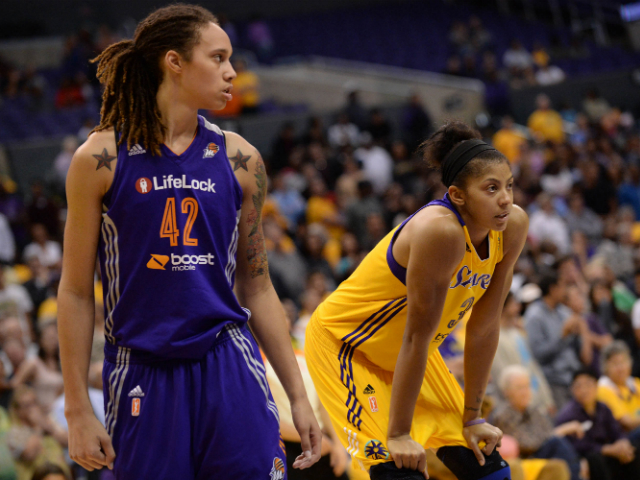
Ong also says that the sport needs to be touched up, literally, and use looks as a means to leverage fans, similar to how the WNBA in the US encouraged women to soften their appearances through fashion and make-up courses as part of their rookie orientation. That hasn’t affected Brittney Griner so much, a 6’8” first-overall pick and all-star center of the Phoenix Mercury in the WNBA whosports long dreadlocks and is openly bisexual.
Griner’s success has been celebrated there, but in the Philippines, women in her mold here might not get the same warm reception. Ong thinks that the burden of marketing the commercial women’s league here falls on the players as well to shed the masculine image that Filipinos dismiss offhand as unattractive at best, or an indicator or homosexuality, which makes supporting them taboo at worst.
“Kailangang i-emphasize to teams and to the players na kailangang medyo i-benta mo siya. Hindi puwedeng mukhang lalaki. Mukhang lalaki na nga yung sport natin tapos mukhang lalaki ka pa, so kailangan may marketing side rin siya. When the WNBA started in the States, I remember bawal sila mag-short hair. Inimpose rin yung make-up. So kahit papaano, mukhang babae ka parin,” she said.
“Kailangang gawin nila yon para ma-attract yung sponsors. Yung iba, they don’t like wearing make-up during games so maiinis talaga sila,” said Ong. “But if you tell them this is for the betterment of women’s basketball I think they will understand, not only for their time but for the future.”
On the other end, Tioseco, who played for Nutri-C-Ateneo, doesn’t want to pander to those expectations. She felt uncomfortable during the times when games were televised and they were expected to dress for the occasion. “I got my uniform and I’m like, what is this? The shorts were tiny, the jersey was fitted, and in every televised game they wanted us to be in makeup. It sort of frustrates me because it shouldn’t have to come to that. We have so many talented girls playing the sport. But I guess the appeal has to be there first before you can get people to start following you and that’s their point of it,” she said.
“They wanted everything televised, and they just didn’t have a fanbase yet,” she said, comparing it to the widely popular Shakey’s V-League that eventually gave rise to the Philippine Super Liga. “The V-League started out as an offseason tournament and it just grew and grew and grew, and now it’s huge. I just feel like maybe that’s something [the WPBL] needed to do. They shouldn’t expect that the seats are going to be filled right away in the first attempt, it’s going to take a while to get there.”
“I do hope short shorts are not why people are watching women’s volleyball. We have all these girls with these crazy skills, and that’s what we should be watching,” said Tioseco.
Gaining traction
Will feminizing the sport solve the problem? It’s not clear. There’s a myriad of factors that come to play. Part of it is we’re expected to lord over the SEA Games basketball because the men’s team has spoiled us with so much success. But maybe we shouldn’t just expect our women to match the men’s medal tally. Rather we should give them the same institutional support and opportunities to succeed as well.
There isn’t much of a push at the university level either. The women receive less benefits than the men, and prospects rely on word-of-mouth more than systematic scouting to get their name out. Perlas involves themselves in the grassroots efforts by conducting basketball clinics in the provinces.
“It makes a difference [for girls] at a young age to see [us] and go, ‘oh, I can play basketball.’ We only know this little, tiny section in Manila. We don’t even know other players from the provinces,” said Tioseco. “The girls were averaging 5’10” in height and at the time, that was really tall. They have the height there, they have girls who are physically strong enough to play basketball, but there’s just no way of us knowing they’re there, and no way for them to come here.”
Nevertheless, Ong says that playing for pride will have to suffice for now. “Being a part of the national team, as an elite athlete, is not for everybody. You need a lot of sacrifice and hard work, hindi lahat kaya,” she said. “But if you have the love and passion for the sport, hindi mahirap sa kanila yon. They don’t even think about that if you love what you’re doing.”
Filipinos like to claim that basketball is the de-facto national sport. But there’s a tinge of hypocrisy when many can’t reconcile the concepts of “females” and “ballers” without joining them with the words “shouldn’t be,” and instead leaves Perlas and other women players to fend for themselves. Fortunately, women’s basketball finds ways to stick around, and the question of how Filipinos will learn to deal with them will linger like a wad of gum on the bottom of their sneakers. The choice is ours whether to keep ignoring the situation, or scrape the hardened lump off and proceed forward with a bit more balance. - AMD, GMA News

