

 GMA Brandtalk
 Tracking
 Archives

ADVERTISEMENT
Filtered By: Lifestyle
Lifestyle
Immortalizing the katutubo: The photo treks of Jacob Maentz
+
Make this your preferred source to get more updates from this publisher on Google.
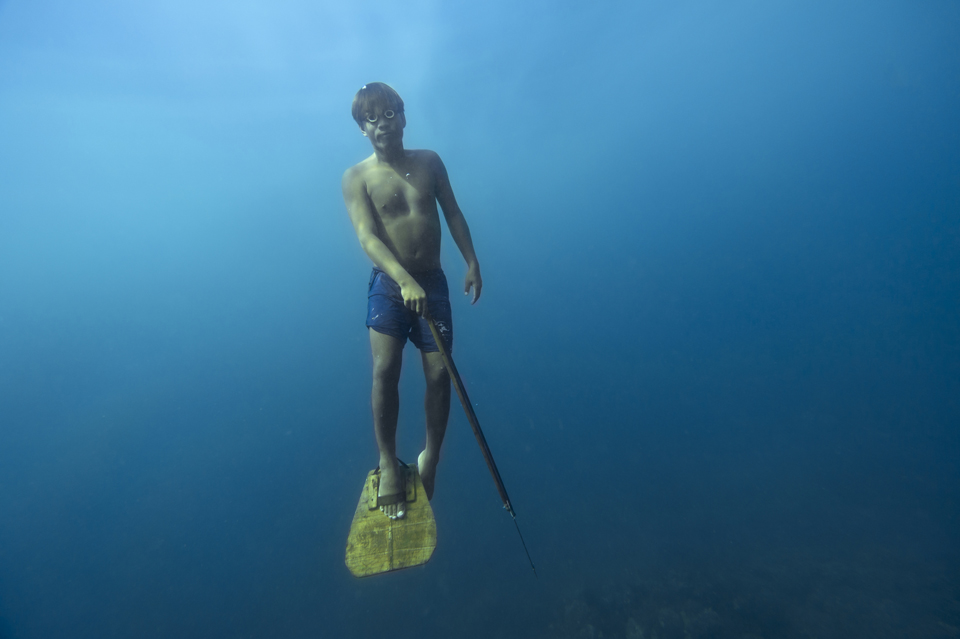
Maentz's trips have brought him to the mountains and to the seas, where he took this shot of a deep-diving Badjao. Photo courtesy of Jacob Maentz
In one corner, an American photographer was snapping away, surrounded by kids curious about the tall man and his camera.
“I love the energy kids have and making friends with them can help break down barriers,” said 34-year-old Jacob Maentz. “Parents can see that you are sincere and interested in their community when you take time with their children.”
He has photographed the rare sight of a turtle munching on a jellyfish, but Maentz is best known for his unique advocacy in the Philippines.
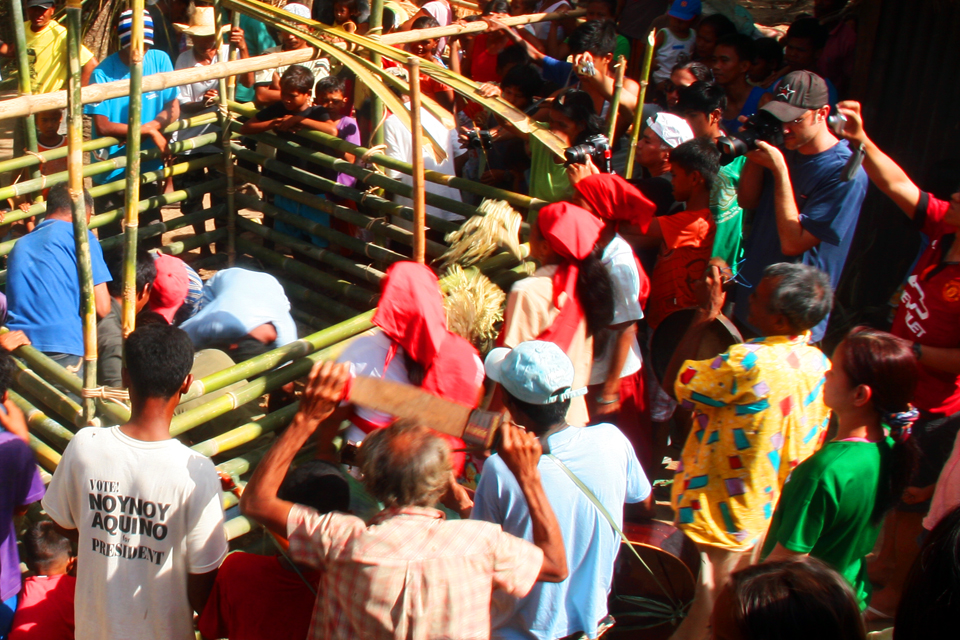
Maentz (right, in blue), shoots members of the Abelling Tribe in Sitio San Pedro, Tarlac preparing a boar for sacrifice during the Anito Festival.
"After returning home I realized there was not much information or imagery available from many of the different indigenous groups throughout the country,” he said. “I felt empowered and wanted to do something to help promote and educate people about the Agta people we had met and the other indigenous groups throughout the archipelago.”
Maentz first came into the country as a former United States Peace Corps volunteer. Now he has settled in Cebu where he married his wife Nahoma, doing photography in far-flung areas to documenting various tribes and groups, from the well-known ti the previously-unheard of.
“Almost every place I visit I am welcomed with the warmest hospitality. I almost always go into a community with a local guide or a contact I have made prior to getting there,” he said. “This is probably the single most effective way to build trust with a community because I am entering with someone who is already respected amongst them.”
Maentz usually spends a day or two with the group, observing and shooting their daily routine while figuring out what subjects to focus on. With enough juice in his gear to shoot and back up his images, he enters occasional wilderness and remote environments with a “deep desire to explore and learn new things.”
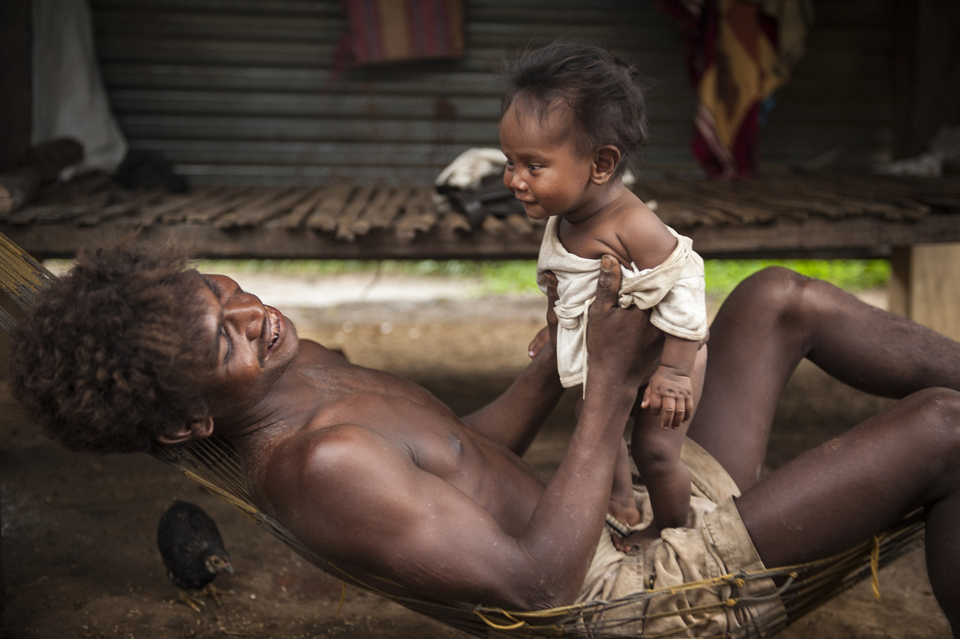
An Agta father and his child play on a hammock while waiting for the rain to stop. Jacob Maentz
There were areas where his itinerary wouldn’t go as planned because of security risks. “I just got back from a trip to Compostela Valley and I wasn’t able to visit all of the locations I had hoped to because of some security concerns with the NPA,” he said.
“I have never felt personally at risk, but often my plans change because of security reasons,” he added. “Likewise, most of the communities we visit take great pride in having us there and want to keep us safe.”
Sometimes he gets invited to document a tribal event, like the Abelling’s Anito Festival, where this writer first met him.
“Abelling Anito Festival was something that Kultura Kamp had asked if I would join. They are the ones who reached out to me and what a great ritual it was to experience,” said Maentz. “Planning is extremely important, but many times you won’t know how things are going to be until you actually get on location.”
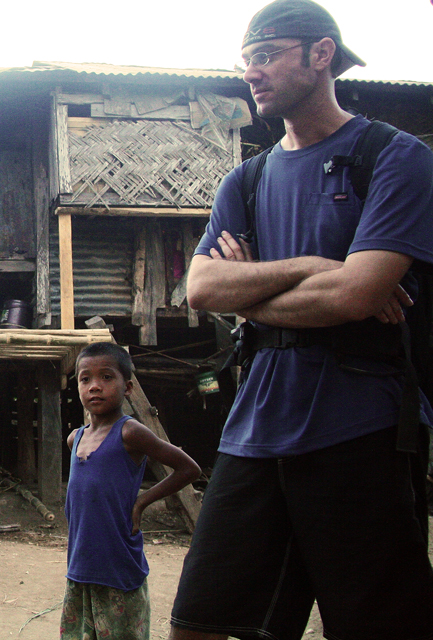
Maentz, here pictured with an Abelling kid, has been traveling all over the Philippines to document various indigenous groups.
“After a long hike to an Agta village, I was offered betel nut by one of the men. I had always wanted to try it and thought now would be a perfect time. Not having ate much food all day, together with the strenuous exercise, the effect of the betel nut went right into my system,” he recalled. “It made me completely dizzy and I lost all the strength in my body. I was zapped and couldn't stand up for over an hour. I honestly didn’t know it had an altering effect on the body and I learned it the hard way. I thought it was just something people chewed on for flavor.”
Back in the Abelling hut, kids continued their curiosity about their foreign visitor. “Sino po siya, anong pangalan niya?” some kids asked this writer.
“When I'm shooting it can sometimes be a challenge when there are a lot of children around,” said Maentz. “Many will want to look over your shoulder or jump in the frame when you are trying to take an important image. I have strategies I use to help prevent this as much as possible.”
But the kids loved him. They’d pose even if his camera is down, say hi, and giggle, and then he’d smile back and try to engage them in conversation. Maentz himself has two children.
Maentz shoots other projects for a living, but he also shoots to capture visual proof of living indigenous groups in the country, an extensive task for anyone, let alone someone for whom the Philippines is his second home. But if there’s one thing he probably learned in his photo trips, it’s that most of the time Filipinos wouldn’t mind being photographed. — BM, GMA News

