

 GMA Brandtalk
 Tracking
 Archives

UP Likas launches book on Kasaysayang Pampook
The book KASAYSAYANG PAMPOOK: PANANAW, PANANALIKSIK, PAGTUTURO (KPPP) is bound to be a landmark work on Philippine history and historiography. A repository of our diverse historical narratives, the book offers a myriad of insights to the nuts and bolts of the Filipino collective identity through the lens of our local experiences. KPPP was formally launched August 18 on the occasion of the 21st National Conference on History of the University of the Philippines Lipunang Pangkasaysayan (UP LIKAS). True to its vision of “tungo sa isang kritikal at mas makabuluhang pag-aaral ng kasaysayan,” UP LIKAS has actively pursued historical and social studies through holding of projects like conferences and publications that aim to deepen our people’s sense of kasaysayan (history), and by extension, pagkakakilanlan (identity). The initiative for the book came in celebration of the centennial of the UP Department of History, founded in 1910, and the anniversary of the establishment of UP LIKAS in 1971. 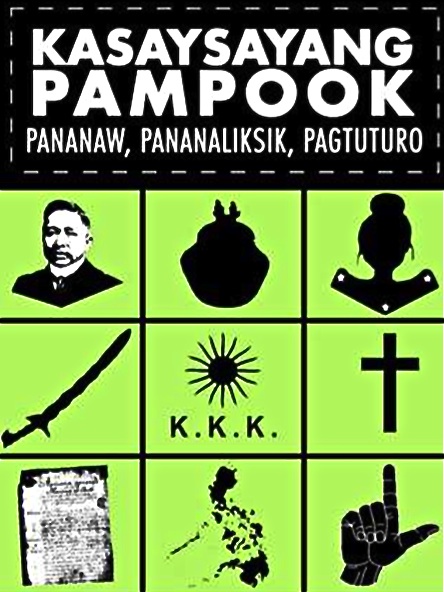 From 2010 to 2011, authors coming from diverse professional backgrounds – law, academe, research and policy-making, government and non-government institutions – pooled together essays on local history with the principal objective of contributing to the existing body of knowledge about our sense of being and becoming Filipinos. Incidentally, it has also been 30 years since the publication of the classic book edited by Alfred McCoy and Ed de Jesus bearing the title Philippine Social History: Global Trade and Local Transformations (1982), the first extensive collection of local histories in the Philippine academic scene. As Atoy Navarro points out in KPPP, while there are laudable endeavors in trying to bolster knowledge production on our local histories through the institutional efforts of national historical agencies, national historical organizations and academic units, there is still the continuing need to configure historical studies using Philippine localities as an important template. KPPP is thus a relevant undertaking in this regard. KPPP is a respite from national histories and educational textbooks that tended to gloss over the value of local histories. KPPP breaks away from the privileging discourse of Manila-centric histories and seeks to provide alternative lanes of thinking about the supposed local and national divide. This initiative treats the various pook (geographic, political, ethnic etc. sites) in the country as constitutive of our collective narrative -- an embodiment of our rich society and culture and a potential source for resolving present-day evils. Furthermore, the book is touted as an important reference material not only for educators and historians, but also for the public at large. Written in the vernacular language Filipino, KPPP recognizes the importance of forging a civilizational discourse that shall promote a culture of dialogue and discussion between and among Filipinos, through the lingua franca that unites us as a people. Retrieval and narrativisation of local histories are among the most urgent tasks of historians today. In the course of constructing our nation, the principle of subsidiarity must be highlighted in all realms of social life, be it grassroots economic development, strengthening of local governments and politics, or expansion and deepening of narrative-building. Seen in this light, KPPP is our noble attempt at strengthening the foundations of our nation through its local base. The collection of essays in KPPP is divided into three parts. Pananaw or perspective deals with the historical, theoretical, and methodological bases of local history. This serves as the backdrop with which to understand the succeeding chapters. Pananaliksik or research is a showcase of exemplary works on local history writing. This chapter unveils before the reader the breadth and depth of local experiences in the past that cut across a wide array of dimensions, from the political-administrative to the socio-cultural themes, from Luzon to Mindanao, and from the earliest of times up to the present. Pagtuturo or pedagogy transmits practical approaches for teachers, organizations and even government agencies. This part also allows enthusiasts to reflect over the local-national axis where their supposed contestation is tempered with an analysis of unities that link still kasaysayang pampook to the greater project and task of kabuuang pambansa. KPPP is edited by a team of historians and writers headed by Mr. Atoy Navarro of the Forum for Ethical Review Committees in Asia and Pacific (FERCAP) and Dr. Ma. Florina Orillos-Juan of the De La Salle University Manila (DLSU). Joining them are Prof. Janet Reguindin of Miriam College and Mr. Adonis Elumbre of the University of the Philippines - Baguio. KPPP is available for purchase upon request. Kindly course your order to UP LIKAS through its Chairperson, Ms. Pat Torio (cellphone no.: +63.915.7549572 | email: pat_torio@yahoo.com). - Press release from UP LIKAS

