

 GMA Brandtalk
 Tracking
 Archives

Ex-Abra farmer defies stereotypes to find success in handloom weaving
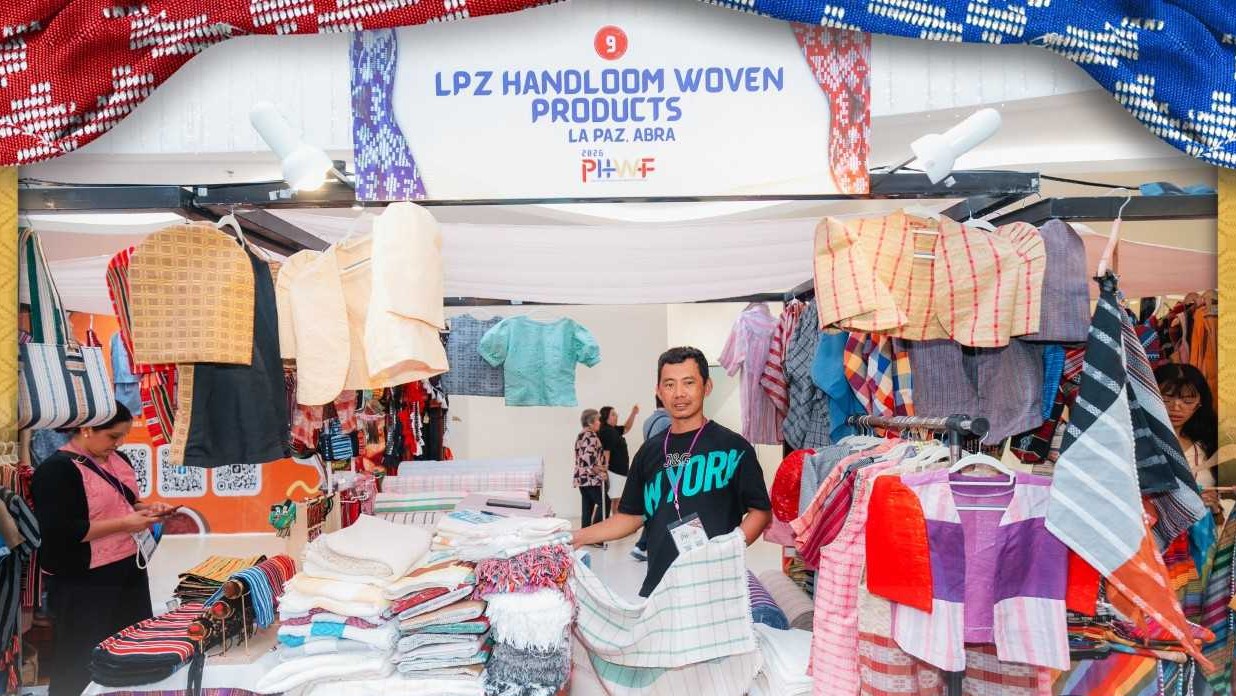
Weaving has been part of the rich culture of the Philippines, as it celebrates tradition, values, and the arts through the craft.
Contrary to the belief that only women comprise the handloom weaving community, men account for 14 percent of registered weavers nationwide, based on SalinHabi app of the Department of Science and Technology Philippine Textile Research Institute (DOST-PTRI) as of Sept.18, 2026.
This accounts for 179 of the 1,279 registered weavers in SalinHabi, an online registry app of local weavers and authentic indigenous textiles.
One of the male handloom weavers is Norman Humpay Venus of LPZ Handloom Woven Products from Abra.
The 43-year-old former farmer entered the weaving industry in 2013 after the seasonal harvest left him with limited sources of income between planting periods.
Venus said he first learned to weave Katarines, a traditional handloom textile from Abra and Ilocos Norte, and later the Binakol, a more intricate Ilocano weaving tradition.
This led him to helping his wife, who was already engaged in the craft.
However, weaving their success did not come overnight, as he faced hurdles that included stereotyped comments concerning his gender.
“Nung una po, challenge po talaga sa akin. Mostly po kasi babae ang naghahabi. Kaya nung nakikita ng mga tao na naghahabi ako, sabi nila trabaho ng babae ‘yan bakit mo sinusubukan, sabi ko gusto ko lang makatulong sa pamilya ko, hanggang sa mag-success po kami," Venus shared.
(It was a challenge to me at first, because traditionally women are the weavers. That's why when the people saw me weaving, they questioned me why I was doing it. I said I wanted to help my family.)
"Hanggang sa lumaki na po yung business namin. Nakapagpaa-aral na kami ng mga anak namin," he added.
(Eventually, our business grew and we were able to send our children to school.)
Under the "We Men Weave" program, DOST-PTRI aims to recognize and support Filipino men in the weaving industry while breaking gender stereotypes.
The program helped Venus expand his skills, including training to use a four-pedal handloom weaving machine.
The machine features DOST-PTRI technology that aims to improve the weavers’ efficiency and create a wider range of weaving patterns.
Through the Philippine Cotton Weaving Movement, the agency also supported weavers and local entrepreneurs through deployment of cotton-based yarns.
After finding success in his new venture, Venus encourages his community to take up the craft, particularly other men, as they work alongside their family to continue the tradition across generations.
Venus' teenaged children, Louise and Philip, the namesakes of the family business, are also learning the skills of their parents’ trade.
Venus is of the weavers who participated in the Hinabi Textile Bazaar during the Philippine Handloom Festival from Sept. 18 to 20 in Quezon City.
The events exhibited local handwoven products and the rich culture, stories, and creativity behind Philippine handloom weaving. —RF, GMA News

