

 GMA Brandtalk
 Tracking
 Archives


REVIEW: 'Sayaw ng mga Ilaw' explores the power of theater to confront a painful past
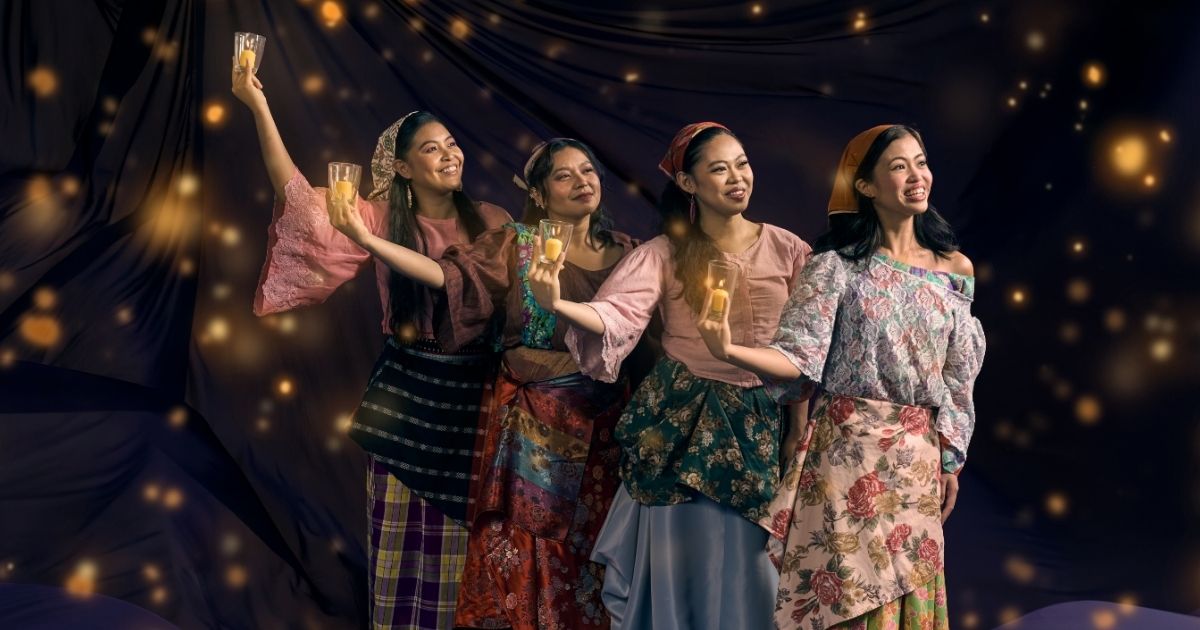
Tanghalang Pilipino's musical brings the Manila Film Center tragedy to the stage through a child's dream of learning a traditional Filipino dance, though its storytelling does not always move as gracefully as its choreography.
A child's fascination with dance becomes the starting point for a story about loss, political repression and the consequences of putting ambition above human lives in Tanghalang Pilipino's "Sayaw ng mga Ilaw."
Adapted by Juan Ekis from Cheeno Marlo Sayuno's illustrated children's book, the musical is set in 1981, when the construction of the Manila Film Center was marred by a deadly accident. It follows young Laya, played by Annika Co (alternating with Wincess Jem Yana) and her family as their lives are changed by the tragedy involving her father, a construction worker at the site.
Rather than recounting the incident as a conventional historical drama, the production approaches it through the experiences of a family, particularly a child whose understanding of the world is still taking shape.
This choice gives "Sayaw ng mga Ilaw" its clearest purpose. History is not presented as something distant or confined to textbooks. It enters the home, changes relationships, and forces people to confront realities they may not yet have the words to explain.
The result is a production that asks an important question: how can theater introduce younger audiences to difficult chapters of Philippine history without diminishing their gravity?
History beyond the textbook
The musical's strongest decision is to place the family's experience ahead of a straightforward retelling of the Manila Film Center tragedy.
Laya's desire to learn the Pandanggo sa Ilaw provides an accessible entry point into the story. What begins as a child's interest in dance gradually acquires greater significance as her family confronts uncertainty and grief.
The parallel story of her older sister, Kala, (Ynna Rafa) adds another dimension. As a student journalist, Kala becomes increasingly aware of the political realities surrounding her, including the risks of speaking out during a period when press freedom remained precarious despite the lifting of martial law in 1981.
Through the sisters, the production explores two different ways of confronting the same world: a child trying to understand what has happened to her family and a young woman beginning to recognize the wider forces shaping their lives.
This approach keeps the story grounded in personal relationships while acknowledging that the tragedy cannot be separated from the political circumstances in which it occurred.
Importantly, the production does not need to turn every scene into a history lesson. Its premise already makes clear that public decisions have consequences for people who often have little control over them. The family's story gives those consequences a human dimension.
When movement carries the story
Dance is central to how "Sayaw ng mga Ilaw" communicates its ideas. The production uses choreography not merely as an additional spectacle but as a way to translate events and emotions into physical movement.
The Pandanggo sa Ilaw is particularly apt for a story concerned with a child's dreams and the fragile nature of hope. Traditionally performed with lights balanced on the dancer's hands and head, the dance requires concentration and control. Onstage, it also offers a visual language through which Laya's changing circumstances can be understood.
Al Bernard Garcia's choreography gives the production opportunities to communicate beyond dialogue, while the music by Krina Cayabyab establishes its emotional framework. The work of director Jonathan P. Tadioan brings these elements together in a production that moves between family drama and larger social concerns.
The challenge, however, is ensuring that movement, music and dialogue do more than reinforce the same point.
There are moments when the musical's imagery and lyrical ideas feel more insistent than they need to be. The recurring emphasis on light and dance is understandable given the story's premise, but repetition can lessen the impact of an image when its meaning does not develop alongside the characters.
The songs also do not always feel equally necessary to the progression of the narrative. Some emotional turns would benefit from more room to unfold through the characters' interactions, allowing the audience to arrive at the same realizations without being repeatedly guided toward them.
These limitations do not undermine the production's overall intent, but they point to the difficulty of adapting a relatively concise children's story into a full theatrical work while preserving the momentum of both its personal and political narratives.
The people behind the history
The performances help keep the musical from becoming weighed down by its subject matter.
Veteran theater actors Noel Rayos and Shiela Valderrama portray the sister's parents, Tatay Ondeng and Nanay Lucia, respectively.
The family dynamic is essential to the production's emotional effect. Without a convincing sense of what the characters stand to lose, the historical context risks becoming an explanation rather than an experience.
Kala's role also broadens the musical's perspective. Her involvement in student journalism introduces questions about the responsibility of speaking up, the limits imposed on young people and the consequences of challenging those in power.
These themes remain relevant beyond the period depicted onstage. They also give the production an opportunity to engage younger audiences with the importance of examining official narratives and understanding whose experiences may be left out of them.
Remembering what should not be forgotten
"Sayaw ng mga Ilaw" is an ambitious work because it attempts to bring a difficult historical event to audiences through a form associated with imagination, music, and movement.
Its value lies not in presenting a definitive account of the Manila Film Center tragedy, but in making the human consequences of that history difficult to overlook. The story reminds audiences that behind monumental projects and promises of progress are workers, families, and communities whose lives deserve to be acknowledged.
The musical is not without shortcomings. Its storytelling could be more economical, and a more varied use of its musical ideas would strengthen the connection between its songs and dramatic developments.
Still, its decision to approach history through the perspective of a child gives the production a meaningful point of entry for audiences who may be encountering the tragedy for the first time.
Ultimately, "Sayaw ng mga Ilaw" demonstrates both the possibilities and the challenges of using theater to revisit the past. Its most important task is not simply to make history visible, but to encourage audiences to look beyond the spectacle and consider the people whose stories must be remembered.
The production may not always find the most effective theatrical expression for every idea it carries, but its central concern remains worth bringing to the stage: the lives behind history should never be treated as expendable. —MGP, GMA News

