

 GMA Brandtalk
 Tracking
 Archives

ADVERTISEMENT
Filtered By: Lifestyle
Lifestyle
PPO plays epic Stravinsky's 'Rite of Spring,' Brahms' concerto on April 20
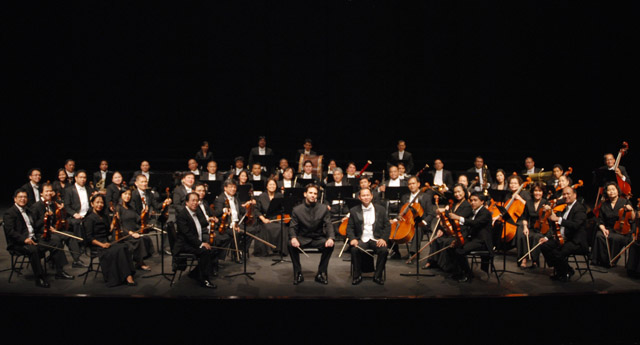
The Philippine Philharmonic Orchestra (PPO) Photo courtesy of PPO-CCP
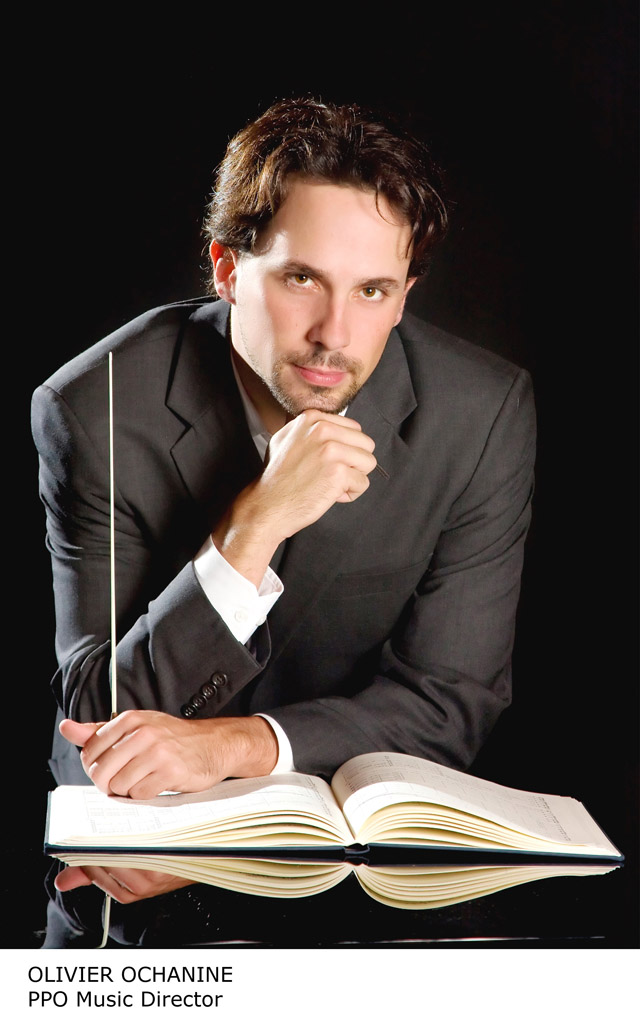
Maestro Olivier Ochanine and the Philippine Philharmonic Orchestra (PPO) close the PPO’s 29th season this Friday, April 20 by mounting Igor Stravinsky’s most revolutionary and epic composition “The Rite of Spring,” which the orchestra has not played in 25 years.
Together with visiting Russian female pianist, Sofya Gulyak, Ochanine and the PPO stage another colossal musical masterpiece in its season-ender: Johannes Brahms’ “Concerto No. 1 in D minor for piano and orchestra, op. 15” in its three movements, maestoso, adagio, and allegro.
In an interview, French-American Ochanine, the current PPO musical director and principal conductor, said, “The closing concert pins together two monumental works: one for the piano repertoire by Brahms and the other for orchestra by Stravinsky.”
“The audience can, therefore, expect to have their auditory palettes tickled this Friday. In Brahms’ ‘Concerto No. 1 in D minor for piano and orchestra, op. 15,’ we have beautiful, poetic writing with majestic, lyrical passages exchanged between the piano and orchestra,” said Ochanine, 32, who assumed his post in the 28th season (2010-2011) of the PPO.
“On the Stravinsky, one notices a completely different approach to writing. Here, we have a focus on the rhythmic construct to emulate old Russian folk songs and dances, as well as incredible tone colors brought about by the various outlandish instruments,” said Ochanine who has a three-year contract with the PPO. His last season (2012-2013) coincides with the PPO’s 30th season.
To emphasize the impressive scope of “The Rite of Spring,” Ochanine said the score calls for two piccolos, three flutes, one alto flute, four oboes, two English horns, three clarinets (one E-flat clarinet and two bass clarinets), four bassoons, two contrabassoons, eight horns, two Wagner tubas, four trumpets (high trumpet and bass trumpet), three trombones, two tubas, timpani, bass drum, tambourine, cymbals, antique cymbals, triangle, tam-tam, guiro, and strings “to convey the ancient rites of sacrifice.”
“’The Rite of Spring’ is extremely tough to put together, especially for an orchestra that hasn't done it in 25 years. Most of the musicians in the group have never performed it. That is what this is about, aside from giving our audience something evocative and highly imaginative to enjoy,” Ochanine said.
With a performance time of about 35 minutes, “The Rite of Spring” (original French title “Le Sacre du Printemps”) was composed by Stravinsky between 1911-1913 for a ballet choreographed by Vaslav Nijinsky, and with concept, set design, and costumes by Nicholas Roerich.
The ballet, about a girl being sacrificed to the gods by dancing herself to death, was produced by Sergei Diaghilev for Ballet Russes company and premiered in Paris on May 29, 1913 at the Theatre des Champs-Elysees, sending the audience in turmoil.
“Stravinsky’s ‘The Rite’ stormed onto the musical landscape with no regard for tradition. Stravinsky was a brave and adventurous composer. Nothing had been heard sounding remotely similar to this music prior to 1913. It didn't help Stravinsky with the conservative folks that the subject matter was so wild and a bit against the times,” he said.
“We have in this piece various elements of shock: extreme use of dissonance, polyrhythmic excitement, and the primordial element of ancient rituals, with a young maiden dancing herself to a violent death at the end of the ballet. It is a well-known story that 'The Rite of Spring’ was introduced in 1913 with a bang in the form of riots that began almost immediately as soon as the performance began,” Ochanine added.
In a separate interview, Russian pianist Gulyak said she looks forward to playing again before the classical music audience in the Philippines. “It is very exciting for me to be back in Manila and to play now at the Cultural Center of the Philippines. I remember the last time I was here that the audience was very nice to me. I hope they enjoy this concert too,” she said.
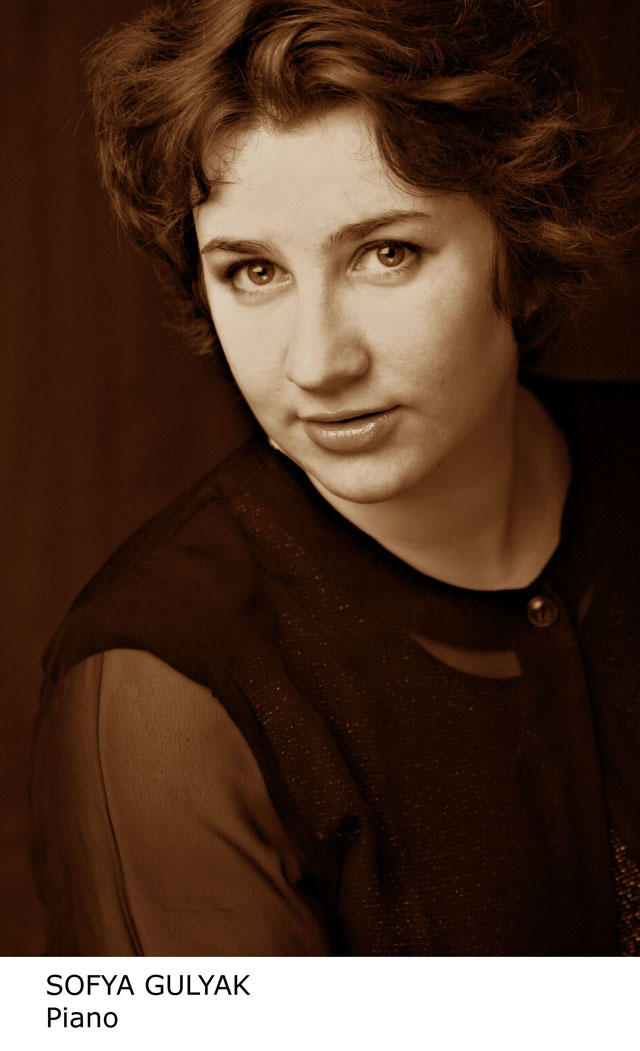
Gulyak, who clinched the First Prize and the Princess Mary Gold Medal at the 16th Leeds International Piano Competition in September 2009, debuted in the Philippine classical music scene in her concert last year at the Philamlife Theater on United Nations Avenue in Manila. She is the first female Leeds gold medalist since the competition started in 1961.
“I am performing Brahms’ ‘Concerto No. 1 in D minor for piano and orchestra, op. 15.’ I can say that Brahms is one of my favorite composers. I won in several big competitions where I played this particular concerto. Those experiences helped me develop my career,” said Gulyak, who will proceed to Shanghai to mount the same winning piece.
Gulyak said she and Ochanine mutually decided to choose this particular Brahms concerto for her maiden appearance with the PPO.
“Currently, I am interested in mounting piano concertos where I can play all the piano concertos by Rachmaninoff. If possible, I hope to come back to the Philippines and I would be very glad to do the Rachmaninoff concert here also,” said Gulyak who characterized the Manila classical music audience as “extremely nice and warm and one of the best audience I have ever had.”
Friday’s concert brings to a close the 29th season which is called “Epic Evenings with PPO” where most pieces mounted were difficult compositions by Beethoven, Saint-Saens, Bruch, Rimsky-Korsakov, Nielsen, Bruckner, Rachmaninoff, Brahms, Mozart, Elgar, Berlioz, Ravel, Dvorak, Mendelssohn, and Stravinsky. –KG, GMA News

