

 GMA Brandtalk
 Tracking
 Archives

ADVERTISEMENT
Filtered By: Lifestyle
Lifestyle
Recounting the horrors of the Battle of Manila
+
Make this your preferred source to get more updates from this publisher on Google.
On this day 70 years ago, Filipinos were being killed by the thousands during the infamous Battle of Manila, which lasted from February 3 to March 3, 1945.
Some people also call the devastating month-long combat the “Battle for Manila,” as two colonizers—the Americans and the Japanese—were fighting to gain control of the city.
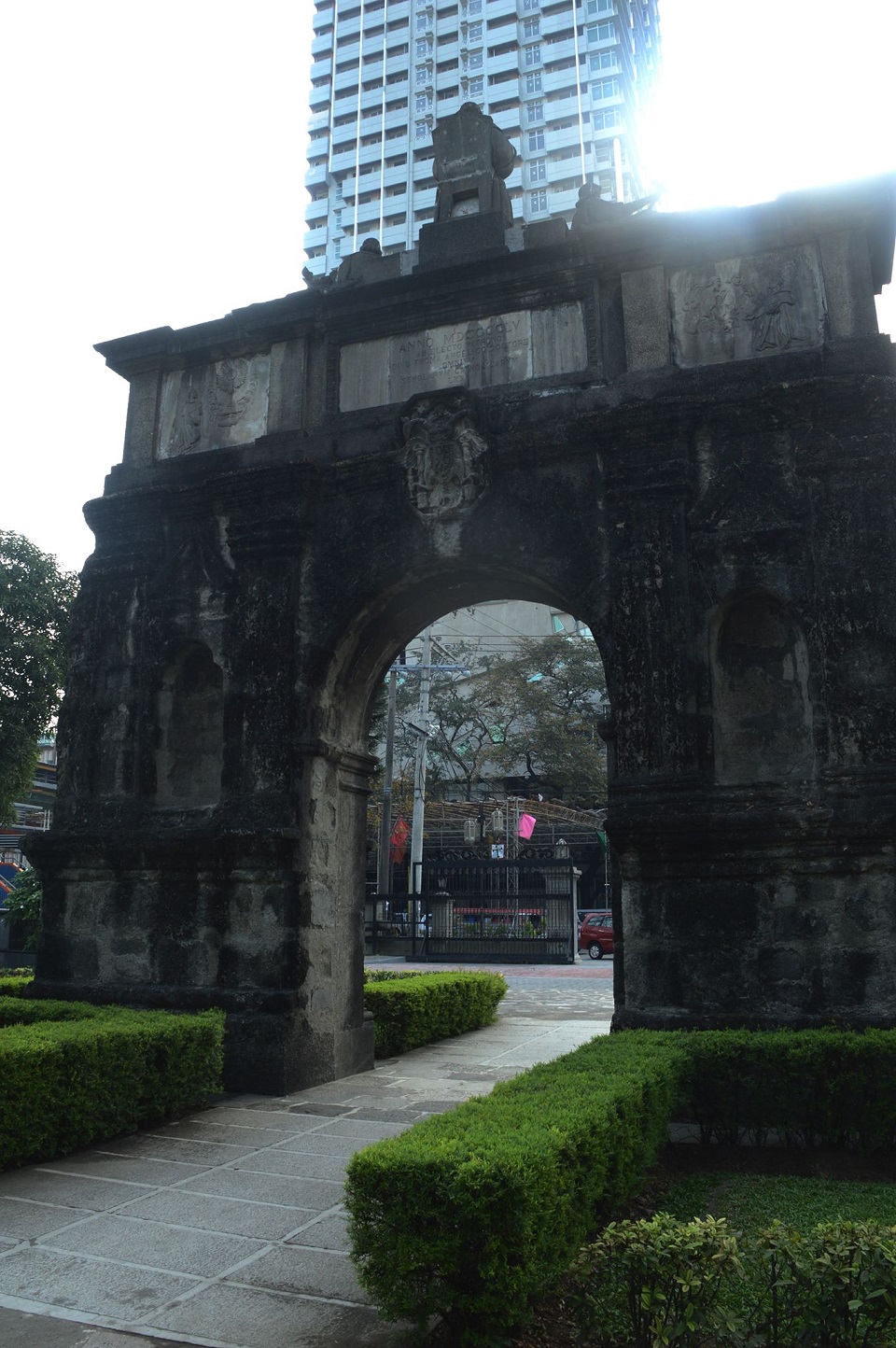
About 21 of those interned at the University of Santo Tomas, which was used as a civilian prison camp during the war, died at the entrance to the main building when the Battle of Manila started. Photos by Riz Pulumbarit
The Second World War officially began on September 1, 1939 and ended on September 2, 1945, exactly six years and one day later.
By early 1945, Japan was losing the war and its troops in the Philippines lacked food, weapons, and other supplies.
By that time, MacArthur had already fulfilled his famous promise to return to the Philippines after being ordered to Australia in 1942.
Earlier this month, during the commemoration of the 70th anniversary of the liberation of the University of Santo Tomas as a prison camp for civilians—called the Santo Tomas Internment Camp (STIC)—an American history expert said that saving the internees at UST was a top priority for MacArthur.
James Zobel, executive director of the US-based MacArthur Library, said MacArthur received information that the UST internees were in danger of being massacred, similar to what happened in Puerto Princesa in December 1944—when about 150 prisoners of war were doused with gasoline by the Japanese and burned to death.
Killing innocent civilians—Filipinos and foreigners alike—by fire became one of the primary military tactics of the Japanese, especially during the Battle of Manila. Here are some things you might not know or have forgotten about this momentous episode in history:
Some of the worst atrocities during the Second World War were committed during the Battle of Manila. According to a report in the Sydney Morning Herald on April 13, 1945, “Officially investigated and legally attested reports of Japanese atrocities in the Philippines prepared for the US War Crimes Authority at Washington show that Nazi death camps in Europe can show nothing to compare with the horrors of Manila's torture chambers and houses, and massacre fields and plazas.”
According to historian and military analyst Jose Antonio Custodio, "Instead of abandoning Manila, the Japanese stayed to kill as many people as possible. The Japanese considered all Filipinos as guerillas: men, women, and children."
They also burned houses and buildings and shot anyone trying to escape. They buried people alive. They threw babies into the air and bayoneted them.
If people failed to bow to the Japanese, they would be slapped, reprimanded, or even killed.
Even in the areas near Manila, people were killed in the thousands.
The Malacañang website says, “Following the end of the Battle, General [Tomoyuki] Yamashita was tried and later found guilty for the massacre of countless Filipinos. He was hung for War Crimes on February 3, 1946 at Los Baños. Survivors of the Battle felt intense hatred for the Japanese whose method of inflicting violence had been both brutal and deeply personal.”
About 100,000 people were killed during the battle.
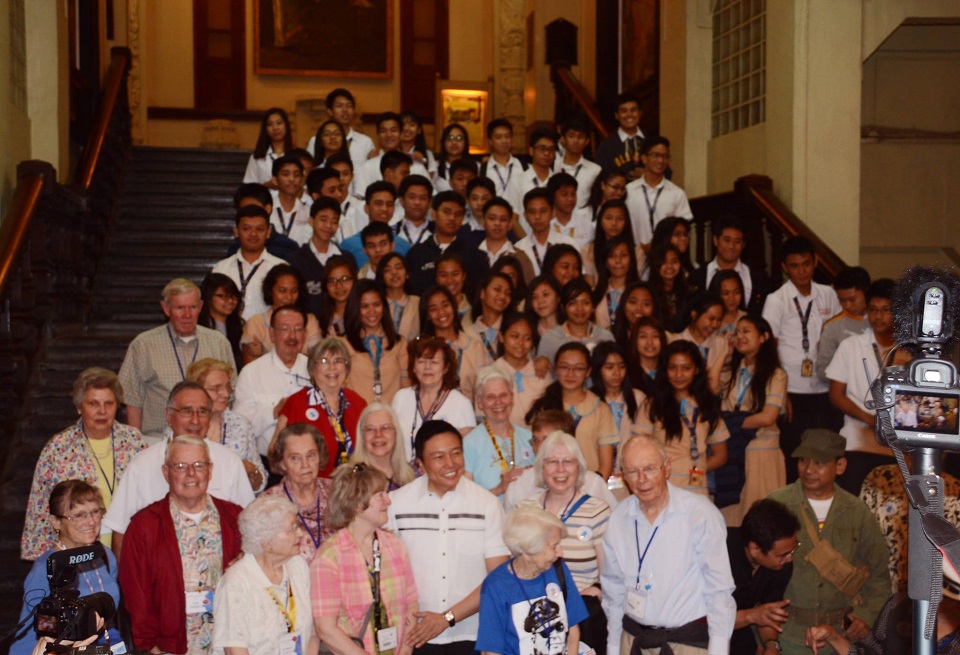
UST students pose with prison camp survivors at the opening of the exhibit commemorating the 70th anniversary of the Liberation of the Santo Tomas Internment Camp (STIC).
Wilkinson said a Japanese soldier holding a grenade stayed near them as they slept that night. The children eventually managed to escape from their captors.
Wilkinson passed away in January this year, just before the 70th commemoration of the UST prison camp. His story was shared at UST by his nephew Robin Pettyfer, founder of PeaceTech Inc., a Philippines-based NGO.
Dr. Ricardo Jose, Director of the Third World Studies Center at the University of the Philippines in Diliman, said some internees survived three years at the UST prison camp only to be killed as the Japanese were trying to escape on the first day of the Battle.
Twenty-one internees were killed and many others were injured as the UST main building was hit by Japanese artillery shellfire.
The first P1,000 bill came out during the war because the prices of goods were abnormally high. Today, a piece of pandesal can cost P2 or P3.50 each, depending on the size. During the war, a piece of pandesal cost P55 each, Jose said.
The Japanese soldiers raped many women and girls. A report of the US Inspector General on April 9, 1945 mentioned this: “On 23 February 1945, Mrs. Agido Upson was brought by an American ambulance to the Psychopathic Hospital, Welfareville Manila. She had been bayoneted in the breasts by soldiers of the Japanese Army after having been tied and carried away by seven Japanese including an officer, to an open field where they wanted to assault or rape her. They had previously attempted to assault her. Upon her husband's refusal to let them, they were both bayoneted.”
In the Inspector General’s report, Esther Garcia Moras of Ermita, Manila, testified that on February 9, 1945, “The Japanese separated the men from the women and children. I estimate that there were about 6,000 women and children in Plaza Ferguson near the Bayview Hotel. They separated the Filipinas from the Mestizas and the young girls from the older women and took the Mestizas in to the hotel.”
“About 25 girls ranging in age from 13 to 27 years were placed in one room and given food, whiskey and cigarettes. They were allowed to eat and drink in the room, and for about twenty minutes there was nobody else present. Afterwards a group of three or four soldiers came into the room, and each took a girl from the room…” Moras added.
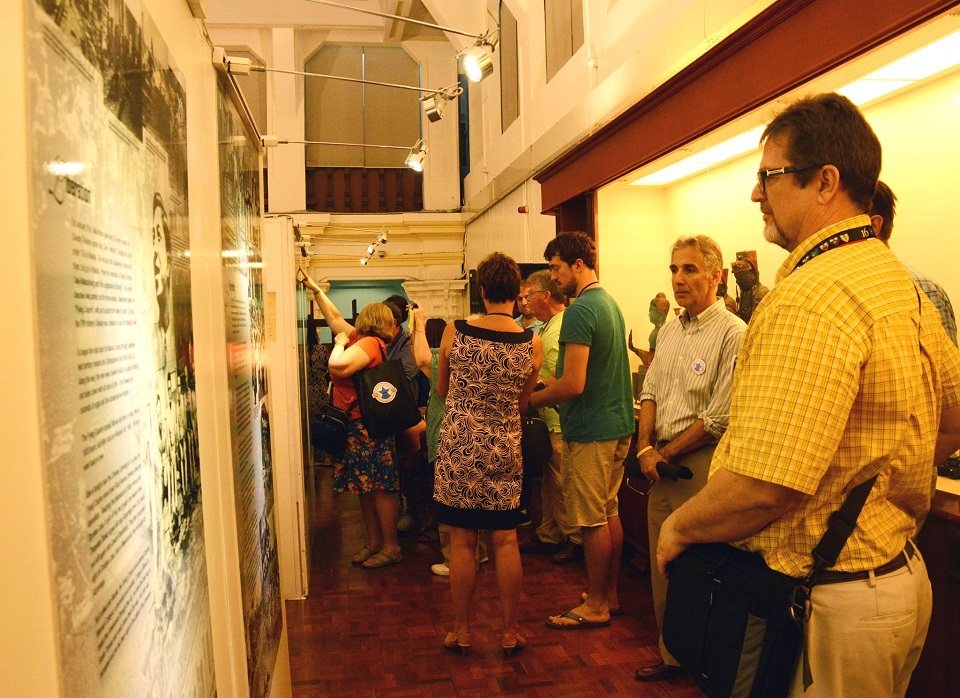
Former internees' families visited the Battle of Manila exhibit at UST.
People were machine-gunned in large numbers. The Inspector General said, “Mrs. Gregoria Alinabon, age 37, Manila, was one of a large group of people who were ordered to get in line by the Japanese. There were about 1,000 men, women and children who were told to sit down. They were then machine gunned. Two of Mrs. Alinabon’s children died and one was wounded. She was not hurt.”
Not even the Philippine Red Cross was spared. The Inspector General’s report said, “On Saturday, 10 February 1945, a squad of Japanese entered the Philippine Red Cross building and began to shoot and bayonet everybody they found in the building.”
There were many other atrocities committed during the Battle of Manila. While the Philippines now has an amicable relationship with Japan, it is important to remember the horrors of war to spur us into resisting such injustices from happening in our homeland ever again. — BM, GMA News

