

 GMA Brandtalk
 Tracking
 Archives

5 reasons why foreigners should learn Filipino languages
Language conveys so much more than mere words and their meanings. Every language tells a story of history, culture, tradition, natural disasters, invasions and migrations. Language is how we bring thoughts to life, communicate feelings and find common ground amongst the greatest of differences. Wherever we travel, we always try to learn at least some of the language. By doing so, our relationships with the country and the people around us develop little by little, giving us deeper insight and connection with them.
The Philippines is as varied in its landscapes as it is in its people and cultures. Its rich and turbulent history has shaped every part of its existence, from its food, traditions, religion, politics, economy and of course, its languages. To understand a Filipino language is to gain a greater understanding of the Philippines itself.
I’ve spent some time thinking over why I believe that we, as foreigners in the Philippines, should take the time and effort to learn the local tongues, and I’ve arrived at five reasons:
1. To gain a greater understanding of the country, its people and its culture.
“If we spoke a different language, we would perceive a somewhat different world.” –Ludwig Wittgenstein (1889-1951)
When you first arrive in a country, with little or no sense of the language and relying on the locals speaking English to deal with the most basic of tasks, it’s hard to get a real feeling for the country and you can only really skim the surface of the culture and what it’s like to live there.
The fact that many languages are so widely spoken in the Philippines is testament to the strength and pride of the various cultures in the country. These languages contain so much history, from the many ancient tribal languages still in use today to the much disputed "national language," Filipino. The choice of Tagalog as the main basis for Filipino is a point of contention for speakers of Visayan and Ilocano. Until I started to learn about Filipino and Tagalog, I had no idea about any of this!

2. To make real friends who truly understand you.
“Language most shows a man: speak, that I may see thee.” –Ben Jonson (1572-1637)
It’s a wonderful thing to have someone who knows you so well that they can practically read your mind, without using it against you, someone completely on your wavelength who you know you can call up with a crazy idea and they’ll go, "Yeah that’s awesome, let’s do it." A best friend to have inside jokes with that no one else understands—so inside that people around think you’re mental!
It’s really hard to do that when you can’t understand a word anyone is saying, or when you can only understand, hello, please and thank you…and beer, usually. Of course, in the Philippines, English is as much the national language as Filipino, but when my Filipina partner, Kach, tries to translate a joke or even an expression from Tagalog for me, I just never quite get it. It just doesn’t work in English!
3. To gain appreciation and sympathy for those who are learning to speak English.
“The secret of language is the secret of sympathy, and its full charm is possible only to the gentle.” –John Ruskin (1819-1900)
If you have only ever spoken one language for your whole life, then tried to learn a new one in adulthood, you’ll know all too well the feeling of cerebral exhaustion that comes with an endless barrage of new grammar and vocabulary; it seems like none of it will ever fit into your brain and you’ll never get anywhere close to being able to converse with fellow humans!
I’m very fortunate that I started learning French as a child and that I had the opportunity to practice with real French people; it prepared my young mind for learning new languages in the future. But I still have that initial feeling of overload. For this reason, I have a great deal of respect for anyone who grows up speaking more than one language, constantly switching back and forth from one to the other, expected automatically to understand all types of accents, idioms and colloquialisms that come with being a native speaker. Kach has come to understand most of my linguistic quirks, but it’s taken two years! Filipinos have, unarguably, the highest standard of spoken and written English in the whole of Asia, but given the huge range of accents and the speed at which we speak, we can make it pretty hard for Filipinos to understand us—nakaka-nosebleed naman!
4. To talk to old people—they always have the best stories!
“If you want to tell the untold stories…you've got to find a language…Use the wrong language, and you're dumb and blind.” –Salman Rushdie (1948)
Some of my favorite people to talk to are old people, like seriously old! The older generations have lived through so many world events, historical changes, governments, regimes, revolutions. They’ve seen technological changes at a rate that we can’t even begin to comprehend!
When we were living in Vietnam, I spoke very little Vietnamese, mainly because it’s such a hard language to learn. Most older people there spoke little or no English.
We once met an old Vietnamese man who spoke a tiny amount of Spanish and explained that he had been sent by the army to South America during the Cold War (extremely suspicious!), but we couldn’t get any more details from him. I still wonder today just how many incredible stories he could have told us, if only we had a common language to share them in. Given the colorful history of the Philippines, I don’t want to miss the chance of hearing incredible personal accounts of the changes and challenges the country has been through.
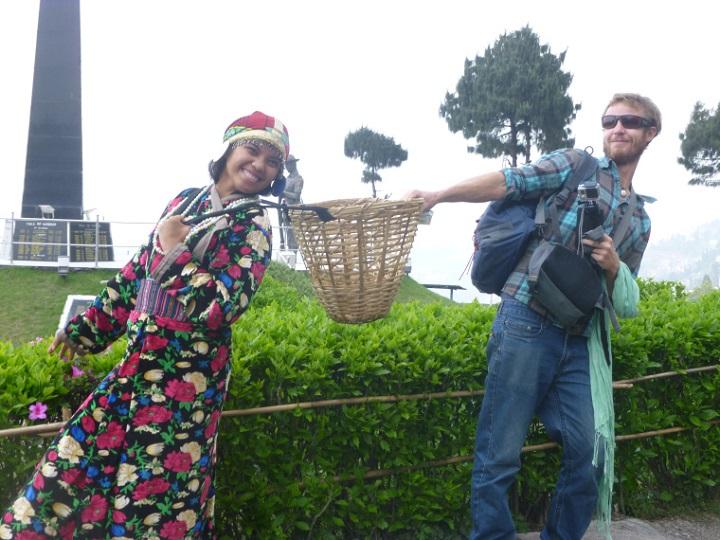
5. To understand what your girlfriend or boyfriend is saying (or shouting)!
“Language is the blood of the soul into which thoughts run and out of which they grow.” –Oliver Wendell Holmes (1809-1894)
OK, so this point doesn’t apply to everyone, but if you love a place so much that you never want to leave, then it’s always quite likely that you could fall in love with a guy or a girl there and spend the rest of your lives together.
Or, like us, you could meet someone in a country that’s foreign and strange to both of you.
But regardless of how and where you meet, there are always going to be times when you want to know what your other half is talking about in their own language. Little comments dropped here or there could be either sweet, playful, sarcastic or annoyed, and you would have no idea! And what about in an argument? It’s those moments of anger, passion and excitement, or all of the above, that we’re most likely to switch automatically to our native tongue, leaving the recipient in a confused and bewildered state of shock.
We don’t live in the Philippines, yet even so, I’m trying to learn Filipino, bit by bit. But I still don’t get it when Kach says things like, "Mamaya na!" "Nakakainis ka!" or even, "Itulogmonayan!" — BM, GMA News
Jonathan Howe and Kach Medina Umandap are world travelers who run the blog Two Monkeys Travel. They are currently in Colombia.

