

 GMA Brandtalk
 Tracking
 Archives

A long time ago in a galaxy far, far away: The original Star Wars trilogy
In sitting down to do this retrospective, one must confess to a sense of trepidation. After all, as anyone who hasn’t been living under a rock for the last four decades probably knows, there is precious little that hasn’t already been written about the “Star Wars” saga. But with next week’s pending release of “Star Wars Episode VII: The Force Awakens” set to continue the story of fan favorite characters Luke, Han, and Leia, now is as good a time as any to look back at the films that started it all: the classic “Star Wars” trilogy.
In May of 1977, writer-director George Lucas, fresh off the success of “American Graffiti” (which inspired the classic sitcom “Happy Days”), released the film with which he will forever be identified: a space fantasy known simply as “Star Wars.”
With America still in the midst of its post-Vietnam malaise, “Star Wars” (retitled “Star Wars Episode IV: A New Hope” in 1981) hit audiences like the proverbial brick through a plate-glass window. While the rest of Hollywood reflected the cynical cultural consciousness of the time with the likes of “Taxi Driver”, “All the President’s Men” and “Apocalypse Now”, Lucas’ sprawling saga of a boy, a girl, and a universe was a decidedly refreshing change of pace.
The story of “A New Hope” revolves around Luke Skywalker (Mark Hamill), a young farmer with dreams of seeing the galaxy. Little does he know, his life is about to change forever when he meets a pair of bickering droids and Obi-Wan Kenobi, a wise old hermit with a secret (the legendary Sir Alec Guinness). Enlisting the services of the roguish Han Solo (an impossibly young Harrison Ford), the unlikely allies set out to rescue the headstrong Princess Leia (Carrie Fisher) from the clutches of the evil lord Darth Vader (played by David Prowse, but voiced by Mufasa himself, James Earl Jones).
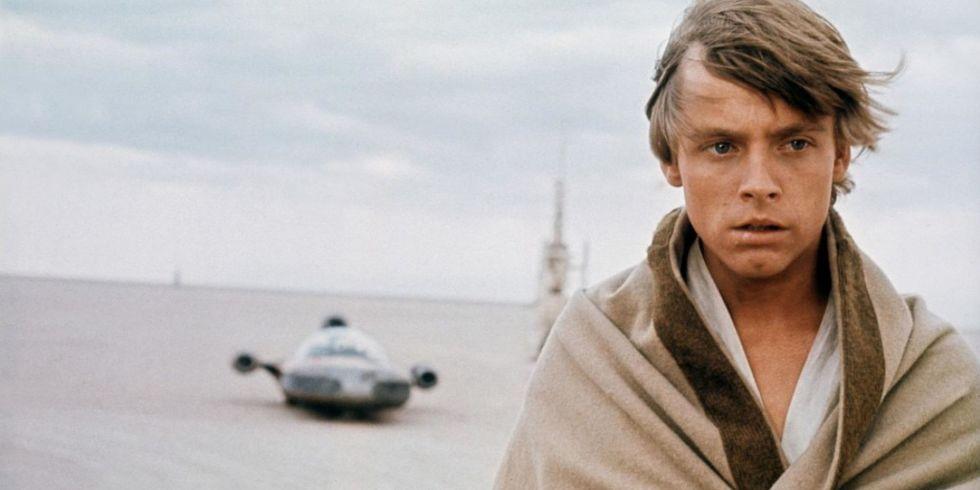
Critics lauded the characters’ relatable, human nature, which never took a back seat to the visuals. Also praised was the inventive production design that introduced the then-radical idea of a “used universe.” The film was nominated for ten Academy Awards, and the groundbreaking visual effects, created by a team Lucas assembled (that would go on to become the foremost effects house in the world, Industrial Light and Magic), wowed audiences, with people lining up to see the film over and over again at sold-out theaters all over the world. Practically overnight, Lucas and his actors were superstars, having created a box office smash and pop cultural milestone the likes of which Hollywood wouldn’t see again until the release of “Batman” in 1989.
Behind the scenes, however, the stress of putting out an unconventional and logistically challenging film while fending off studio interference (in the form of 20th Century Fox) gave Lucas a heart attack, leading him to swear off directing forever (more on this next week!). Thus, all future “Star Wars” Episodes under his control would be independent films funded by Lucas, with Fox reduced to the role of distributor.
Ironically, it was Lucas’ contract with the studio that made this possible, as it guaranteed him, almost as an afterthought, total control over all merchandise made from his series. At the time, merchandising wasn’t yet the lucrative industry it is now, so the studio didn’t think twice when Lucas asked for it with modest dreams of an R2-D2 cookie jar in mind. The rest, of course, is history, as the merchandising blitz that came in the wake of “Star Wars” and its subsequent entries made George Lucas a billionaire.
In 1980, with Irvin Kershner directing a story by Lucas, “Episode V: The Empire Strikes Back” was released, which upped the ante on the first film by introducing pathos into the “Star Wars” universe as Darth Vader sought revenge on the Rebel Alliance that had defeated him the last time around.
Where “A New Hope” had been a traditional adventure story that took its time to set up the characters and situations, “Empire” hit the ground running, unafraid to place those now-beloved characters into environments and situations that pushed the series forward in a bold new direction. Acting, cinematography, and, yes, even the effects, were above and beyond those of “A New Hope,” laying the narrative foundations for plot threads that are even now being expanded upon.
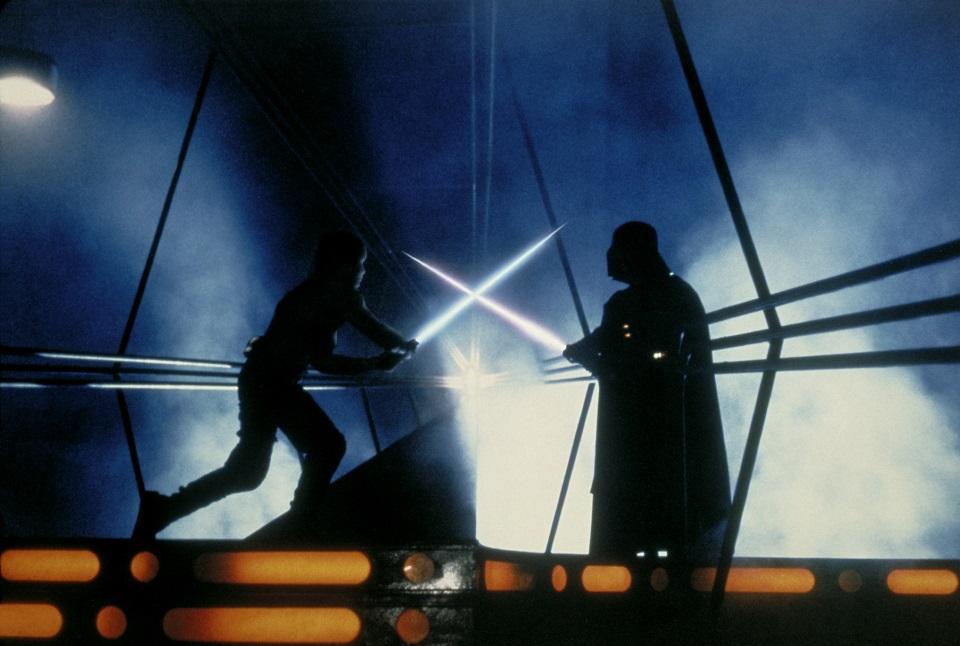
1983 saw the release of the final film in the classic Trilogy. “Episode VI: Return of the Jedi”, wherein Luke and Vader clash over the demons of the past while the Rebel Alliance makes a final, desperate push against the Galactic Empire (personified here by a scene-stealing Ian McDarmid as Emperor Palpatine).
While not as audience-challenging in plot or execution as “Empire”, “Jedi” was a crowd-pleasing finale to a series whose creators used every trick in ILM’s by-then considerable arsenal to bring it to life. While reviews would be somewhat mixed, “Jedi” was an epic conclusion to a beloved franchise.
Much like the “Indiana Jones” films he would go on to make with his good friend Steven Spielberg, Lucas crafted the classic “Star Wars” Trilogy to evoke the spirit of the low-budget serials he had grown up watching, but updated for a modern audience. His masterstroke was building the narrative on a classic literary framework (Campbell’s oft-cited “Hero’s Journey”), and combining it with helpings of pseudo-mysticism and spectacle.
Before “Star Wars”, science fiction had been characterized by outlandish plots and cheesy special effects, before Stanley Kubrick’s critically acclaimed (if somewhat ponderous) “2001: A Space Odyssey” brought a sense of legitimacy to the genre. However, following “2001”, quality releases had been few and far between, and fewer still had the scale, scope, or ambition of Lucas’ films. Simply put, the original Star Wars trilogy is almost singlehandedly responsible for bringing a sense of fun and wonder back to the big screen, wrapped in a high-tech package tempered with heart, humor, and whimsy that everyone could enjoy. The proof was in the pudding, as the series went on to become one of the highest-grossing box office champs of all time.
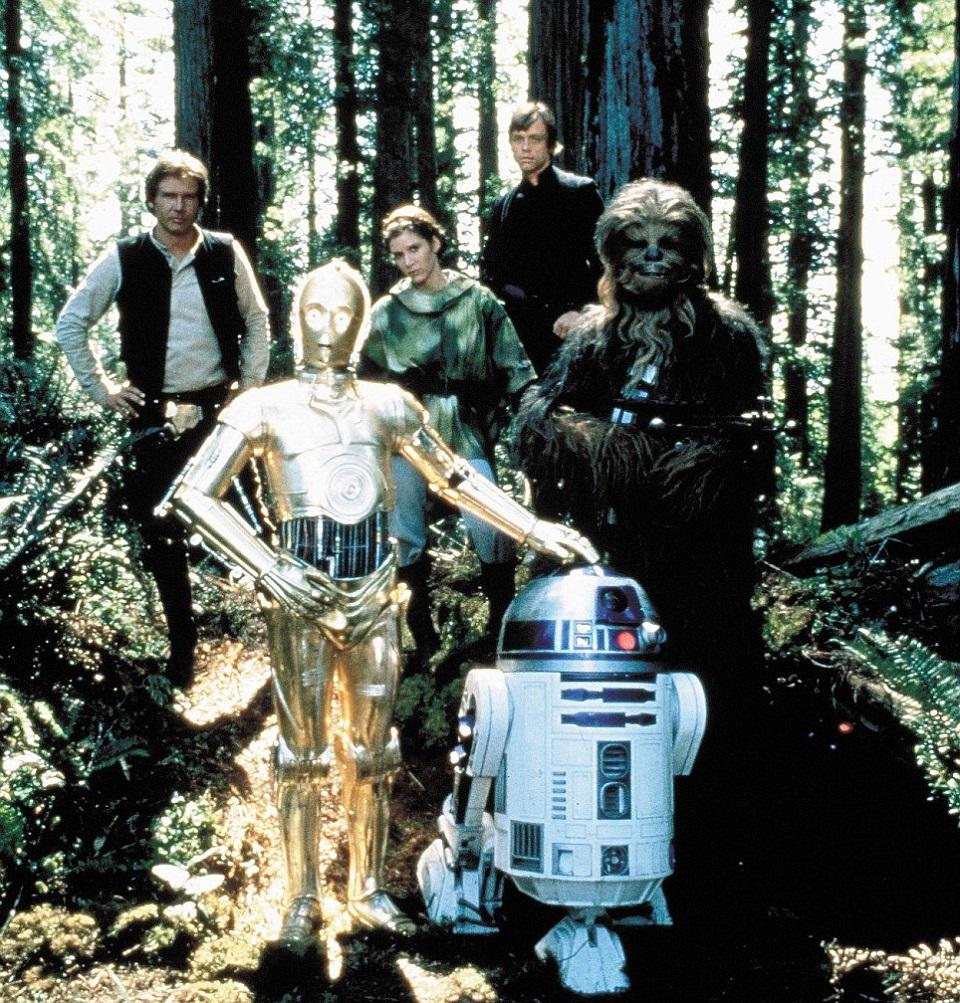
While it is widely acknowledged that Spielberg (pretty much) invented the mass-release summer event film with “Jaws” in 1975 (believe it or not, summer was formerly seen as a horrible time to release potentially profitable films), it is undeniable that “Star Wars” took the concept to the next level, influencing the way modern blockbusters are designed, produced, marketed, and, ultimately, consumed.
In 2012, Lucas would sell off the entire franchise (and “Indiana Jones”) to Disney for $4.05 billion, allowing the House of Mouse (which has had “Star Wars” attractions in its theme parks for years) to create its own series of films, with the first being the aforementioned “The Force Awakens.” Now, as cinemas prepare for the long-awaited next entry, fans everywhere wait with bated breath to find out if director J.J. Abrams (the man who successfully rebooted “Star Trek”) can recreate the lightning in a bottle that, since 1977, has captured the imaginations of generations.
After all, like Darth Vader himself, they’ve been burned before. — BM, GMA News
Next week: Special editions, prequels, and cartoons in the run-up to “The Force Awakens”!

