

 GMA Brandtalk
 Tracking
 Archives

Devotees, Task Force Nazareno prepare for Feast of the Black Nazarene
January 9 holds a particular significance to the devotees who flock to Quiapo Church in throngs of hundreds of thousands, even millions, annually. On that date, the Feast of the Black Nazarene is commemorated and the procession locally known as the Traslación is performed. The procession is a 4.3-mile journey, beginning at the Quirino Grandstand and concluding at the Quiapo Church after an estimated 19-hour spiritual frenzy.
At the heart of the celebration is the life-size statue of Jesus, kneeling on one knee and carrying a cross. This dark-skinned image of Christ, whose designer is unnamed, first landed on Philippine shores from Mexico in 1606. It was then enshrined in St. John the Baptist Church at Luneta before it was moved to its current home in Quiapo in 1767.
The year 2016 marks the statue's 410th year in the country and its 249th year in Quiapo Church. It has survived fires, earthquakes, typhoons, and even bombings during World War II—earning it even more awe from the faithful, who believe that it can perform miracles in exchange for devotion.
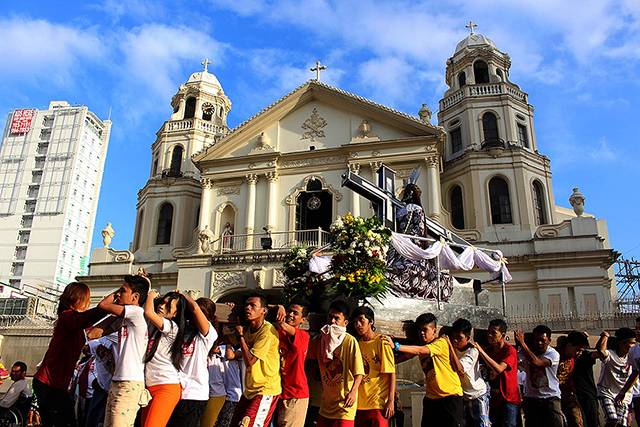
During the Feast of the Black Nazarene, the most devout walk barefoot as both penance for sins committed and an expression of gratitude. The sacrifice made by Jesus Christ for humanity is a key maxim in Catholicism and for those who make the pilgrimage annually, participating the procession allows them to share his suffering.
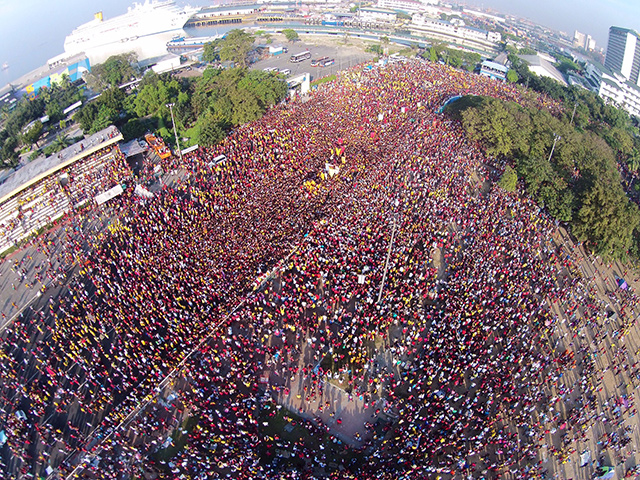
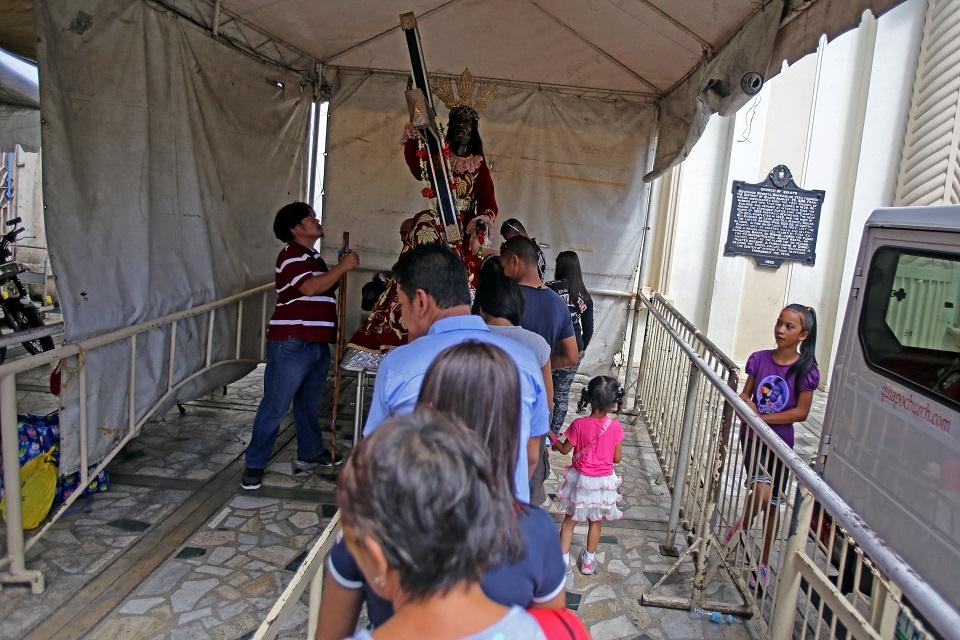
Aside from braving the thick crowd to demonstrate reverence for the Black Nazarene, the pious also risk injury to get close enough to throw small pieces of cloth at the statue. They believe that the cloth that has touched the holy figure's dark skin gain curative qualities. The same act is done in the Pahalik, where people lineup to wipe or "kiss" the statue prior to the Traslación.
Although the Pahalik officially starts on January 8 at 1 p.m., devotees are already flocking to the Minor Basilica of the Black Nazarene in Quiapo, Manila.
The Manila Police District has already formed the Task Force Nazareno in preparation for the procession on January 9. The Metro Manila Development Authority is also expected to give an advisory to the public about road closures and alternate routes, ahead of the procession of all replicas of the Black Nazarene on January 7 at 3 p.m.
In an interview on Balitanghali, Quiapo Church rector Msgr. Hernando Coronel assured the public that safety is of the utmost importance to the organizers of the Feast of Nazarene.
Coronel said that they will be using the APEC template, which he described as a "whole organization" approach to security. This means that different institutions and agencies involved (e.g. the Church, the local government of Manila, and the police) are coordinating to ensure that the Traslación goes smoothly. He added that he is thankful that the City Administrator and the City Engineer of Manila are overseeing the roadworks near Quirino Grandstand.
He also advised that they will be holding a press conference on Tuesday (January 5) to address questions about parking and other public concerns. — Aya Tantiangco/BM, GMA News

