

 GMA Brandtalk
 Tracking
 Archives

‘The Emperor in August’ seeks to humanize Japan’s wartime ruler
This August 6 and 9, Japan marks the 71st anniversary of the US' twin atomic bombings of the cities of Hiroshima and Nagasaki.
On Aug. 6, 1945, in a bid to end World War II (1939-45), an American B-29 bomber dropped and exploded the first atomic bomb over Hiroshima, immediately killing at least 80,000 people and erasing 90 percent of the city.
On Aug. 9, 1945, another B-29 bomber dumped the second atomic bomb over Nagasaki, its impact killing an estimated 40,000 people.
Years later, tens of thousands would have health problems, suffering from and eventually dying of causes related to radiation exposure linked to the twin atomic explosions.
On Aug. 15, 1945, in an unprecedented move, the voice of Emperor Hirohito, once considered as descended from the gods, was heard all over the realm.
In a radio address, the Hirohito (now referred to as Emperor Showa after his death on Jan. 7, 1989) announced Japan’s acceptance of the Allied forces’ demands and its unconditional surrender. The Emperor said Japan had to surrender because of the destruction unleashed by “a new and most cruel bomb,” historical accounts asserted.
On Sept. 2, 1945, the formal agreement stipulating Japan’s surrender was signed on board the US battleship Missouri docked and anchored in Tokyo Bay.
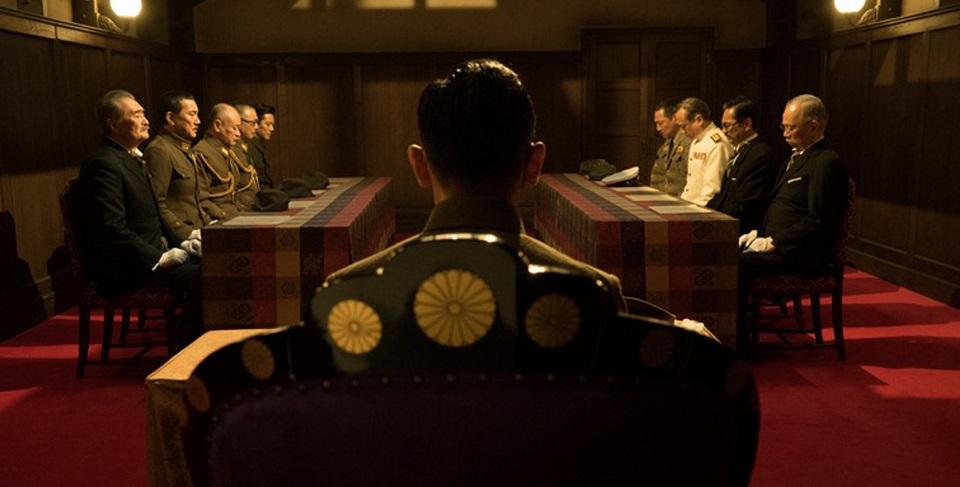
The decisions and actions of the Emperor in the final five months of deliberations as US-led forces advanced on Japanese shores are central to “The Emperor in August,” directed by Masato Harada and released in 2015.
In an interview, writer-director Harada (who played the villain Omura in “The Last Samurai”) said he worked on “The Emperor in August” to “humanize and put a human face to Emperor Hirohito.”
Harada diplomatically acknowledged criticisms that the Emperor played a crucial part in the bloody battle undertaken in his name. But he noted also the Emperor was instrumental in making Japan surrender.
“'The Emperor in August' is a film about an insider’s point-of-view or perspective of the Emperor. Unlike many previous films about the Emperor, my film shows close-up shots of [him]. There are many shots of the Emperor’s face. I did not caricature his mannerisms—again, unlike previous films about him,” Harada said in an interview.
“The Emperor in August” had a recent one-night-only screening at the Cultural Center of the Philippines. The film was adapted from the 1988 book by Japanese historian Kazutoshi Hando. The narrative is similar to Kihachi Okamoto's 1967 film “Japan’s Longest Day,” which was also based on Hando's account.
Film lovers who are not into Japanese wartime history may be turned off by “The Emperor.” But those who are will savor it. The film is marked by the tentativeness in thoughts and actions of the lead actors and key protagonists—performances so subtle that there were moments one begins to ask, is this character pro-Emperor or anti-Emperor?
One positive aspect of “The Emperor in August” is its being devoid of sentimentalism or nostalgia associated with historical figures.
Harada said he would have wanted to include scenes depicting the Emperor’s testy relations with his mother, then Dowager Empress Teimei, who wanted Japan “to fight till the end.” He eventually decided against it in order not to unsettle right-wing political forces still active in Japan’s politics.
“I was told the Emperor holed himself up in his room for days and refused to talk to his mother after a bitter fight. His mother also had difficult relations with his wife, Empress Nagako,” Harada added.
While the narrative of the film is anchored on the Emperor, played gracefully and tactfully by Masahiro Motoki, two important figures of the six-member Supreme War Council had more screen time.
Tsutomu Yamazaki, as the hard-of-hearing Prime Minister Kantaro Suzuki, is convincing and impressive in portraying Suzuki's loyalty to the Emperor, deftly dodging pressures from and tricks by the militarists in the wartime Cabinet.
Yamazaki also elicits laughter with his antics as an aging prime minister in the middle of war, without losing the aura of authority as a senior official of the government most trusted by the Emperor.
Despite his youthful looks, Motoki (“Shall We Dance”, “Departures”)credibly essays the pivotal role of the Emperor.
Koji Yakusho (“Shall We Dance”, “The World of Kanako”) plays the Minister of War, Gen. Korechika Anami. He is the most conflicted and complex of the three main characters, and Yakusho persuasively agonizes as Anami ponders the implications of Japan’s surrender, terrified that capitulation means the death of Japan and its people.
Yakusho's performance is the film's emotional center. Playing a loyal military general, husband, and affectionate grandfather, Yakusho capably personifies the despair and dismay of various sectors of Japanese society waging a no-win war against the Allied forces.
One weakness of “The Emperor” is that it can leave members of the audience feeling confused. Or is this director Harada’s desired effect of making the viewers feel the turbulence and disorder in the days before Japan’s surrender? — BM, GMA News
Two of Masato Harada’s films, “Chronicle of My Mother” (2011) and “Kakekomi” (2015), will be shown at UP Diliman’s Film Institute from Aug. 17 to Aug. 20.
Go to Japan Foundation, Manila's Facebook page for more information about film screenings and other activities.
"The Emperor in August" was shown as part of the Eiga Sai festival.

