

 GMA Brandtalk
 Tracking
 Archives

Members of ‘Hamilton’ cast talk about doing the hit musical and today’s activism
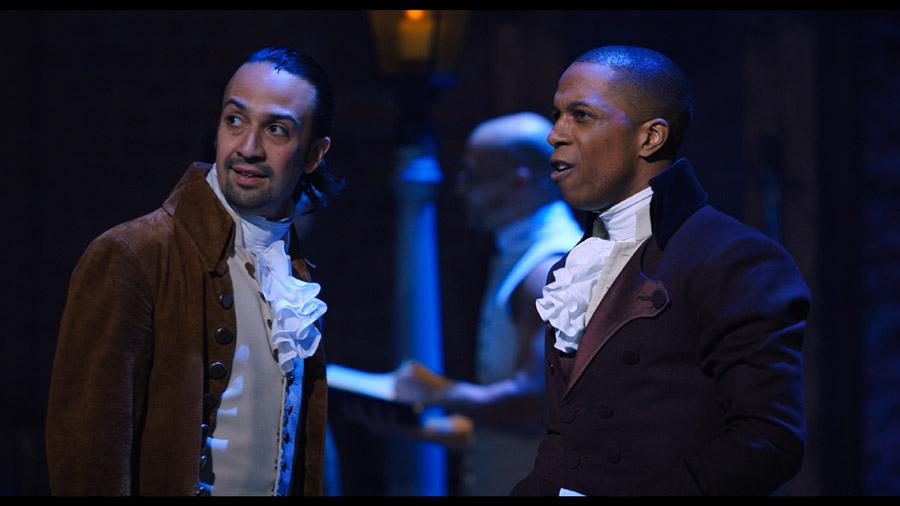
Los Angeles — When creative genius Lin Manuel-Miranda made a hip-hop Broadway musical to tell the story of Treasury Secretary Alexander Hamilton with nearly a non-white cast in 2015, he never knew what was coming. The show became a hit commercially and critically, bagging 11 Tony Awards to name just a few accolades.
"Hamilton" is still the most-sought-after show on Broadway and now, the musical, which is made into a film, is streaming for everyone to watch in the comfort of their living rooms thanks to Disney+.
The film version, directed by Thomas Kail, was filmed in June 2016 at the Richard Rodgers Theatre on Broadway. It was originally to be released in movie theaters in October 2021 but due to the pandemic, the film was released earlier on July 3 via the streaming service platform.
We were able to interview virtually Lin Manuel-Miranda, Leslie Odom, Jr. and Renee Elise Goldsberry about their experience doing the musical film as well as their views on today’s activism, pandemic and self-isolation.
Below are excerpts of our conversations with them:
Lin Manuel-Miranda (Writer / Composer/ Executive Producer / Alexander Hamilton)
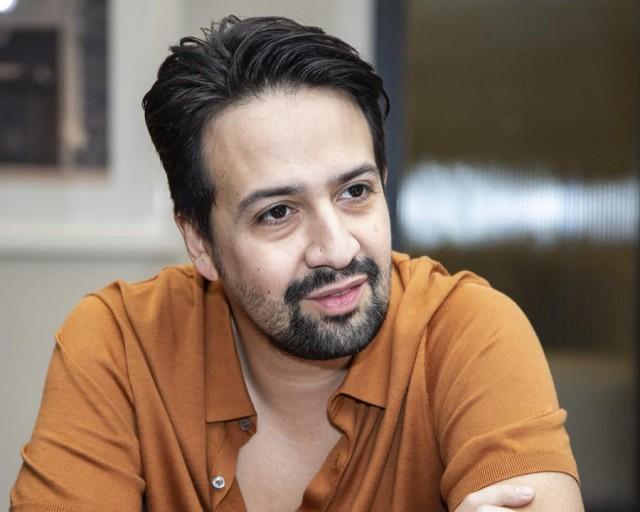
How would you describe "Hamilton" to someone watching it for the first time?
First of all, we are doing this for people who have not seen it yet. Although we were strapped to a rocket ship that first year in terms of the success of the show — and by success I mean everyone who saw the show told five people about the show — and it suddenly became very difficult to get a ticket to the show and we struggled with issues of accessibility and we made the entire two front rows 10 dollars via lottery.
Anytime we put out inexpensive tickets, people would buy them up and sell them for way more prices, way more expensive than we were charging. So it was always a struggle and it’s something that we are still struggling with and meaningfully wrestling with now that theaters are dark.
But, that also forced us to prioritize, we have got to film this cast and this moment while they are all in the building, while we are still in our first year contract. And so it’s hard to plan a movie shoot while you are doing eight shows a week, but we were able to pull it together, literally the week before I left the show.
We filmed this on I think June 25th, 26th and 27th. I left the show the next weekend, along with Leslie Odom, Jr. and Phillipa Soo and Ariana Debose, all original members.
To give people a description on “Hamilton,” it’s about a young man who came from impossible odds and poverty and incredibly tough origins in the Caribbean, to the mainland, just as the American Revolution is starting. It’s really an immigrant narrative, about someone who comes here from somewhere else and on the strength of his writing, writes his way out of poverty, writes his way into the Revolutionary War, writes his way into the formation of this country, but also writes his way to ruin.
It is a tragedy, it is narrated by everyone closest to Hamilton in his life and that includes Aaron Burr — the man who shot him, who was a friend and a colleague and a soldier and fellow lawyer — his wife and his sister-in-law and George Washington. The interesting thing about “Hamilton” is in telling Hamilton’s story, you have to reckon with the origins of this country.
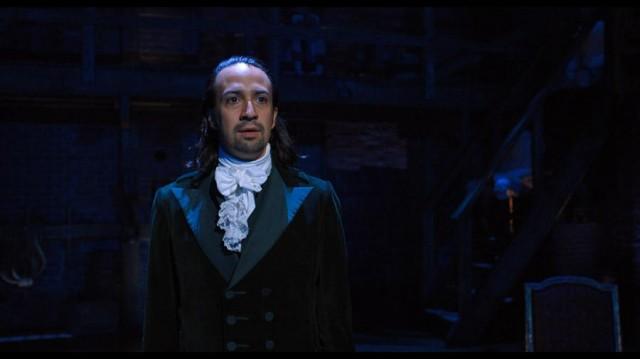
And if there is any political insight, I think the biggest one is the fights present and the problems and paradoxes present in the origin, are the fights that we are still having.
That’s how I was able to write about it and that includes the original sin of slavery that includes the division between states, when we are the United States and when we are warring states that includes foreign intervention, when we get involved in the affairs of other countries and when we isolate.
It’s not an accident that every character in our show with the exception of one, dies as a result of gun violence, so the epidemic of gun violence still being at the root of the founding of this country. But more than anything, it’s as much of this guy’s life as I can pack into two-and-a-half hours while I have you in the Richard Rodgers Theater.
How important was this for you archival wise to have this original cast because maybe in the future, there will be a film theatrical version?
I spent six years writing this show and so of course it was important to me to be able to capture it with the folks who made it come to life in that first year. And you almost never have time.
One, it is expensive and your expenses are entirely concerned with keeping the show open, getting people to come to the show and because of the runaway success of “Hamilton,” a lot of those issues got taken off the table.
We are still doing eight shows a week, I don’t recommend planning doing an independent movie while doing eight shows a week, but we managed it. And we managed it just at the time before principles started leaving the building.
We had already lost a couple of ensemble members in that first year to other gigs and stuff. But it’s an incredible luxury to be able to get it in the way we did, which is filming two live shows, filming close-ups, crane shots, and dolly shots.
What cinematic tools are you using for the cinematic version?
A couple of things, the thing I am supposed to say is like everyone who sees this movie gets the best seat in the house, but that is not exactly true, because no one ever had a seat like the one (director) Tommy Kail provides in this movie.
Because the camera is everywhere at once and I think he does an amazing job of giving you close-ups, breaking the proscenium, giving you crane shots, overhead shots, Steadicam shots, tracking shots, all while always stepping back so that you can see the larger picture.
When you see a piece of live theater, you get to look wherever you want, we direct your eye to an extent, but it’s up to you. Tommy has done an amazing job really making a cinematic, theatrical hybrid.
I am excited that this is the first film version that people will get to see, because I spent six years writing this version. To then take this and then adapt it to a more traditional cinematic translation is hard, it’s an active translation.
As someone who has been through that as well, Jon Chu has done an incredible job translating the musical “In the Heights” into a film and you are taking a two act structure and turning it into a three act structure and there are sacrifices that happen, there are things that you add and scenes that you take away. And so I am thrilled that you are seeing the show I wrote in a thrilling cinematic way. Whether someone makes a more traditional cinematic adaptation down the line, sure, okay. It will take a real vision and a real director and of course Tommy Kail has the right of first refusal because he has done such a wonderful job with this one. But I am thrilled that this is coming out in this way.
Renee Elise Goldsberry (Angelica Schuyler)
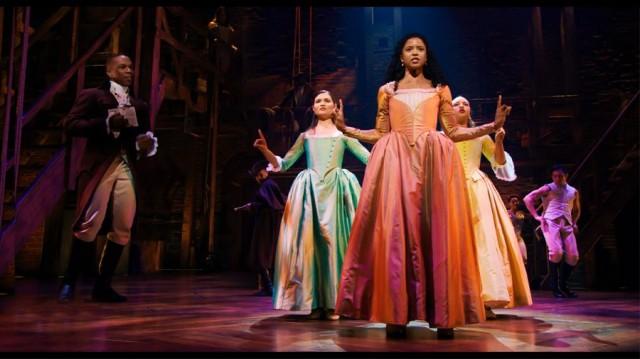
What did you learn from doing “Hamilton” and what lessons have you learned from your cast and Lin Manuel-Miranda?
I keep getting that gift. I keep learning I believe, and I get emotional when I think about them because, you know, I think they're all giants, you know, and I'm reminded because I just saw this movie.
I stood with them on a stage and they are always inspiring. They're always shockingly beautiful to me like spiritually shockingly beautiful but watching them in this show is humbling again because I remembered how frightening it is sometimes, you know, to be in a room with people with that kind of power. It's swagger honestly.
I'll speak specifically about Lin even though I could say this about any of them. He has this phrase that he said to me one time, when one of the greatest rap icons ever was sitting in the front row and this was early when we were at the Public.
Busta Rhymes was sitting in the front row of the Public Theatre with a big chain on, when we were doing the show and I don't know at that time that we expected even though it was this kind of hip-hop musical that actual hip-hop legends would embrace us.
That was a huge gift and so when he was sitting in the front row and was like one of the first hip-hop legends to be watching a show, I was like 'Lin, are you afraid? Are you scared?' I mean, how you did that when he was sitting in the front row and he said, 'The wizard should be afraid of me,' which I thought was so genius.
It just showed there's always tremendous humility in these people but you have to be able to stand in front of your heroes when you're "Hamilton" because they all came. They all came and as normal and regular or pedestrian as you feel when you're just a person who loves to do theatre and when the President shows up or anybody from any walk of life shows up and they're sitting before you, it could make you feel very small or you can believe in something that allows you to share this gift and you have to pick something that you believe in if it's not going to be yourself.
So we had a lot of things. We had each other and I had the example of a bunch of kids who stood up with all the swagger and bravado in the world in front of the world to share this story. It reminds me every time I'm in a very scary situation to put on a little swagger and believe in the words that I've been given to say.
Do you have a secret remorse that the film didn’t get a theatrical release?
I will be honest. When I first heard that we were going to be streaming my feeling was oh, is that how long this quarantine is going to last. These are very powerful people. They probably know more than I do and they don't really believe that 2021 October is an option and so that made me a little bit sad because I was ready for the world to return to normal.
The second thing I thought was, I won't be sitting with this group of people that I love so much when we first see the show because none of us are seeing the show that we've been in. So there was a bit of remorse about that but it was so quickly overshadowed by the gift it is to still be able to experience theatre from our homes.
That's so much greater than anything else so there's been so much loss. I thought this before we all flooded the streets in protest for Black Lives Matter, even before we were there it was clear that we needed art. We needed theatre. We needed to remember who we are and the best of who we are. We huddle up together in a dark room, side by side with strangers watching people spitting at us from the stage telling our stories.
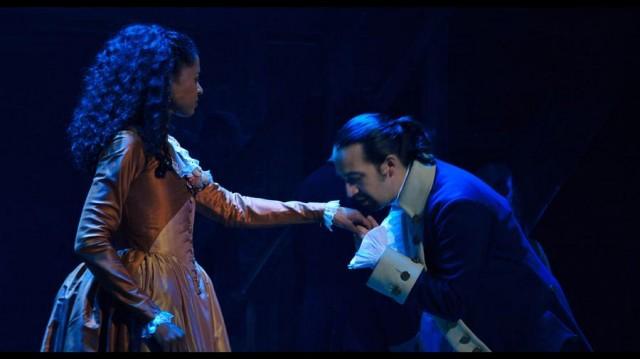
That's the beauty of humanity and the opportunity to still do that it's just too important and too great so I'm thrilled and my sadness about not coming together with my family was completely untrue because we've been having the best time on these Zoom meetings talking about this play and when I watch this movie which I have to say I can't guarantee this because I didn't see it like you did from the audience but I believe it's different. I believe it's different than seeing it in the theatre.
I believe that film is very specific. It's a different art form and if you love the theatre and truly know it the way Tommy Kail does and you also love film and truly know it and you can marry the gift of those two things, you've created something new. I believe that that's what this is. This is not just the stage production as glorious as I hear that was. This is something new and it is breathtaking.
Where are you isolating right now and how are you affected by this new normal? How are you adjusting?
I'm isolated in Connecticut actually and what's so crazy about that term “new normal” is that I have to keep checking in to find out what it is every single day.
I start in the morning and by the afternoon I am like “what's the new normal” and what's going on. Social media I'm checking in to see what Cuomo is talking about. I am always trying to keep up and it's interesting because it started with this escape from New York City because it was a virus that was the biggest thing and we wanted to be away from people. It was like this really weird game of musical chairs like who am I next to and it'll just be us for God knows how long.
Then George Floyd was murdered and Breonna Taylor and this oasis that I have in Connecticut away from Harlem felt. I felt like I was trapped. I felt like I wanted to go back and stand with the families in Harlem that I raise my children with and with this iconic image now of a protest sign that says Black Lives Matter and a mask on which actually brings me back to “Hamilton.”
The beauty of this idea that something could be bigger than our lives, right. Something is worth laying – I'll lay down my life if it sets us free which is American Hamilton and that was the protest we wanted to be a part of so we went back for that moment and now we're straddling those two ideas being faith and speaking for the safety of all of our citizens.
Leslie Odom, Jr. (Aaron Burr)
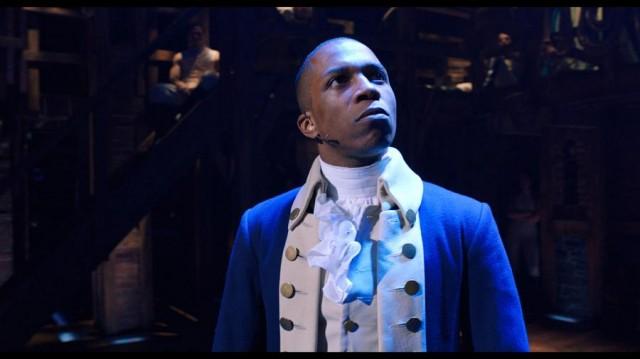
How different was doing “Hamilton” for the cameras than doing it on stage?
When I signed on to be a part of “Hamilton,” it was only to be a part of the stage version. I never thought that they would film it or that I would be a part of a filming but I was lucky enough to have done quite a bit of film and television work coming into “Hamilton.”
I'd spent 10 years after college, I went to Carnegie-Mellon University to study drama. Josh Gad, Josh Groban, Zachary Quinto, Joe Manganiello and Matt Bomer were there at the same time. It was a really great theatre acting program so after college, I've spent really most of my time doing television. Not much film but TV. So I'd gotten to know the camera a bit and the subtlety that can carry on camera that you can't really achieve in the theatre.
It doesn't read in the same way so when we got the opportunities, when they said we were going to do it on film, I was so grateful because now I got to put these two things together. I got to use my theatrical training and that really is a whole body storytelling that can be really read and understood in a 1,300 seat house but I got to do these small gestural things and these thoughtful little small things that only the camera would read I knew would add another layer of dimension, specificity and emotion to the performance. So I was really excited when they said we were going to film it as well.
How different was working with the director on stage and for the film version?
I love working with Thomas Kail. I love working with Tom and part of the thing that makes him a wonderful director is he's not about inserting himself everywhere and so if you're fine, you're fine. You have his support and you have his love to go as far as you want.
Tommy gave me in the entire process of “Hamilton,” I feel less than 10 notes in the whole process but he would always say the perfect thing that took the performance to the next level and so really the only thing I can remember was him reminding me that it needed to be for the first time, to discover these things for the first time. Lin says we were the most well-rehearsed cast in cinematic history because we'd done these scenes near 1,000 times but Tommy was like you got to go back to the first time and so really make these discoveries for the first time and that was really helpful.
What are your discussions with your colleagues since it is dark now in Broadway and we don’t know when we will ever have Broadway shows again?
Oh, we'll have it again. We'll have it again and we don't know how – we don't know when but the conversations with my peers are they are about lots of things but they're twofold.
The primary conversation that's happening is whenever we return is our responsibility to make sure we don't come back. It's our responsibility to make sure we don't come back the same. We have to allow this experience, this profound experience to change us as creators, as makers, as audience members.
So we're letting our hearts stay open and we're staying vulnerable of letting the changes happen. It's a painful process and having those uncomfortable conversations but we have to come back different.
Art is about creativity and so even in this time, I'm watching people like Bill Irwin or Michael Urie. Michael Urie did his one man show. It was brilliant off-Broadway. He found a way to do it online that I have chills thinking about it that was still emotional and effective. It's not the same as the live theatre.
This “Hamilton” film that Tommy's made so beautifully it's not the same as live theatre but it's something and it's something that can stand in the gap and so we're also talking about this resilient and creative group of people, what are we going to do in the meantime but we're going to come back. We're going to come back and it's our responsibility to make sure we don't come back the same. — LA, GMA News

