

 GMA Brandtalk
 Tracking
 Archives

The Wuds frontman Bobby Balingit releases debut novel 'Ang Paglalakbay ni Juan Isip'
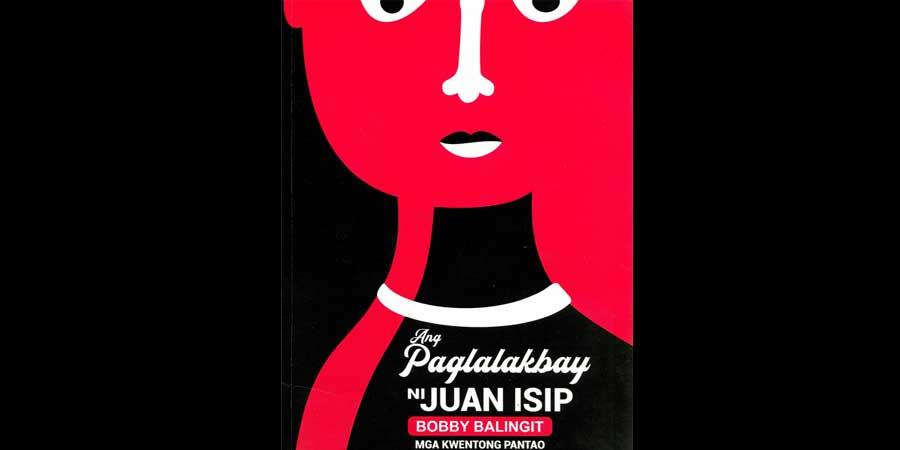
Pinoy punk rock legend Bobby Balingit, the frontman and guitarist of The Wuds, wears many hats.
The voice behind the songs “At Nakalimutan ang Diyos” and “Inosente Lang ang Nagtataka” is also a guitar coach, painter, theater actor, art installation artist, vegetarian chef, and with the launch of "Ang Paglalakbay ni Juan Isip: Mga Kwentong Pantao," the performer is now also a novelist.
A labyrinth of stories
Quarantined readers will find themselves taking the path of Juan Isip, who enters the world of different stories. With a touch of magic realism and fantasy, the book is part-fable, part-playscript, part-historical fiction, and part poetic essay.
Like its creator, the novel itself is punk. The characters, though they belong to different stories in the book, intermingle with each other. Balingit explains that the stories, happening in various timelines and dimensions, all take place at the same time.
“’Yung aklat ay hindi lamang isang babasahin. Ito ay isa ring laro. Dahil mapaglaro ang isip, siguro kailangang makipaglaro para sa kapakinabangan at kabutihan,” Balingit said in an interview with GMA News Online.
It was in 1995 when the labyrinthine idea appeared in a dream. He originally intended for an opera, but the fate of the "book" changed course in 1998.
“Tulad ng isang multo, ayaw niyang kumalas. Lagi ko na siyang naiiisip. Kaya sinimulan ko na siyang isipin. Kasabay ng paggawa ko ng musical scoring sa isang radio play, sa paggawa ko ng music commercials para sa radyo, nasasanay na akong gumawa ng kwento,” the Cavite-based artist said.
“Pinag-aralan ko ang galaw ng bawat artista, direktor, at production crew para sa pangarap kong isang opera. Ang mahal pala. Imposible,” he quipped.

In 2000, Balingit resurfaced as Juan Isip. He collaborated with foreign artists Italian Ugo Guido and Chris Callas for the first album, released the following year. With songs, dancing, live storytelling, and orchestra, he created a 4-dimensional living novel, which he called an "exibook."
“Ang aklat ay tula na may mga napilas na bahagi na naiwan sa nakaraan, sa hinaharap at kasalukuyan. Hindi ko pinapangarap na maintindihan ito ng mga makata. Maging malaya lang sa pakikibahagi sa kwento,” he explained.
Balingit also started writing an opera about Macario Sakay, until his extensive research took a toll on his health in 2013.
But nothing could take away the artist from his creation. Near the end of 2014, “hawak ang laptop, sukdulan ng depression, sinimulan ko nang isulat ang aklat ng 'Ang Paglalakbay ni Juan Isip.' Naiiyak akong natatawa sa mga karakter na nagsisilabas. Sinasalungat ko ang epekto ng depression. Super dami ng aking mga kaibigang karakter sa kwento.”
History and music
Balingit chose his painting of Mona Sisa, one of the book’s characters, as the cover design for Ang Paglalakbay ni Juan Isip. The artwork was displayed in his first exhibit in Kalye Art Gallery more than a decade ago.
He considers his book as a “pahapyaw na nobela” or a brief introduction into the real Juan Isip universe. More stories will spawn from the ones in the novel.
He is planning to write the next book in baybayin, with a Filipino translation across the page. In one of the stories about Macario Sakay, the revolutionaries have a high regard for it “pagkat ang ugat ng Baybayin ay Sanskrit, kung paano nakasulat ang Vedas o Knowledge sa Ingles.”
The novel also displays the author's music prowess. Terms like 440hz, acapella, and bass drums as well as personalities like Rolling Stones, Sandinista and Bob Dylan make an appearance in the book. It's not surprising. Balingit graduated with a degree in Music Education at the Philippine Normal University in 1986.
The sound and sense of “Ang saysay ng kasaysayan ay ang isalaysay ang saysay ng kasaysayan” and “binatbat ng satsat ng ratrat ang patpat” did not fail to have an appeal to readers. In the book, Balingit also created his own onomatopoeia (“gligg”and “taragadingdangan” for instance).
The Wuds is also present in the narrative. One character made reference to a line from the band’s song “Eugenics.” One of Sakay’s comrades was said to have written his song “‘Saan Nanggaling ang Iyong Ngiti’ at di kalauna’y nai-record at napatugtog noong panahon ng Hapon.” In another scene, Sakay dreamed of a “Punk na jamingan w/ the WUDS. Pero ang kumabit sa kanya nang husto ay ang album recording na ang title ay ‘SILKENPLANKEN PLINK.’ Ang panahon kung kailan napagtritripan ulit ang electronics at computer music.”
Balingit also gave us a taste of history. We learn about pikbung, the sound produced by the Japanese infantry rifles of World War II. He twisted the fate of Hiroshima and Nagasaki. In “The Way to Bhutto,” butoh, or the Japanese dance of death, was turned into the dance of “ngiti” or happiness.
The world through a kaleidoscope
Be ready to encounter the red-haired Maligaya who can talk to insects and trees. She loves to go to the farthest side of the sagingan, the part of the elementary school feared by many, because of stories that a tikbalang inhabits the area.
There are accounts about a certain Señor Tenor, who challenged the tikbalang, but was killed by the entity. Since then, that part of the school has been avoided. Especially, the back part of a classroom, where students say someone or something was listening to them and watching them. They avoided sitting in the last row of chairs. And those who do not study their lesson were told to sit there, to scare them off.
There is a small hole in the wall at the back of the classroom. Maligaya loves to peer into the hole and listen to the discussion. For her, “isang kaleidoscope ang pagsilip.”
We are like Maligaya, watching every scene from Ang Paglalakbay ni Juan Isip.
We learn about Mona Sisa who did not speak until she turned into a young lady. Balingit said she is the antithesis of the Sisa who always shouts “Crispin! Basilio!” in stage plays.
Mona Sisa is different from us, he says, because “hindi siya nagtataka,” presumably a reference to a Balingit song. “Wala siyang pinagtatakhan. Siya ang puno ng kaalaman. Siya ay makapangyarihan. Alam niya ang ‘Absolute Truth.’ Malinaw sa kanya ang ‘dualities’ kaya niya nalalagpasan.”
In “IKAPITO: Huling Bahagi (Si Macario bilang isang Aktor),” we learn about the Chinese character named Corazon. She was Sakay’s lover who ran away with the revolutionary funds of the organization. The story has some similarities to the rumored love affair of Antonio Luna and Ysidra Cojuangco.
The stories of Mayumi and Pino, Bumble B, the Flying Turtle, Naku Yagashima and Umi Hirosaki, and Margot Villa del Prado Ang-koh, who had her heart broken by Juan Isip, will grow on us. We will also be transported to the magical realms of Kalambasura, Ibana, and Planeta ng Ngiti.
Never-ending tales
In 2017, Aiya Balingit, the daughter of the punk legend, opened her first solo show, Ang Planeta ng Ngiti at Secret Fresh Gallery in San Juan.
Through landscapes, still-lifes, and portraits, Aiya gave a visual form to the story with the same title from "Ang Paglalakbay ni Juan Isip."
And since the novel only serves as a rough sketch to Balingit’s other tales, be ready to be mezmerized again.
“Ginagawa ko now ‘yung karugtong ng mga nawaglit na dahon,” Balingit said, referring to the story “Ang Mga Dahon,” as the lost pages of a book.
Meanwhile, his Juan Isip band already as 11 albums in total, including unreleased tracks.
The printed narratives will always be accompanied with songs and dance. For Balingit, “Ang mga pinakamagagandang tula at kwento ay inaawit.” — LA, GMA News
Ang Paglalakbay ni Juan Isip is an independent book. For orders, please contact the author through his Facebook account.

