

 GMA Brandtalk
 Tracking
 Archives

In 'Quezon,' watch for the moral thread that is Joven Hernando tying Jerrold Tarog’s 'Bayaniverse' trilogy together
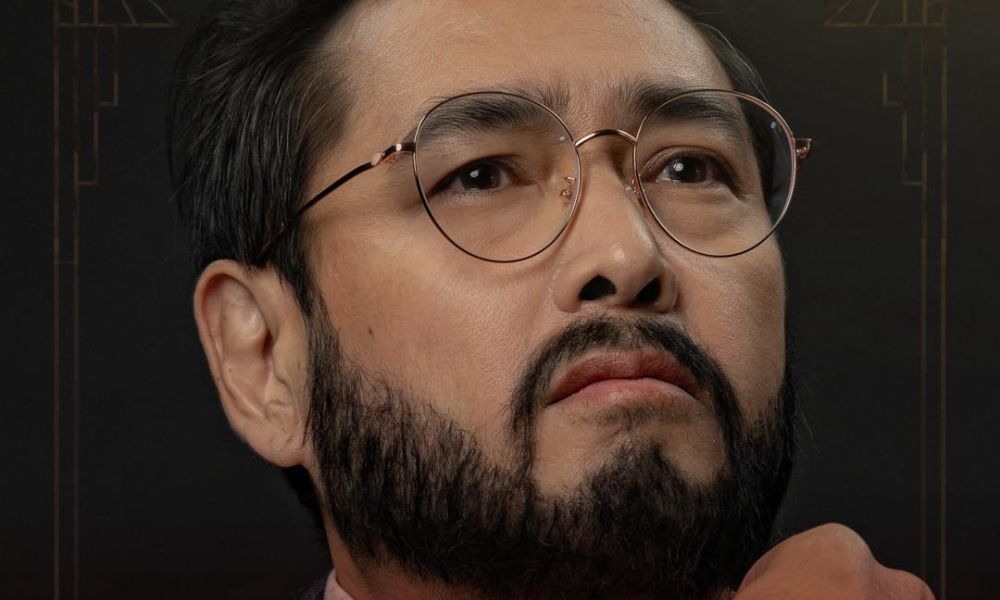
In "Quezon," the fictional journalist Joven Hernando (played by Arron Villaflor and later on by Cris Villanueva) proves to be something of a pivotal character, a moral thread that ties Jerrold Tarog’s “Bayaniverse” trilogy beautifully.
Joven, which means youth in Spanish, symbolizes the ever-questioning spirit of the younger generation, eager to believe in the promise of nationhood yet burdened by its flaws. He represents the voice of the people, often described as observant, idealistic, and ultimately disillusioned by the realities of power.
Joven first appeared in “Heneral Luna” (2015) as a young journalist covering the revolution. Through his idealistic lens, viewers witness both the heroism and the flaws of the revolutionaries. He idolizes General Luna (John Arcilla) and when he witnesses his brutal death, his faith in the revolutionary cause is shaken.
Following Luna's death, he joins the ranks of Goyo (Paulo Avelino) in the second film of the trilogy, “Goyo: Ang Batang Heneral.” Continuing his work as a journalist, Joven observes Goyo’s journey from a proud, idealistic hero to a man who ultimately confronts the true meaning of sacrifice and duty.
In “Quezon,” Joven’s evolution reaches its peak. Once an idealist reporter of revolutionary heroes, he becomes a seasoned journalist and a witness to the transformation of Manuel L. Quezon (Jericho Rosales) from a soldier fighting for freedom to a politician navigating power and compromise.
Through his newspaper, Alerta, Joven strives to uphold truth and integrity, even when it means criticizing his powerful friend. His moral struggle — torn between loyalty to Quezon and loyalty to truth — reveals the depth of his character and his importance to the film’s message.
Joven’s confrontation with Quezon is one of the film’s most revealing moments. It exposes not only Quezon’s political flaws but also Joven’s own complicity in the system he condemns.
When Quezon slams Joven for agreeing to help build the propaganda machine through his daughter’s films, it forces the journalist to confront an uncomfortable truth: that even those who pursue righteousness can become part of the corruption they oppose.
This is what makes Joven a revelation in “Quezon.” He is no longer just a passive observer or a narrator of history. He becomes its conscience.
Through his disillusionment, viewers will question the cost of independence, the moral compromises of leadership, and the blurry line separating truth and ambition.
Joven’s story reveals that the fight for freedom is not just against colonizers, but against the moral decay that power can bring within.
“Quezon” is the last installment of the “Bayaniverse” trilogy. It follows the life of Manuel L. Quezon, a lawyer and a soldier who became the President of the Commonwealth of the Philippines from 1935 to 1944, highlighting his tumultuous presidential campaign against Emilio Aguinaldo.
“Quezon” is currently showing in over 200 theaters nationwide. — LA, GMA Integrated News

