

 GMA Brandtalk
 Tracking
 Archives

On Bayaniverse and heroism: Deconstruction is sexy until you need to figure out what to do
By the way, spoilers for the movie "Quezon."
The deconstruction of heroes
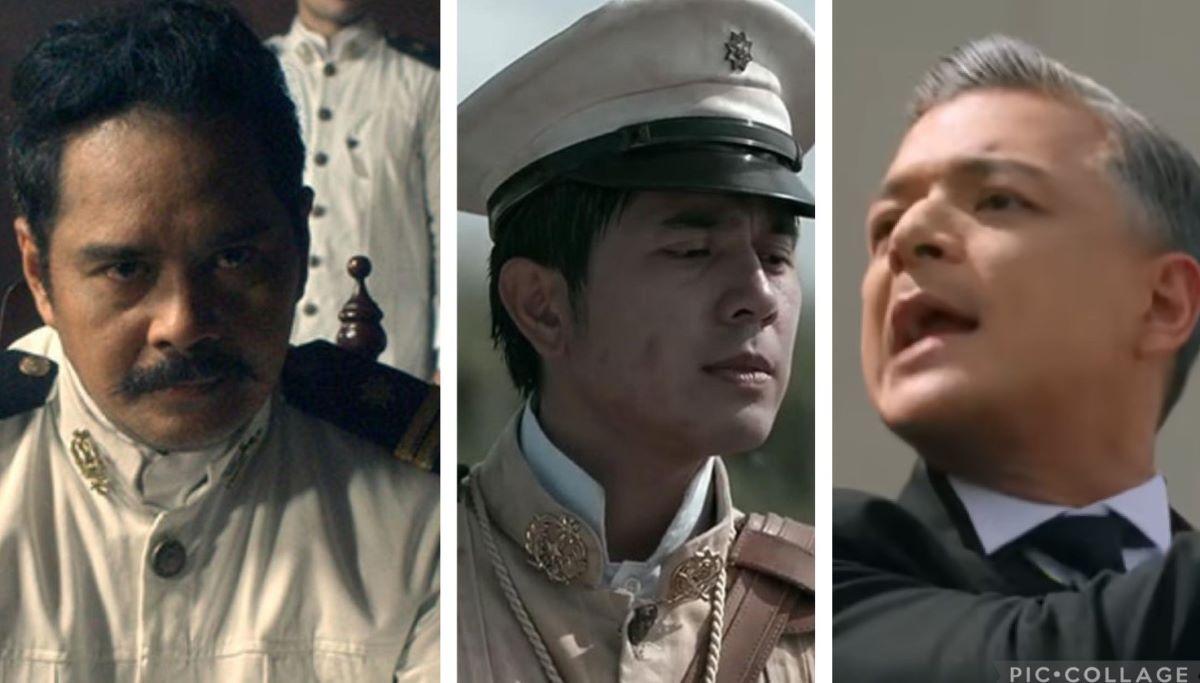
Deconstruction is seductive. It flatters our intelligence. It tells us we’re wiser than those who came before us. Jerrold Tarog’s Heneral Luna–Goyo–Quezon trilogy captured that mood perfectly... three films that tore apart the marble idols of Philippine history and held up the flawed, all-too-human faces beneath.
And let’s give credit where it’s due: the trilogy is a masterful and ambitious achievement by any standard. Few directors have attempted such a cohesive cinematic universe for Philippine history, and fewer still have pulled it off with this level of craft. Tarog’s command of tone, pacing, and symbolism is remarkable… a blend of history lesson, political essay, and moral provocation. The production values are world-class, the performances blisteringly committed. For a country still learning how to dramatize its own past without sermonizing, this trilogy is a milestone. It made history breathe, bleed, and argue with itself.
That said, I would not treat these films as biopics or documentaries. That’s the slippery slope many on social media seem to fall into... arguing historical accuracy point by point as though Tarog were grading a history exam. At best, these films are historical fiction: fictional stories based on historical events, shaped by interpretation, mood, and metaphor. It’s easier... and truer... that way. The goal isn’t to replicate the record but to question how we remember it.
"Heneral Luna" showed us not a saint of discipline but a volatile man undone by ego and rage. "Goyo" turned the Boy General into a tragic study of vanity and blind loyalty. "Quezon" revealed the narcissism and political self-interest beneath the polished veneer of statesmanship. Collectively, the trilogy became a masterclass in unmasking... showing that our so-called heroes were not demigods, but deeply compromised mortals stumbling through the same chaos we inhabit.
It’s easy to see why audiences loved it. Deconstruction feels thrilling. It gives us permission to be skeptical, to feel smarter than our textbooks. It reflects our times: the age of irony, the age of social media takedowns, the age of “receipts.” Tarog’s trilogy arrived like a cultural echo of our national psyche... weary of propaganda, allergic to false heroism, hungry for truth even when it hurts.
And yet, the trilogy also marks a turning point. Because after the dust settles, after we’ve dismantled the old myths, one uncomfortable question lingers: what now?
Deconstruction is sexy only until you have to build again.
Postmodernism’s great project was to show that everything is relative, that every truth is suspect, that every hero has clay feet. Fine. But after the demolition comes the emptiness... a vacuum of meaning where belief used to live. And the Tarog trilogy, for all its brilliance, leaves us there: staring at ruins, mistaking exhaustion for enlightenment.
What was missed
What Tarog’s trilogy misses... or perhaps intentionally avoids... is the act of reconstruction. It tells us how heroism fails, but not how it evolves.
The films are stunningly self-aware. They interrogate nationalism, masculinity, idealism... all the ways Filipinos mythologize suffering and loyalty. But they stop short of synthesis. They never show us what heroism could look like after the fall.
Luna’s brutal integrity ends in chaos. Goyo’s devotion ends in futility. Quezon’s cunning ends in compromise. There’s no bridge between them, no moral throughline connecting their failures to a deeper truth about nationhood. Instead, the trilogy loops back on itself... each hero’s death a reiteration of the same theme: that belief, in the Filipino experience, is inevitably punished.
That’s powerful storytelling, but also profoundly limiting. Because if every ideal is doomed and every hero corrupt, what’s left to fight for?
In the end, the trilogy mirrors our collective disillusionment more than it challenges it. It gives us a mirror when what we desperately need are blueprints. It gives us catharsis but not direction. And while that’s an honest reflection of our history... a republic that keeps repeating its heartbreaks... it’s also a missed opportunity to imagine something beyond despair.
Quezon, for instance, could have been the hinge. He was aide-de-camp to Aguinaldo, the bridge between revolution and statehood, the man who learned to maneuver rather than to charge. Yet the film flattens him into another study of ego and performance. It could have been about transformation... how the fire of revolution becomes the pragmatism of governance. Instead, it ends as another elegy.
We understand now that our heroes were flawed. Good. But where’s the next question? What do we do with that knowledge? How do we live with imperfection without surrendering to cynicism?
That’s what was missed... the follow-through. Deconstruction as a first act, not the finale. The trilogy dismantles, but it does not rebuild.
And perhaps that’s why it resonates with our current moment. We, too, are trapped in endless critique... scorning leaders, institutions, even hope itself... without the courage to imagine better ones. We’ve mistaken being jaded for being wise.
But disillusionment, left untreated, curdles into apathy.
Now what
So, what now?
Maybe the real task ahead isn’t to resurrect statues but to rewrite the idea of heroism itself. To understand that heroism isn’t about purity... it’s about persistence. It’s not the absence of ego, but the act of wrestling with it for something larger than the self.
In an age where truth can be deepfaked and corruption feels immortal, it’s tempting to stay cynical. But cynicism is not clarity. It’s comfort. It lets us feel intelligent without requiring action.
Tarog’s trilogy held up a mirror to our history. What we need next is a map. A story that doesn’t flinch from flaws, but still insists on building... on nationhood, on ethics, on empathy.
Deconstructing heroism was necessary. It cleared the ground. But if we stop there, we end up mistaking rubble for wisdom.
The next great Filipino film... or movement, or generation... must take that rubble and build something with it. Not marble statues, but stories that hold contradiction and still reach upward.
Because breaking is easy. Building is the hard part.
And right now, in an era of corruption scandals and false promises, that’s the kind of heroism we urgently need.
Author’s Note: The thoughts shared in this article started as an emotional rant on social media. You can find the original here: https://www.facebook.com/share/p/1BSunhD5bK/
Dominic “Doc” Ligot is one of the leading voices in AI in the Philippines. Doc has been extensively cited in local and global media outlets including The Economist, South China Morning Post, Washington Post, and Agence France-Presse. His award-winning work has been recognized and published by prestigious organizations such as NASA, Data.org, Digital Public Goods Alliance, the Group on Earth Observations (GEO), the United Nations Development Programme (UNDP), the World Health Organization (WHO), and UNICEF. He may be reached at https://docligot.com.

