

 GMA Brandtalk
 Tracking
 Archives

Copy of 1936 Filipino film 'Diwata ng Karagatan' found in Belgium
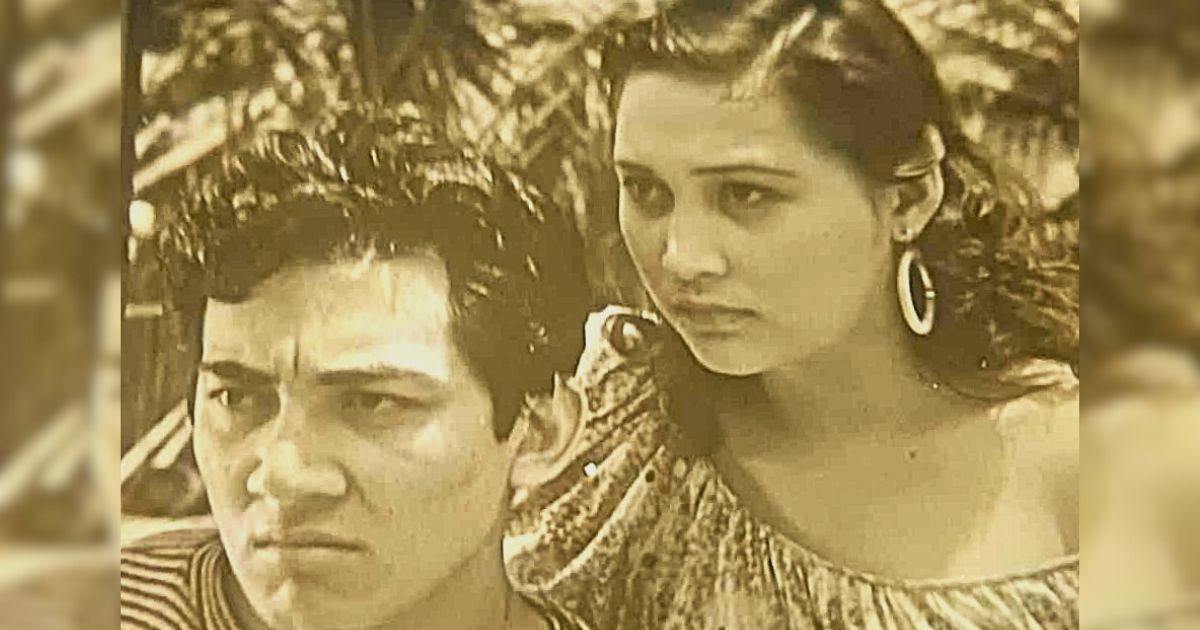
A copy of "Diwata ng Karagatan," a 1936 film produced by the Father of Philippine Cinema, Jose Nepomuceno, has been found at the Cinémathèque Royale de Belgique in Belgium.
The discovery was made possible through the personal efforts of Filipino filmmaker and historian Nick Deocampo, who traveled from Berlin to Brussels to confirm the existence of the copy.
"A national film treasure has just been found! A copy of 'Diwata ng Karagatan,' long-rumored to be existing but not found, has finally been located at the Belgian film archive," he wrote in a Facebook post.
According to Deocampo, he collaborated with Louise Baterna, the daughter of a pioneering Ilonggo-language film director, to liaise with the Cinémathèque Royale de Belgique to find the film.
On October 28, Deocampo and Baterna viewed the only known surviving copy of the film using a Steenbeck editing machine, with assistance from Bruno Mestdagh, coordinator for digital film collection and restoration.
The film survives as a 35mm print deposited in 2016 by the now-defunct Belgian laboratory CineLabor. It has not yet been digitized.
Deocampo said that "Diwata ng Karagatan" dethrones "Zamboanga," the Fernando Poe Sr. starrer produced in 1937, as the oldest surviving pre-World War II Filipino film.
Coincidentally, "Zamboanga" was also rediscovered abroad by Deocampo in 2004 through a Fulbright scholarship at the U.S. Library of Congress.
After its 1936 debut, "Diwata ng Karagatan" was re-premiered in 1939 following successful international exhibitions. The film was shown in France, Belgium, and South America, gaining popularity in France under titles such as "Ligaya, fille des îles (Ligaya, Girl of the Island)" and "Wong, le Tyran (Wong, the Tyrant)."
After its last screening at Fox Theater in Manila, the film was lost during World War II—until a surviving copy was recently rediscovered abroad.
"What makes the discovery of this film doubly historical is that this is the first and perhaps the only film that is extant that was produced by the Father of Philippine Cinema, Jose Nepomuceno. Despite rumors of some films attributed to Nepomuceno to be existing, none of his films has ever been found," Deocampo wrote.
"The newly-discovered copy is certifiably Nepomuceno's, produced by his pioneering film studio, Parlatone Hispano-Filipino. It is a film he produced but not directed. Instead, it was directed by another pioneering figure, Carlos Vander Tolosa, the same filmmaker who directed the first films to open the movie studios, Sampaguita and LVN, in the Thirties," he added.
According to Deocampo, "Diwata ng Karagatan" was difficult to trace due to early film piracy. A French distributor re-edited and falsely claimed it as a French production, cutting it down to 52 minutes, erasing Filipino credits, and adding a French narration.
This led to the loss of original scenes and the erasure of Filipino filmmakers' names, including producer Jose Nepomuceno and director Carlos Vander Tolosa. Despite this, Tagalog dialogues were preserved, and the lead actors were later identified as Rogelio de la Rosa and Mari Velez.
"Louise Baterna and I found it heartbreaking to find only a long black leader at the end of the film where names of Filipinos once appeared in the closing credits. The ending was all blacked-out while the theme music continued to play. This was evidently a clear case of filmic and cultural erasure," Deocampo said.
"No credit could also be found of the actors, as the film was claimed to be a 'documentary' of some exotic South-sea natives, a popular topic in the Thirties. It is of the same genre as 'Zamboanga,' also carrying the same South-sea romance theme. The country where the film was shot (the Philippines) was also left unknown," he added.
Deocampo said the discovery of "Diwata ng Karagatan" is considered a major breakthrough, comparable to an archaeological find.
"With Manila totally devastated during World War II, and with no archive to store films then, it is lucky that a few films still remain to be found in foreign archives," he said.
Deocampo thanked Baterna for helping him to retrieve the film.
"Without Louise's local support and facility in the French language, I would not have done everything in two days, considering I had no financial or logistical support but my retirement money from UP," he said.
He also said that his personal effort was driven by his love for Philippine cinema and fueled by his scholarly interest in Filipino film history.
"Who would be crazy enough to jump on a plane using personal funds to go to Belgium without fully knowing if a copy of the film was there? But the gamble paid off," he said.
—Jade Veronique Yap/MGP, GMA Integrated News

