

 GMA Brandtalk
 Tracking
 Archives

In 'Son of a Dead '80s Bold Star,' award-winning writer comes to terms about being Pepsi Paloma's son (or so he's told)
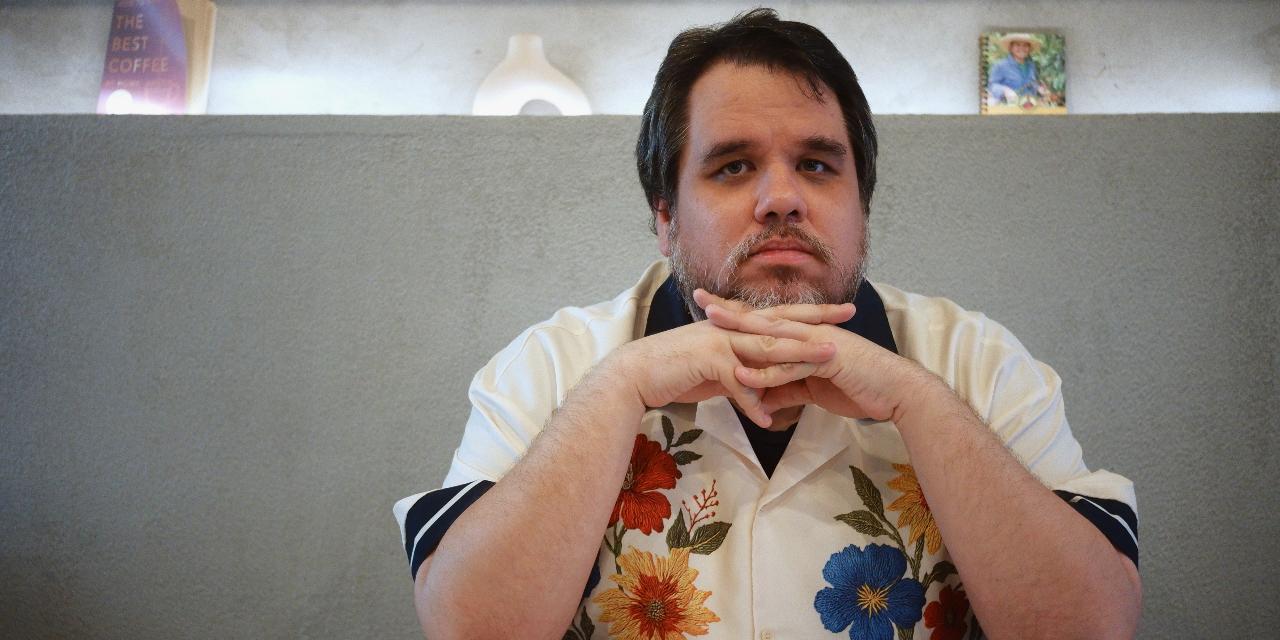
Palanca awardee Chuck D. Smith believed he was the son of a dead '80s bold star, Pepsi Paloma, until he wasn’t. And so he wrote about it.
In the essay "I am the Son of a dead '80s bold star," Chuck wrote about his upbringing as an adopted child, being the only white member of a brown family, and being the only white student in a brown school. He unpacked his experiences growing up about how he was told he was the son of one of the country’s most controversial figures. It was also titled “Origin Story."
It was his unusual experiences that “compelled me to write,” Chuck told GMA News Online in an online interview.
On the one hand, it’s an informal adoption story, something that happens in the Philippines a lot. On the other, it’s a showbiz story about an adopted child of a controversial bold star.
“May inkling naman ako that the story told to me by my adoptive parents was not true," he admits. "So when it was told to me, medyo may konting acceptance. Pero eventually as the months passed by, medyo weird kasi ano gagawin ko sa feelings ko?" He said. “That forced me or that compelled me to start writing the essays that I wrote.”
For Chuck, writing was a "way of trying to make sense of it."
"Kasi it’s a weird feeling,” he said.
The 2017 essay is among those included in Chuck's newly published debut book, “Son of a Dead ‘80s Bold Star.” The collection of personal essays tackles themes of family, of the self, coming-of-age awakenings, and more.
“I always describe it as something bigger than myself,” Chuck says of his book.
And though it started from an ultra specific situation, the book has relatable themes of family at its core.
“Present siya in all Filipino families, 'di 'ba? The concept of grief, the concept of not talking about things you know you should be talking about, ‘yung concept of what a family is in Filipino culture.”
The collection of personal essays is something Chuck also describes “as sort of a memoir of a very specific period in my life."
"That period being me trying to reconcile and accept certain parts of my life. Specifically, the fact that I was raised to believe na anak ako ni Pepsi Paloma," Chuck said, before emphasizing that "It’s not true.”
Spoiler alert: Chuck is the biological son of Pepsi’s brother, but Pepsi adopted him.

A lot of the essays were written through that lens, about Chuck's life, given the revelations he’s experienced through “Origin Story” and the ones that came after.
“Hindi siya happy ending, medyo bittersweet nga siya eh when you think about it,” he said. “And for me to realize na hindi dito natatapos ‘yung story, I had to write about it. Sabi nga nila, writing is making sense out of life. And when I wrote the essays in the book, dun ko na-realize ‘yung mga hindi ko napagisipan noon."
“Writing helped me understand myself more.”
The curation of the pieces tells a story of discovery, may it be of the self, of friends and family, or of famous personalities like Lang Leav, Eddie Garcia, and Cherie Gil. Aside from that, it also goes beyond the Pepsi Paloma stories to delve into the inner goings of Chuck’s life, like meeting his biological father and Chuck's work as an entertainment journalist.
“I don’t want to say I want to humanize Pepsi Paloma, it’s not my place to say that,” he said.
“We know of Pepsi Paloma as this controversial figure, right? Pero for me, hindi ganun ‘yung pagkakakilala ko sa kanya. When I was growing up, ang pagkakilala ko sa kanya na she was my biological mother. And even now finding out that she is not my biological mother, na she adopted me when I was younger for whatever reason. Ganun ‘yung pagkakakilala ko sa kanya,” he added.
That adds a new layer over Pepsi Paloma's personage, "na she’s no longer this controversial figure because of this and that — she’s also human."
“And if you look at it in a general sense, personal writing, it allows for that kind of power. Writing of the personal story kasi, it empowers the writer, it allows the writer to claim their story. Ito ‘yung kwento ko eh, and may power dun, being able to write it and to claim that it’s yours.”
With this, Chuck still hopes readers find the book relatable.
“It talks about family. It talks about Filipino culture. It talks about showbiz from a very personal [side]. Pero at the same time, naniniwala kasi ako sa importance ng pagkekwento ng personal story, both from the writer’s perspective and the reader’s perspective,” he said.
Life is showbiz, darling
The showbiz and the personal have been a common trope in Chuck’s life since he was young.
As a student, he didn’t necessarily want to be an entertainment writer — at the time, Chuck said entertainment journalism was not taken seriously — but he started reading various magazines like The New Yorker and Entertainment Weekly, which featured entertainment stories that were beautifully written.
“That was the moment when I realized I wanted to do entertainment writing because even though hindi siya quote-unquote serious, may opportunity ka pa rin magkwento in a well-written way,” he said.
“And minsan, you’re given the opportunity to tell meaningful stories in that spectrum of journalism.”
When he was starting out, fellow writer Louie Jon Agustin Sanchez told him, “Anything that would help people forget that they are hungry is important.”
“And back then, one of those things is entertainment writing, kasi kilala siya as pampalipas ng oras,” he said. “Na-realize ko, wow, may silbi pala ‘yung entertainment writing.”
Chuck’s trademark style mixes the showbiz with the personal, because it’s “important to write about the sector in a consensus way.” His words combine showbiz news with personal experiences without veering away from the topic; in fact, he has the gift to emphasize them more.
But still essentially a journalist, Chuck's stories are anchored on facts and verifiable information.
“Hindi mo mahihiwalay ‘yung politics, ‘yung how we live, with entertainment and lifestyle,” he said. “If you look at our life, nag-re-reflect din ‘yun, so you cannot separate the two. Kaya I think consciously and subconsciously, may merging of the personal of the political and the showbiz dun sa mga sinusulat ko.”
Chuck hopes “Son of a Dead ‘80s Bold Star” will help readers look at the memoir and the personal story as important aspects of writing.
“We see value in it. Hindi tayo laging nakaangkla lang sa kung ano ‘yung facts, but nakikita rin natin na behind these certain facts and certain information, nakikita din natin may deeper story siya na pwedeng ikekwento,” he said.
“Importante na we allow ourselves the power to tell our personal stories kasi it allows us to tell our personal truth.”
“Son of a Dead ‘80s Bold Star” is available at the UST Publishing House Bookstore, and the UST Publishing House Shopee and Lazada pages. —JCB/LA, GMA Integrated News

