

 GMA Brandtalk
 Tracking
 Archives

Filipino spiritual tradition at Christmastime
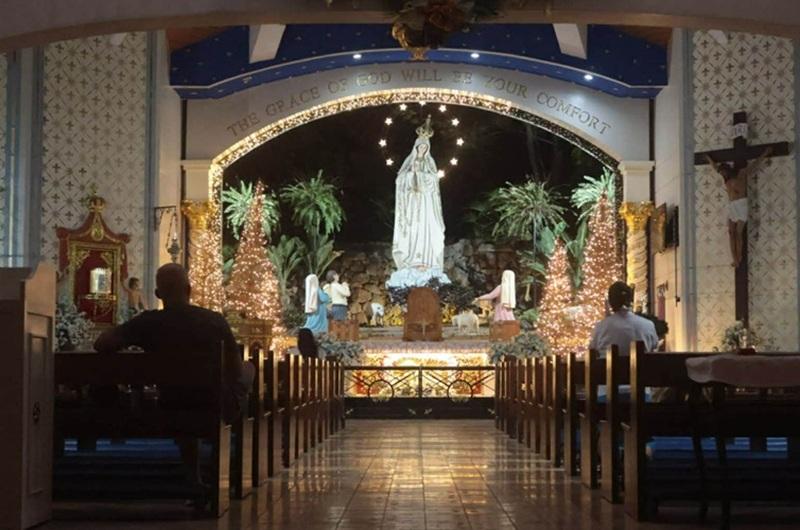
Christmas is just around the corner, and along with the holiday rush in the streets and marketplaces comes the celebration of the traditional Simbang Gabi.
For Catholics, especially Filipinos, Simbang Gabi or Misa de Gallo is a nine-day early-morning Mass celebrated from December 16 to 24 in anticipation of the birth of Jesus Christ.
But where did it come from, and what other spiritual traditions do Filipinos practice during Christmastime?
Parish priest Julius De Sagun said the direct translation of Misa de Gallo is “Rooster’s Mass,” which is an Eucharistic celebration around the “time when the rooster crows (gallo).”
“This is to give the farmers a chance to worship God at dawn just before they go to the fields to work during daytime,” De Sagun told GMA News Online.
Also referring to the nine-day Masses before Christmas, Misa de Aguinaldo means “gift Mass.”
“Both Misa Aguinaldo and Misa de Gallo refer to the same nine Masses in preparation for Christmas. There is no liturgical difference — only a difference in meaning and emphasis,” said De Sagun, who is the rector of the Diocesan Shrine and Parish of Our Lady of Fatima in Binakayan, Kawit, Cavite.
“The former emphasizes the 'grace' (Jesus, the greatest gift of all) that the attendees receive from God, the latter emphasizes the 'time' when the mass is celebrated (dawn),” he added.
Filipinos began practicing Simbang Gabi during the Spanish colonization period, around the 16th to early 17th century, De Sagun explained.
It flourished in the country after missionaries allowed early Masses so that farmers and laborers, who begin their work at dawn, could attend Eucharistic celebrations.
“Rome granted a special indult permitting these Advent votive Masses — something unique to the Philippines. This practice later evolved into what we now popularly call Simbang Gabi,” De Sagun said.
Over time, some of the faithful could no longer attend Simbang Gabi, so anticipated Masses were celebrated.
However, this is not the case in every Catholic church in the country.
“The schedule depends on the pastoral needs of the place, based on the number of people. For it to be anticipated in the evening, the Bishop of the place must give permission,” De Sagun said.
Salvation, Jesus’ birth
Each day of Simbang Gabi focuses on salvation history leading to the birth of Jesus Christ, including His Genealogy, Annunciation to Mary, Annunciation to Joseph, Visitation, Birth of John the Baptist, and the Prophecies fulfilled in Christ.
De Sagun said readings and homilies during Simbang Gabi emphasized “waiting and hope, God’s fidelity to His promises, Mary and Joseph’s obedience, and God entering human history.”
“The readings follow the proper liturgical texts for December 16–24. They are fixed in the sense that they do not rotate yearly, unlike Sunday readings,” De Sagun said.
Meanwhile, during Christmas, especially on Christmas Eve and Christmas Day, the Church highlights the mystery of Jesus’ incarnation or becoming a man.
Special Christmas Prefaces proclaim “The Word became flesh” and “Christ, the Light born for us.”
During the Creed, a genuflection is made at “Et incarnatus est…” (“And by the Holy Spirit was incarnate…”), expressing reverence for this central mystery of the faith.
A solemn celebration
Christmas is not just about gift-giving and Noche Buena, but it is also about God’s victory in entering the world.
This is represented by the white vestments worn by priests during Christmas Masses, which symbolize joy, light, purity, and resurrection and glory, De Sagun said.
“White emphasizes that Christmas is not merely sentimental — it is a solemn celebration of God’s victory entering the world,” De Sagun said.
During the Christmas Eve Mass on December 24, the Holy Child Jesus is venerated, a religious act of deep respect or reverence.
It expresses faith in the incarnation and love for Christ, who became small, poor, and vulnerable like humans, reflecting a Filipino spirituality that emphasizes closeness and tenderness with God.
“It is not worship of an image, but veneration of Christ Himself, reminding us that God chose humility as the path to salvation,” De Sagun said.
Meaningful Christmas, Simbang Gabi
De Sagun reminded the faithful that Simbang Gabi is not a “ritual to complete” but a “journey to enter.”
To make it more meaningful, he called on Catholics to attend the Mass not out of “superstition” but out of “love.”
The priest was referring to the superstition that God will grant wishes if one completes the nine-day Simbang Gabi.
“While attending the Masses, reflect on the Word, not just the tradition; practice the values of charity, forgiveness, and simplicity; and let Christ be born not only in the Belen, but in your heart,” De Sagun said.
“Christmas becomes truly meaningful when Christ changes how we live, not just how we celebrate,” he added.
Here are the Simbang Gabi Mass schedules in some churches in Metro Manila and across the country. — BAP, GMA Integrated News

