

 GMA Brandtalk
 Tracking
 Archives

Living with Fantine: How Rachelle Ann Go’s longest role learned to age with her
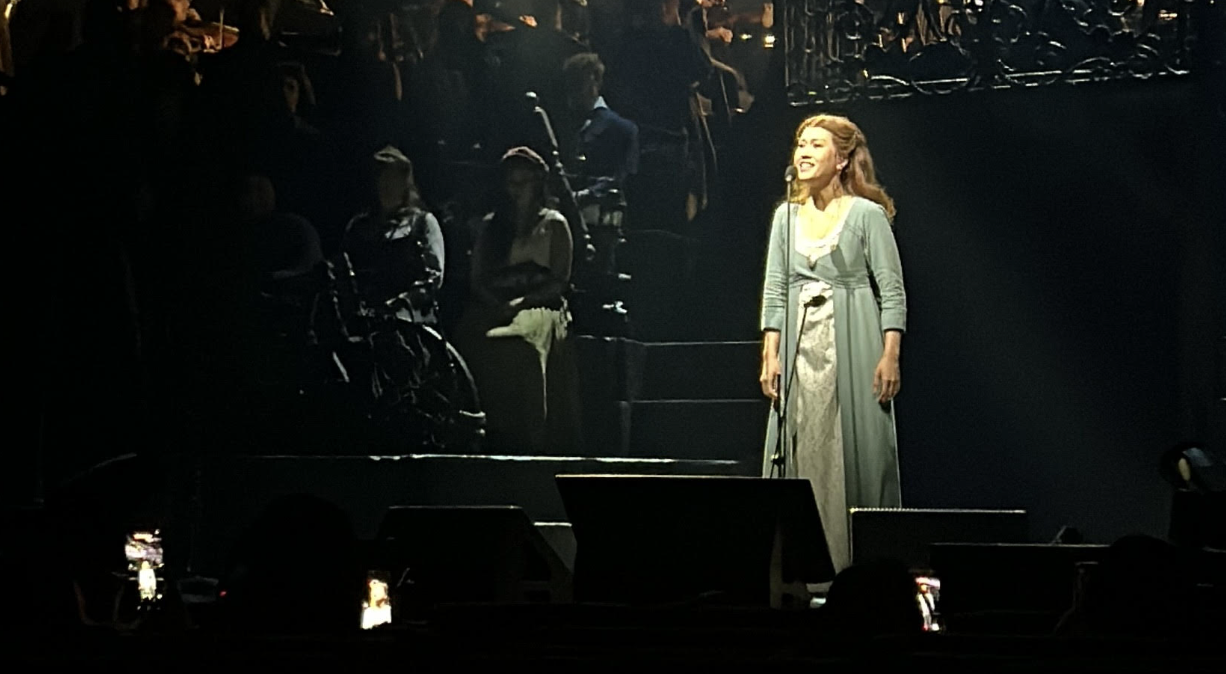
When Rachelle Ann Go first sang Fantine in London back in 2015, she was not yet sure musical theater was where she belonged.
She had moved to the UK for another production, stepped into "Les Misérables" as a newcomer, and quietly wondered if she was out of place in a world that seemed to already know itself.
“I was really a newbie, doing musical theater,” she told the members of the media at a press conference on Wednesday at the Theater at Solaire.
"I wasn’t really sure — is this for me?”
At the time, the doubt was not abstract. Go remembers feeling isolated in the West End company, where she was the only Asian cast member.
“I felt like I didn’t fit in. I think I was the only Asian in the cast in London," she said.
It is a detail she recalls plainly now, without bitterness, but with the clarity that comes from distance, she said.
Fantine, she would soon discover, was not a role that asked to be mastered quickly. It was one that demanded time.
More than a decade later, Go is still singing Fantine. She has carried the role across countries, tours, and revisions of the show.
In the years since that first London run, her own life has expanded. She got married and became a mother. She now has two children.
“Fantine has been with me through every season of my life,” she said.
That continuity is rare in musical theater, where performers often move on long before roles begin to feel lived in. For Go, Fantine never stopped returning, and with each return, the character shifted.
Not because Fantine changed on the page, but because the woman singing her did.
Before motherhood, Go needed time before every performance to prepare herself emotionally, particularly for Fantine’s most painful moments.
Now, she does not.
“Now I can just rock up on stage and just open my mouth and cry on the spot, because I know how it feels.”
Fantine’s story, centered on loss, separation, and maternal sacrifice, no longer requires imagination.
“Every single night, it’s heartbreaking to know that’s Fantine’s story, and she had to go through that.”
That immediacy is especially exposed in the concert version of "Les Miserables," which removes elaborate staging and relies almost entirely on the performers and the score.
There is no revolving stage in this version, something Go herself pointed out. What remains is the music.
“The music itself has its own heartbeat,” she said. “No matter where you put the actors, it’s going to stand on its own.”
The stripped-down format also speaks to the way the show continues to meet new audiences. Go noted that younger viewers, many of whom may not be familiar with the musical, still connect immediately.
“It’s amazing because the younger generation nowadays, who are probably not familiar with the music, can also enjoy the musical," she added.
For her, the appeal is not nostalgia but endurance. "Les Misérables" keeps changing because the world around it does. Fantine survives not because she is frozen in time, but because she absorbs new meaning through the people who play her.
That includes Go herself, who admits that early in her career, she performed under constant pressure. She measured success through applause, through approval, through whether she felt she was enough.
“I’m just enjoying the show instead of feeling the pressure and insecurities,” she said now.
Go is among the strong Filipino presence in the global cast of the "Les Misérables: The World Tour Spectacular," alongside Tony Award winner Lea Salonga, Emily Bautista, and Red Concepcion.
Cameron Mackintosh, in association with Nick Grace Management and GMG Productions, the Manila staging runs until March 1, 2026, at the Solaire Theatre, with ticket prices starting at P1,750. — LA, GMA Integrated News

