

 GMA Brandtalk
 Tracking
 Archives

A lifetime with 'Les Misérables': Lea Salonga, longevity, and learning to find joy
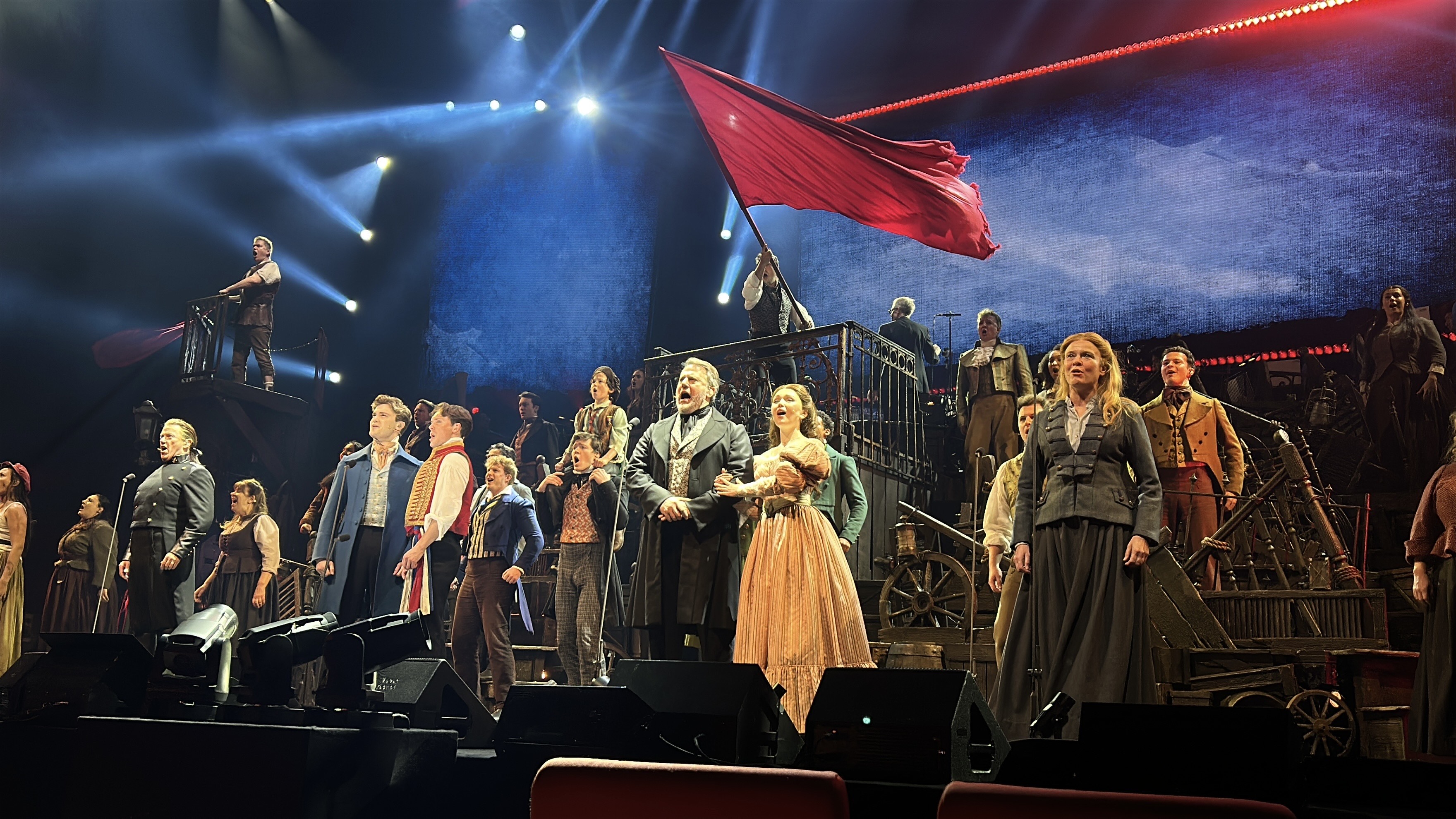
Long before Lea Salonga stepped into the world of "Les Misérables," the show had already taken hold of her imagination.
Lea traces the beginning of her connection to the musical, when early in her career, she was introduced to the music by Jaime del Mundo.
The stage director lent her a copy of the original Broadway cast recording, and "that was what started me on that train,” Salonga said.
“The minute I was introduced to Les Mis, I was obsessed.”
She shared this during a press conference at the Theater at Solaire, where she also opened up about being separated from her husband "for awhile now," supporting her son Nic Chien in his transition, and why "Les Misérables," which is is currently playing at the Theater at Solaire continues to resonate with Filipino audiences.
That obsession soon became part of her professional path. When Salonga auditioned for "Miss Saigon," she chose a song from "Les Misérables." Later during the final auditions, producer Cameron Mackintosh treated the cast to a performance of "Les Mis" in London. Seeing Lindsay Hately perform Madame Thénardier transformed an abstract dream into something tangible.
“She was the role-made flesh for me,” Salonga said. “And so the obsession became three-dimensional, and has continued on throughout my career and throughout my life.”
From obsession to expectation
Over the decades that followed, "Les Misérables" remained a constant reference point in Salonga’s life. She would go on to perform several roles in the musical, each one reflecting a different stage of her career—and of herself.
Early on, she admitted, the pressure was immense. When she first played Éponine, the weight of expectation was impossible to ignore.
“It was like, I gotta do this well. It’s gotta be perfect,” she said. “Because I’m the first Asian doing this.”
That sense of responsibility shaped how she approached the work, sharpening her discipline but also narrowing the emotional space she allowed herself. Success, then, felt conditional—something that had to be constantly earned.
By the time she took on Fantine years later, something had shifted. The urgency to prove herself had softened, replaced by perspective and a growing sense of balance.
She recalled moments backstage that captured that change perfectly. After Fantine’s devastating death scene, she would still be in tears when a fellow cast member would casually ask if she was joining the poker game.
“Fantine is dead, I get off the bed, I’m still in tears,” she said, laughing. “And then one of the ensemble guys runs into me and goes, ‘Are you in?’ And I said, ‘Oh, absolutely.’”
It was a small exchange, but it marked a turning point. The work remained serious—but it no longer consumed her entirely.
Not dying this time
In "Les Misérables," death often serves as punctuation. Characters arrive, endure suffering, and exit in grief. For Salonga, that pattern once defined her relationship with the show. This time, it does not.
“I did the two other dead girls previously,” Salonga said with a laugh. “But now to be cast in this world tour, and it really is spectacular… it’s so nice. I don’t die.”
It is a lighthearted line, but it captures a genuine shift. In the World Tour Spectacular, Salonga plays Madame Thénardier—a character who survives not because she is virtuous, but because she is relentless. Unlike Fantine or Éponine, she is not written to be pitied.
“It’s nice to not be the one na maawa kayo sa kanya,” Salonga said. “That’s not it.”
For Salonga, the appeal of Madame Thénardier lies in the freedom the role offers.
She spoke enthusiastically about experimenting with sound, dialect, posture, and physicality—about how refreshing it is to approach a familiar world from an entirely new angle.
“It’s wonderful to now explore this character,” she said. “To try a different sound, and dialect, and posture. It’s been so much fun exploring this other woman.”
Learning to play—and to enjoy
Now returning to "Les Misérables" as Madame Thénardier, Salonga describes a relationship with the show that feels lighter, even as her commitment remains firm.
“I take the work very seriously, as I’ve always done,” she said. “But I take myself and everything else just less seriously.”
That distinction has opened space for joy, something she no longer feels she must earn through suffering or perfection. Madame Thénardier, unburdened by tragedy, allows her to play.
“This,” Salonga said simply, “is just pure joy.”
That joy is amplified by context. For the first time in her career, Salonga is performing Les Misérables at home, in Manila, in front of friends and family.
“I get to do Les Mis at home for the first time,” she said. “I get to do it in front of friends and my family.”
There is also the quiet significance of shared representation. Salonga recalled opening the souvenir program and noticing that four Filipinos in the cast appeared together on a single spread: herself, Rachelle Ann Go, Emily Bautista, and Red Concepcion.
“When I looked at it, I was like, ‘Wow,’” she said. “That is so cool. That is truly iconic.”
“Les Misérables: The World Tour Spectacular” runs from January 20 to March 1, 2026, at the Theater at Solaire. Salonga stars as Madame Thénardier, alongside fellow Filipino artists Rachelle Ann Go (Fantine), Emily Bautista (Éponine), and Red Concepcion (Thénardier). — LA, GMA Integrated News

