

 GMA Brandtalk
 Tracking
 Archives

From pabasa to salubong: Holy Week practices explained
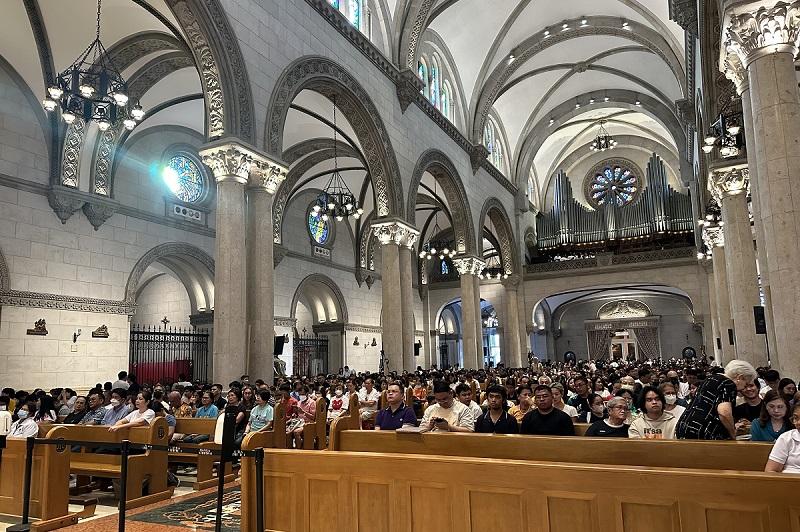
Holy Week is one of the most solemn and meaningful periods in the Philippines, the 3rd largest Catholic country in the world, with 85M of its citizens as Catholics.
From the start of Lent (Ash Wednesday) all the way to Easter Sunday, Filipinos observe unique customs shaped by centuries of Spanish influence, local devotion, and communal practice.
These traditions, ranging from chanting the pabasa to reenacting the passion of Christ in Senakulo, visiting churches through Visita Iglesia, and participating in early morning Salubong rituals, are more than mere customs. They are ways for believers to reflect, pray, and physically engage with the story of Jesus’ suffering, death, and resurrection.
Bro. Jethro Jansen Natividad, a Filipino missionary of the Maryknoll Fathers and Brothers in New York, explained the origins, meaning, and significance of these practices.
Below is our Q&A with Bro. Jethro, which has been edited for length and clarity.
RELATED: What does 'Maundy' mean, why is it called 'Good Friday' and more Lent-related questions answered
Can you tell us more about pabasa?
Pabasa was introduced during Spanish colonization. Its focus was on chanting “Pasyong Mahal ng Panginoong Hesus Kristo,” or the life story of Jesus Christ. From creation until Christ's death and resurrection, you can hear the entire salvation history.
Pasaba is communal vigil. Devotees come together in one house or at the barangay, and set the venue up with statues and holy figurines that demonstrate the life of Jesus. Nagbabantay sila nang walang tulugan.
Ang pabasa — it helps Filipinos who don't know how to read. So they can understand the bible. These days, each place has different tones. There are traditional and modern, sometimes, people even rap but they all have the same objective: To invite prayer and reflection.
Anybody can organize a pabasa. There is no strict regulation, and that's why it remains a local and domestic tradition.
What is the purpose of visita iglesia?
Ang visita iglesia originated from Rome, where the four major basilicas are visited as part of penance.
It was adopted in the Philippines through St. Philip Neri. Normally, people visit seven churches on Holy Thursday.
Its purpose is to join in Jesus’ prayer in Gethsemane and to undertake a mini pilgrimage while praying the 14 Stations of the Cross. Maaaring gawin ito ng parokya o ng magkakaibigan, at puwede ring magkaroon ng side trip sa iba’t-ibang lungsod.
But you must remember that visita iglesia isn't just about visiting churches. It's a journey of faith and sacrifice.
What happens during the Salubong ceremony?
The Salubong is the traditional meeting of Mary and Jesus after his resurrection. It takes place at dawn on Easter Sunday, where Mary’s sorrow is dramatically lifted through the removal of her veil.
Men and women walk separately during the parade, and an angel figure descends, while singing the Regina Caeli. The ritual demonstrates how happiness replaces sadness and grief. This isn't a mere symbol but one way for devotees to actively participate in Christ's resurrection.
Each church has its own way of practicing the Salubong. And even if there are superstitions, like the dropping of the veil, its primary message is grace and happiness over the resurrection.
Can you explain the Senakulo tradition?
Senakulo is a dramatic reenactment of Christ's life and suffering, beginning with the Last Supper until his death.
Unlike the pabasa, which is audio-focused and tells the entire history of salvation, the Senakulo contains visual elements — actors, props, different scenes. It started from Spanish missionaries and was quickly embraced by the Filipinos because we like arts and drama.
Each scene may be staged in different locations, sometimes across an entire town. And then it becomes this journey of faith for the devotees. Through the senakulo, people can experience the Bible through their senses.
How do fasting and abstinence fit into Holy Week?
Fasting and abstinence started from the very first Christians as a way to show solidarity with Jesus' suffering in the wilderness.
Fasting is eating one meal a day, while abstinence is avoiding meat or other forms of indulgence.
Their objectives are not just physical but to instill discipline in our desires. In this way, we learn to control ourselves as well as to participate in Christ's sacrifice.
What is the role of processions during Holy Week?
Processions are like a walking Bible. Devotees walk and pray together with statues of saints and Christ.
This shows we are never alone in our journey. It's an expression of our communal faith. Sometimes processions may also be held to bless communities, to ask for protection, or to give thanks.
In Antipolo, there is a regular procession every Saturday and first Saturday of the month. This becomes part of the pilgrimage season and in this way, we are able to show our faith and each devotee becomes an active participant in the journey.
What does pagtatanod signify?
Pagtatanod, or keeping vigil beside the Altar of Repose after the Holy Thursday Mass, is also in solidarity with Christ's prayer in Gethsemane. The altar is fixed and set up like a garden — a symbol of the Garden of Gethsemane. While the ritual is a reminder of God’s seeming absence in the world, it is one that offers hope.
The ministry or the parishioners follow a schedule to stay by the altar, often for one hour or more. And this practice continues all through Black Saturday.
This is a tradition that deepens both personal and communal devotion, and gives devotees the opportunity to unite with Christ’s sacrifice.
What are your thoughts on modern additions like Easter egg hunts and the Easter Bunny?
The Easter egg hunt began in Germany, as a symbol of fertility and new life. It was adopted and Christianized by the Catholics to become a symbol of the resurrection of Christ.
The egg became a symbol of the empty tomb. Though it appears plain on the outside, it holds new life within.
While Easter eggs have become more widely accepted by the Church, the Easter Bunny remains part of German folklore that has also been adapted and we are able to give new meaning in light of our faith.
In the end, what's important is we are able to give these meaning as a way to recognize Easter.
What message would you like to share with Filipinos observing Holy Week?
The most important message for Filipinos this Holy Week is to remember that these traditions go beyond simple rituals; their true purpose is to share in Christ’s suffering.
While Holy Week is often considered a holiday in the Philippines, everybody is reminded to use the time to pray and reflect, not just to rest or go on vacation. It is an invitation to return to Christ, to turn away from sin and offer our personal sufferings to Him.
Above all, Holy Week brings the message of hope. It teaches us that in every challenge in our lives, during every Lent and every great trial we face, there is always a promised resurrection or joy that awaits us.
In our journey, we must remember that the Lord is always with us: in our sorrow, in carrying our crosses, and in our triumphs, and He never abandons us. — LA, GMA News

