

 GMA Brandtalk
 Tracking
 Archives

Explore 7 notable churches in the Diocese of Parañaque for Visita Iglesia
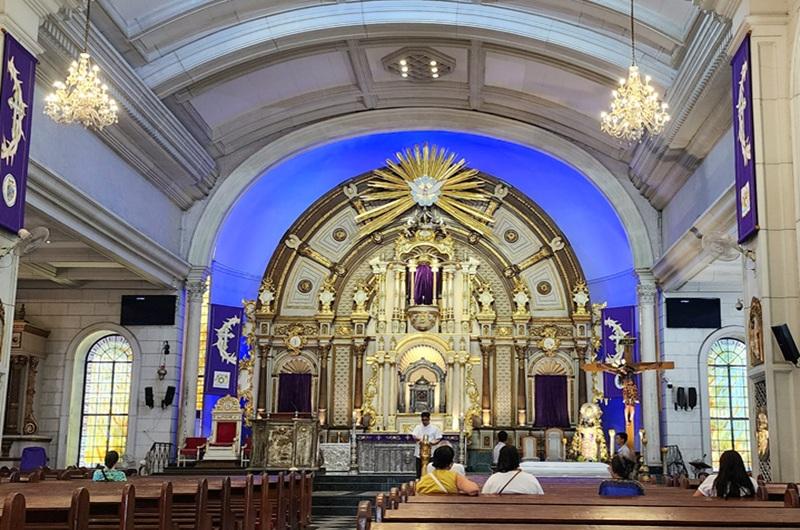
One of the traditions done during Holy Week is the Visita Iglesia, in which Catholics visit several churches to pray, reflect, and spend time in adoration before the Blessed Sacrament.
For Holy Week 2026, the faithful is invited to visit seven churches in the south of Metro Manila that belong to the Diocese of Parañaque, which is one of the two dioceses formed from the Archdiocese of Manila (the other is the Diocese of Kalookan.)
Established on December 7, 2002, the Diocese of Parañaque covers three cities: Parañaque, Las Piñas, and Muntinlupa.
The Cathedral Parish of St. Andrew
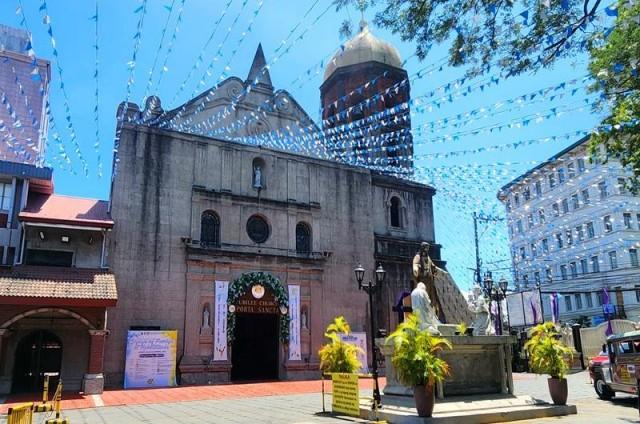
Located in Barangay La Huerta, Parañaque City the Cathedral was established by Spanish Augustinian Friars and is the seat of Parañaque Bishop — Most Rev. Jesse Eugenio Mercado, D.D.
The dedication of the cathedral took place on January 25, 2003, with Bishop Mercado as the diocese’s first prelate, who was installed on January 28, 2003.
The church was also constituted and declared the Diocesan Shrine of Nuestra Señora del Buen Suceso in 2012, in recognition of the locals' devotion to the Blessed Virgin Mary after her image was enthroned in the cathedral on August 10, 1625.
Serving as Parañaque City’s patron saint, St. Andrew the Apostle is the patron saint of fishermen. The Nuestra Señora del Buen Suceso is honored as its patroness.
National Shrine Of Our Mother Of Perpetual Help (Baclaran Church)
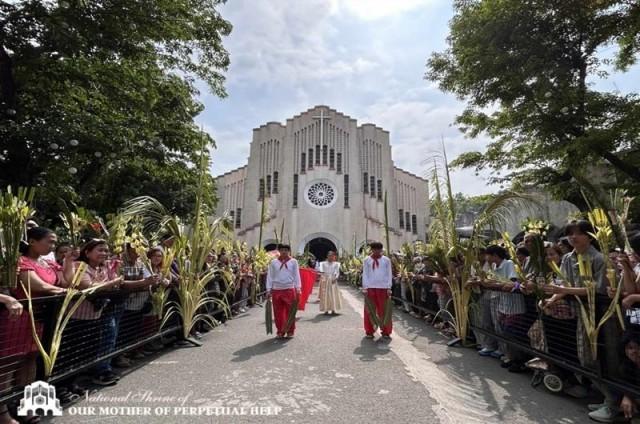
The National Shrine of Our Mother of Perpetual Help stands in Barangay Baclaran, Parañaque, surrounded by bustling business establishments and facing Roxas Boulevard and the vibrant Aseana City economic hub.
According to its website, Baclaran Church is the biggest shrine in the world dedicated to Our Mother of Perpetual Help.
Established by the Redemptorist missionaries, Baclaran Church began as a small wooden chapel that only catered to the local community around the convent.
Now, with the influx of devotees, particularly on Wednesdays, the shrine is open 24/7.
Minor Basilica and National Shrine of Mary Help of Christians
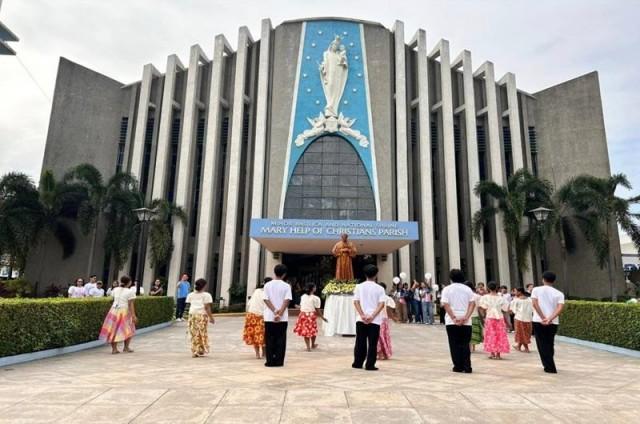
The National Shrine of Mary Help of Christians is the first minor basilica in the Diocese of Parañaque.
It was the late Pope Francis who elevated the parish to its new designation on March 27, 2025.
Located in Barangay Don Bosco, Parañaque, the basilica houses the century-old image of Mary, Help of Christians, which received its canonical coronation in 2022.
The Marian image arrived in the Philippines in 1922 and was first enthroned at the Manila Cathedral. It was then brought to Our Lady of Loreto Church in Sampaloc, Manila for safekeeping during the Japanese occupation.
In 1994, the Marian image was transferred to the now-basilica in Parañaque.
National Shrine of Our Lady of the Miraculous Medal
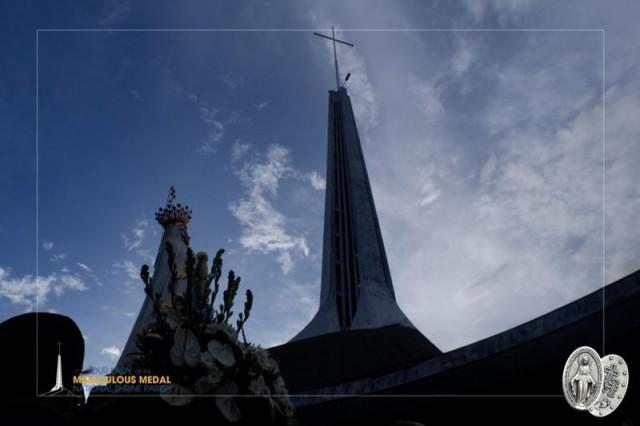
Nestled in Barangay Sucat, Muntinlupa, the Shrine of Our Lady of the Miraculous Medal was built in commemoration of the 150th anniversary of the Marian apparitions to Saint Catherine Labouré in France.
Designed by national artist for architecture Jose Maria Zaragoza, the church’s cornerstone was laid in July 1979, and it was consecrated in 1980.
That same year, the Catholic Bishops’ Conference of the Philippines declared it a national shrine dedicated to the Miraculous Medal devotion.
With its monumental steeple visible from the Skyway, the National Shrine follows a diamond-shaped plan, with the nave oriented toward the diamond’s vertices, deviating from the traditional cruciform layout of churches.
Sacred Heart of Jesus Parish
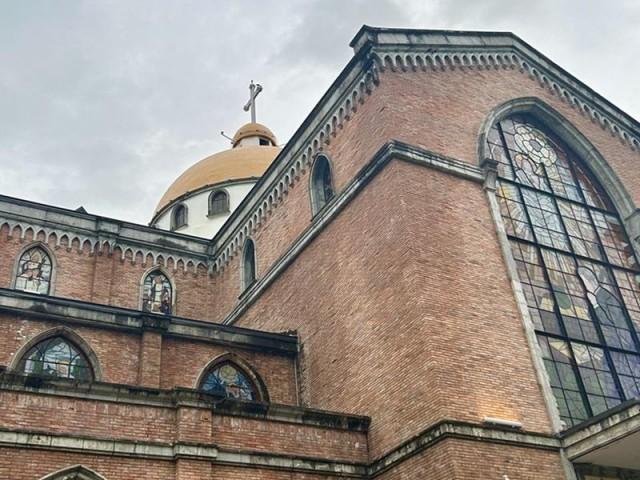
Established in 1997, the Sacred Heart of Jesus Parish is located along Don Jesus Boulevard in Barangay Cupang, Muntinlupa.
The parish is dedicated to the Most Sacred Heart of Jesus, one of the most revered devotions to the Lord.
Observed on the Friday following the second Sunday after Pentecost, the feast of the Most Sacred Heart of Jesus honors the physical heart of Jesus Christ as a symbol of his immense and infinite love for humanity.
Mary Immaculate Parish Nature Church
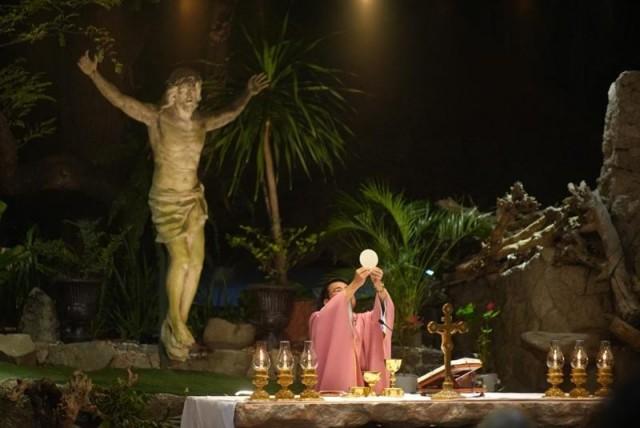
Situated in Talon V, Las Piñas City, the Mary Immaculate Parish Nature Church is a unique spiritual sanctuary that stands within a fifty-year-old mango orchard.
Built in 1986, the nipa-hut open-air church has a high ceiling that is made of native materials such as wood and anahaw.
The church’s altar is crafted from driftwood and marble, while its ceiling is adorned with hanging dove lighting fixtures made from Capiz shells.
Using tree trunk stumps from star apple trees as seats, the church can accommodate around 100 people.
Diocesan Shrine and Parish of St. Joseph (Bamboo Organ Church)
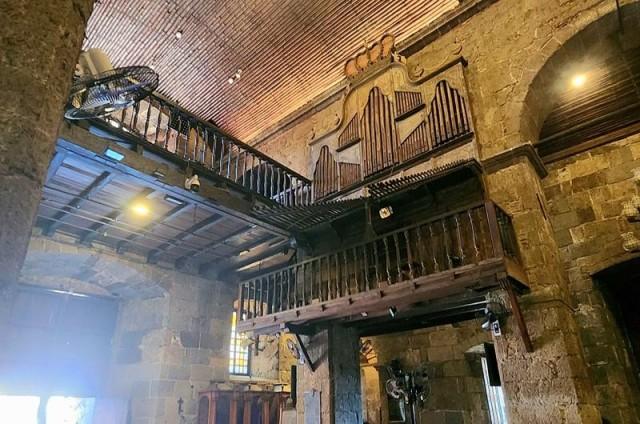
Built between 1797 and 1819, the Diocesan Shrine and Parish of St. Joseph has an “earthquake” Baroque architectural style and is mainly made out of adobe stones.
Located in Barangay Daniel Fajardo, Las Piñas City, the church houses the only 19th-century bamboo organ in the Philippines that has survived and is still functioning, recognized by the National Museum of the Philippines.
It was built by Las Piñas’ first parish priest, Fray Diego Cera Dela Virgen Del Carmel, who constructed the unique musical instrument from 1816 to 1824.
This unique musical instrument is composed of 1,031 pipes, 902 of which are made out of bamboo, while the rest are metal.
In the 1880s, a typhoon and an earthquake damaged the church and the bamboo organ. Renovation was carried out only from 1971 to 1975.
Understanding Visita Iglesia
Speaking to GMA News Online, Fr. Francis Gustilo, president of Don Bosco School of Theology in Parañaque City, explained that the tradition of Visita Iglesia began in the 16th century when Christian missionary St. Philip Neri visited seven major basilicas in Rome on Maundy Thursday, which commemorates the institution of the Eucharist.
It is traditionally observed after the Mass of the Lord's Supper on Thursday evening, when the Blessed Sacrament is taken out of the tabernacle and placed on an altar installed in one side of the church where the faithful spend time in prayer.
Gustilo explained that visiting churches is done at night as this practice is tied to the Gospel narrating the agony of Jesus Christ in the Garden of Gethsemane, where he asked his disciples to stay with him and watch.
“He asked his disciples to please stay with me and watch, magtanod, and pray. Watch is not to look. Watch means hindi naman relo (not like a clock). Pero it's an hour,” Gustilo said.
Thus, during Visita Iglesia, the faithful are invited to remain in the church and keep vigil for an hour, from 6 p.m. during the Mass of the Lord’s Supper, until 12 a.m. at the seventh church. — BAP, GMA News

